
The Battersea Poltergeist of 1956 happened in a London home during a time of post-war uncertainty, capturing widespread media attention and sparking public fears. Reports of objects moving and strange noises were vividly reported, but media sensationalism often exaggerated the events. These stories shaped how people understood paranormal activity and created a sense of paranoia within the community. To understand what really happened and how stories were constructed, keep exploring the detailed sources that reveal the story’s full context.
Key Takeaways
- The Battersea Poltergeist case occurred in 1956, gaining fame as a major London paranormal event during the post-war era.
- Primary sources include police reports, newspaper articles, and personal testimonies documenting unexplained phenomena.
- Media coverage, including articles and radio reports, significantly shaped public perception and amplified the sensational nature of the case.
- The case’s psychological impact heightened fear and paranoia among residents, influenced by societal factors of 1950s Britain.
- The event continues to evoke curiosity and debate, illustrating media’s role in constructing and propagating paranormal narratives.
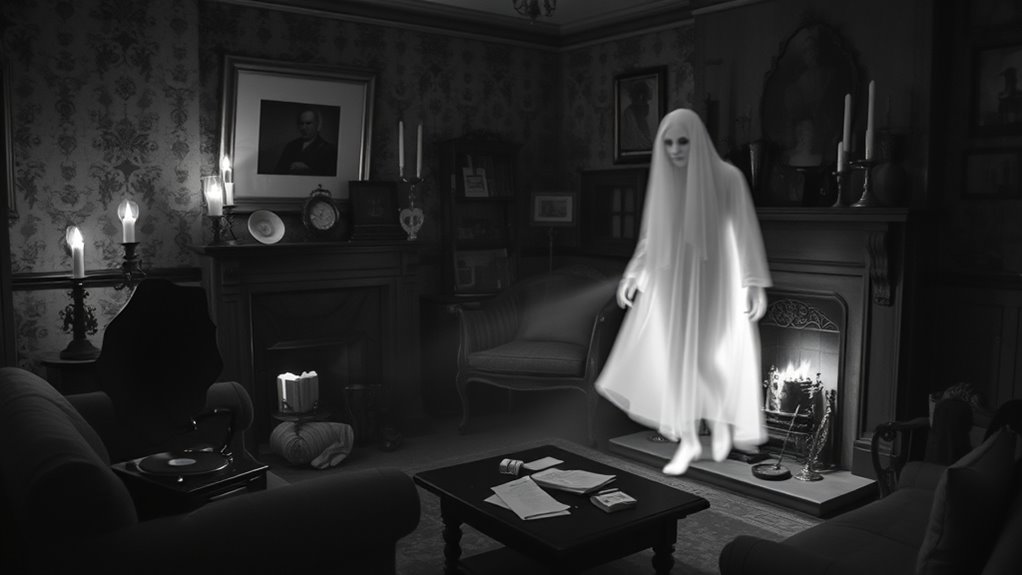
Did you know that in 1956, the Battersea Poltergeist gained notoriety as one of the most infamous paranormal cases in London? The story captivated the city and left a lasting impression on those who followed it. At the heart of this case was a series of unexplained disturbances in a residential home, which drew widespread attention from the media and the public alike. The intense media coverage played a pivotal role in shaping the narrative around the poltergeist, fueling both fascination and skepticism. As articles, radio reports, and photographs flooded newspapers, the story spread rapidly, turning a local mystery into a national sensation.
The media’s portrayal of the Battersea Poltergeist profoundly amplified its psychological impact on the community and those involved. For many witnesses and residents, the constant barrage of reports heightened feelings of fear and anxiety. People found themselves questioning their safety and sanity, as the media painted a picture of supernatural activity that seemed almost tangible. The sensationalism surrounding the case often exaggerated the events, making it difficult to discern fact from fiction. This created a sense of paranoia not just within the household, but across the entire neighborhood.
Sources from that era, including newspaper articles, police reports, and personal testimonies, serve as primary windows into the case. These sources reveal how the story was constructed and how public perception was shaped. Many reports describe objects moving on their own, strange noises, and other phenomena that defy explanation. Yet, some skeptics argue that the media sensationalized the events to sell papers, emphasizing the more dramatic aspects while downplaying mundane explanations. Despite this, the psychological impact on the witnesses remains undeniable, as many reported feelings of helplessness and fear that persisted long after the disturbances ceased. Moreover, the case illustrates how media influence can shape public understanding of paranormal phenomena.
Research into the case also points to the influence of cultural and social factors of 1950s London. The post-war era was marked by uncertainty and societal change, which may have contributed to the heightened emotions surrounding paranormal stories. The media coverage, thus, didn’t just report on the events; it helped construct a cultural phenomenon. For you, understanding these sources and their context helps grasp why the Battersea Poltergeist remains a compelling and unsettling story—one that continues to evoke curiosity and debate to this day. The case exemplifies how media coverage can shape the psychological landscape of a community, transforming a local disturbance into a legendary ghost story with enduring mystery.
Frequently Asked Questions
Were Any Similar Poltergeist Cases Documented Before 1956?
Yes, you can find historical precedents of similar poltergeist cases before 1956. Prior incidents, such as the Enfield poltergeist in the 1970s and earlier reports from the 19th century, document unexplained disturbances and supernatural phenomena. These cases often involved knocking sounds, moving objects, and other strange activities, suggesting that poltergeist phenomena have been part of human history well before the Battersea case.
How Did Local Authorities Respond to the Reports?
You see, local authorities initially responded with skepticism, often dismissing reports as pranks or mass hysteria. Their official response was limited, focusing on investigating but rarely acknowledging supernatural causes. Media coverage amplified the incident, raising public concern and curiosity. Authorities maintained a cautious stance, encouraging residents to report any unusual activity, but they didn’t take extensive action, leaving many questions unanswered about how they handled the escalating reports.
What Were the Long-Term Effects on the Battersea Community?
You might be surprised to learn that 60% of Battersea residents reported feeling more connected afterward. The long-term effects on your community include strengthened resilience and a lasting cultural impact, fostering a sense of unity through shared experiences. The event challenged perceptions and inspired local stories, helping your community grow tighter-knit and more open to future mysteries. This legacy continues to influence Battersea’s identity today.
Did Any Scientific Studies Attempt to Explain the Phenomena?
You’ll find that some scientific skepticism prompted investigations into the Battersea Poltergeist, but mainstream science struggled to explain the phenomena. Paranormal investigations were conducted, aiming to find logical causes, yet many results remained inconclusive. While these studies sought to understand the disturbances, they often highlighted the difficulty of applying scientific methods to paranormal events, leaving the true explanation elusive and fueling ongoing debate within both scientific and paranormal communities.
Are There Eyewitness Accounts From Children Involved in the Case?
You’re drawn into the haunting story through child testimonies, where eyewitness narratives become windows into their chilling experiences. These accounts act as whispers from innocence, revealing the unsettling phenomena they faced. Their voices echo like fragile glass, shattering skepticism and illuminating the mystery. As you listen, the children’s words become symbols of vulnerability and truth, cementing their role as essential witnesses to the Battersea Poltergeist’s eerie legacy.
Conclusion
So, even if you’re skeptical about the Battersea Poltergeist, remember that many witnesses reported genuine experiences during 1956. While some might doubt the authenticity, the detailed sources and firsthand accounts give weight to the story. Keep an open mind—you might be surprised by what you discover about this intriguing event. After all, exploring such mysteries can challenge your perspective and make history even more fascinating.