![A Better Way To Tie Your Gym Shorts. (Or Any Drawstring) [Video]](https://moleopedia.com/wp-content/uploads/2026/07/a-better-way-to-tie-your-gym-shorts-or-any-drawstring-video-featured-200x110.jpg)
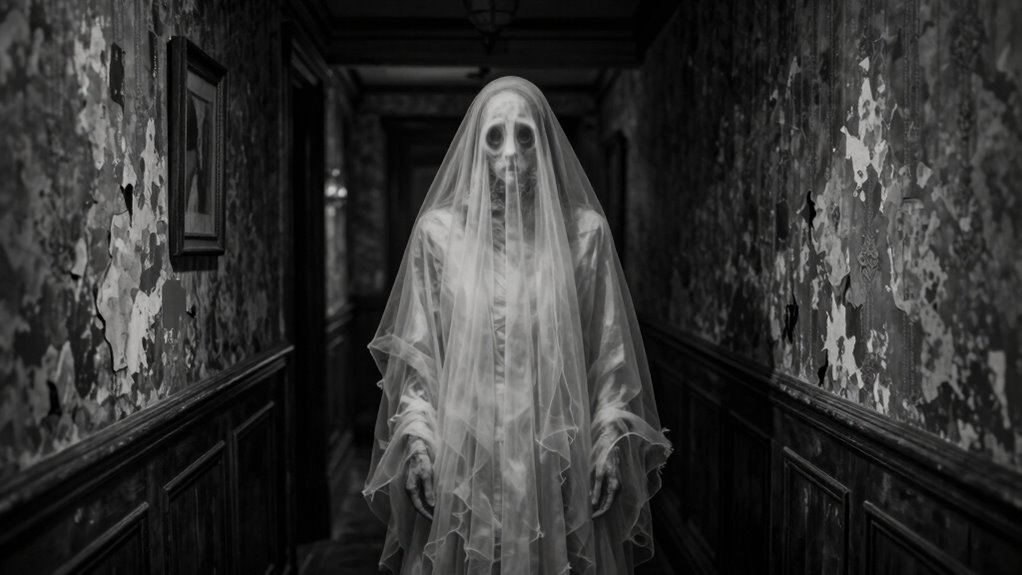
The Brown Lady photograph was taken in 1936 at Raynham Hall in Norfolk, England, using early film technology. Its eerie appearance results from long exposure times and the limitations of cameras of that era, which often created spectral-looking blurs. The photo depicts a ghostly figure believed to be Lady Dorothy Walpole’s spirit. While many argue it’s a genuine ghost, skeptics suggest it could be staged or manipulated. Exploring further uncovers the fascinating history behind this famous image.
Key Takeaways
- Taken in 1936 at Raynham Hall, Norfolk, England, this photograph is famous for allegedly capturing a ghostly apparition known as the Brown Lady.
- The image was produced using early film technology with long exposure times, causing misty, spectral effects.
- Its eerie appearance is partly due to technological limitations and unintentional photographic effects common in the 1930s.
- The photograph is linked to the legend of Lady Dorothy Walpole, believed to haunt Raynham Hall.
- Debates continue over its authenticity, with some viewing it as genuine evidence of a supernatural entity.
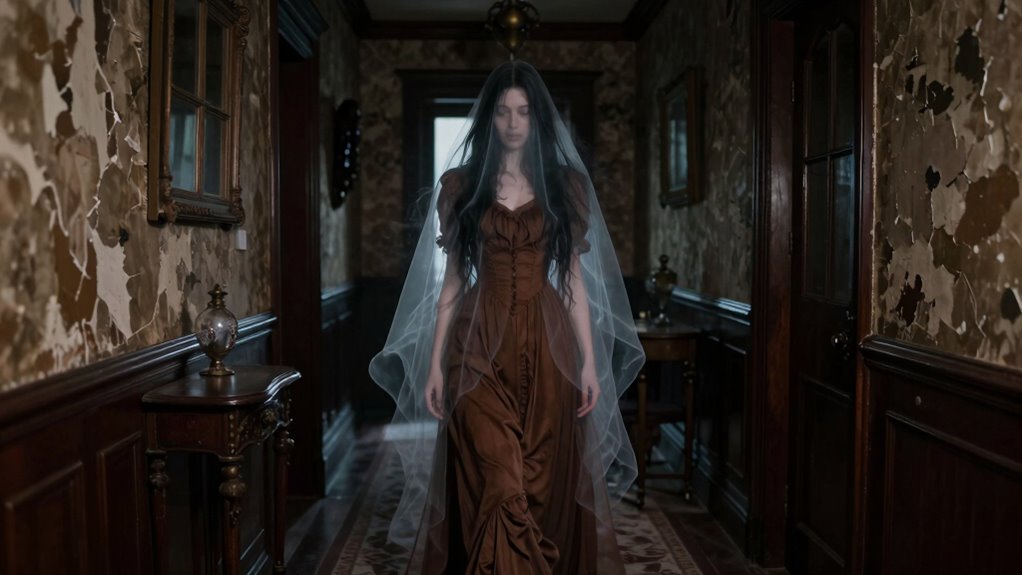
The Brown Lady photograph has captivated paranormal enthusiasts and skeptics alike for decades, but understanding its history reveals much about the mystery surrounding it. When you examine this iconic image, you’ll notice how photographic techniques of the time played a significant role in shaping its eerie reputation. Taken in 1936 at Raynham Hall in Norfolk, England, the photograph was captured using early film technology that, by today’s standards, might seem primitive. Yet, this image has persisted as one of the most convincing pieces of evidence for ghostly apparitions. The photograph’s haunting quality is partly due to the way the camera captured the faint, misty figure drifting through the hallway. Back then, long exposure times were common, which meant any movement—intentional or accidental—could produce spectral-looking blurs. This technique inadvertently contributed to the ghostly appearance of the figure, making it seem as if a mysterious presence was captured on film. Additionally, the photographic techniques used during that era often enhanced the eerie effects, whether intentionally or not. Understanding the limitations of early film technology helps explain why the image appears so ghostly and surreal. Interestingly, some experts believe that the camera technology itself may have played a role in creating the illusion, as early cameras often produced unpredictable results under certain conditions.
Furthermore, the historical context of the 1930s, with its limited understanding of photographic technology, played a crucial role in how viewers perceived the image. As you explore further, you’ll realize that the photograph’s authenticity has been debated extensively. Skeptics argue that the image could have been manipulated or staged, but supporters believe it genuinely shows a supernatural entity. The ghostly apparitions that appear in the picture seem to float eerily, with details like flowing robes and a spectral face, which heighten the sense of otherworldliness. Some suggest that the figure is the restless spirit of Lady Dorothy Walpole, who supposedly haunts Raynham Hall. Whether or not you believe in ghosts, you can’t deny the power of the image’s composition and the photographic techniques used to create such a haunting illusion.
film camera for vintage photography
As an affiliate, we earn on qualifying purchases.
As an affiliate, we earn on qualifying purchases.
Frequently Asked Questions
Was the Brown Lady Ever Confirmed to Be a Real Ghost?
You might wonder if the Brown Lady was ever confirmed as a real ghost. Spectral sightings like hers have intrigued many, but paranormal investigations haven’t provided definitive proof. While numerous witnesses claim to see her apparition, scientific validation remains elusive. So, despite ongoing curiosity and investigations, the Brown Lady’s status as an authentic ghost isn’t officially confirmed, leaving her existence in the sphere of mystery and folklore.
How Did the Photograph Influence Ghost-Hunting Culture?
The Brown Lady photograph considerably boosted ghost-hunting culture, proving that seeing is believing, at least for many. It fueled debates over photographic authenticity and became a staple in paranormal folklore, inspiring countless investigations and discussions. As a result, skeptics and believers alike started taking ghost stories more seriously, and the image became a symbol of haunting mysteries, encouraging you to look beyond the surface when exploring the supernatural world.
Are There Other Famous Ghost Photographs From the Same Era?
Yes, other famous ghost photographs from the same era exist, like the “Chillingham Castle” apparition and the “Flying Dutchman” image. The historical context of early 20th-century paranormal interest fueled their popularity. Photographic techniques such as double exposures and long exposures contributed to their eerie effects. You can see how these images reflect the era’s fascination with the supernatural, showcasing both the limitations and creativity of early photography in capturing the unexplainable.
What Equipment Was Used to Take the Brown Lady Photo?
You might find it fascinating that the Brown Lady photo was captured using a historical camera, likely a large-format film camera common in the 1920s. Photographers of that era relied on traditional photographic techniques, such as long exposures and careful lighting, to create their images. These methods, combined with the equipment’s sensitivity, helped produce the eerie, ghostly effect that makes the Brown Lady picture so enthralling and mysterious today.
Has the Brown Lady Photograph Been Officially Debunked?
Yes, the Brown Lady photograph has been officially debunked. Experts used modern photographic techniques to analyze the image and concluded that the ghostly illusions result from camera exposure issues and photographic artifacts. These techniques revealed that the eerie figure was likely caused by a combination of long exposure and reflections, rather than a supernatural event. So, the haunting image is now understood as a trick of photography rather than a genuine ghostly apparition.
Conclusion
Now, imagine witnessing the Brown Lady’s ghostly figure haunting the halls of Raynham Hall, her story echoing through time like a chilling whisper. This photograph isn’t just an image—it’s a portal to the unknown, a glimpse into a world where spirits linger and history’s secrets refuse to stay buried. As you ponder her haunting presence, you realize some mysteries are so powerful, they threaten to rewrite the very fabric of reality itself.