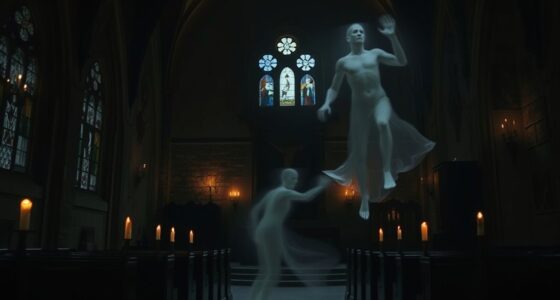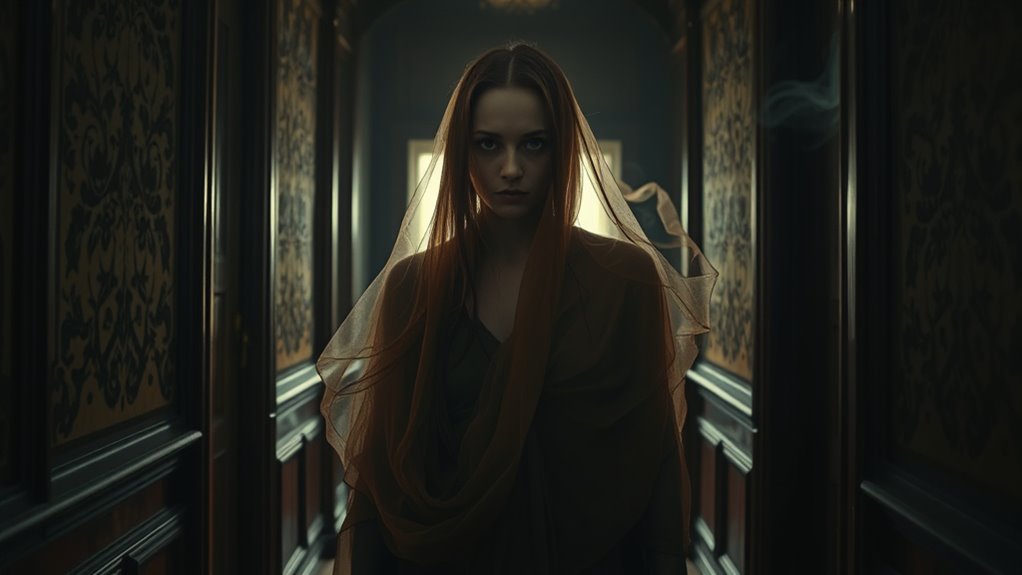
The 1936 Brown Lady photograph was taken at Raynham Hall in England and is famous for its ghostly image of a semi-transparent figure believed to be Lady Dorothy Walpole. Created with early camera technology, long exposures and photographic tricks might explain the eerie appearance. Crafted by professional photographers, its provenance adds credibility, but skeptics suggest it could be staged or manipulated. To discover more about its fascinating background, explore the details behind this iconic haunted image.
Key Takeaways
- The photograph was taken in 1936 at Raynham Hall, Norfolk, England, by photographers Hubert Provand and Indre Shira.
- It depicts a semi-transparent figure believed to be Lady Dorothy Walpole, linked to local haunted legends.
- The image was captured using early 20th-century camera technology, possibly involving long exposures or double exposure techniques.
- The credibility is supported by the photographers’ professionalism, though skeptics suggest it may be staged or a photographic trick.
- The Brown Lady photo remains an iconic piece in ghost lore, fueling debates over authenticity and supernatural phenomena.
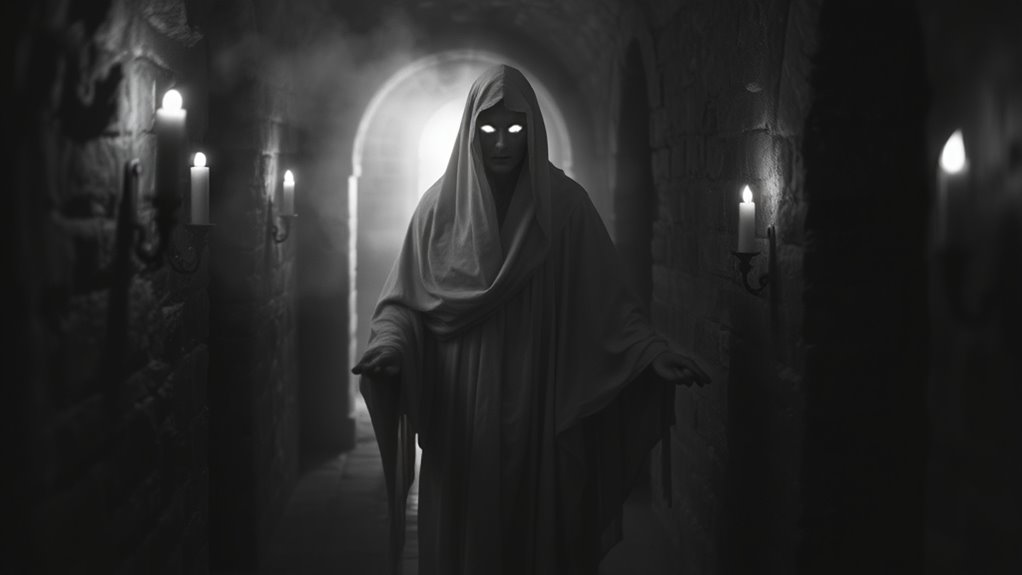
The Brown Lady Photograph of 1936 is one of the most famous and debated ghost images in history. When you first see the photo, it’s impossible not to be intrigued by the eerie figure that appears behind the castle’s walls. This haunting image has fueled countless haunted legends and sparked debates over its authenticity. Many skeptics argue it’s a clever hoax, while believers see it as compelling proof of ghostly activity. To understand its significance, you need to consider the photographic techniques used at the time and how they might have contributed to the image’s mysterious appearance.
Back in 1936, photography was still evolving, and camera technology was far from perfect. The image was taken with a box camera, which had limited control over exposure and focus. Despite this, the photograph captured a strange, semi-transparent figure that seems to float behind the castle’s walls. Its blurry, undefined form hints at the use of long exposure times, which were common then. Long exposures could easily pick up movement, creating ghostly apparitions or illusions when combined with lighting conditions or camera shake. Some experts believe that the figure’s apparition could be a result of double exposure or accidental camera movement, both common photographic techniques of that era. Others argue that the figure’s consistent appearance in multiple instances suggests something more supernatural. Additionally, the presence of photographic artifacts can sometimes produce similar ghostly effects, complicating interpretations.
In 1936, limited camera tech and long exposures created ghostly illusions behind castle walls.
The story behind the photograph adds another layer to its mystery. It was reportedly taken at Raynham Hall in Norfolk, England, a location steeped in haunted legends. The lady in the photo is believed to be the Brown Lady, Lady Dorothy Walpole, who supposedly haunts the estate. The photograph’s provenance was supported by the fact that the image was captured by two professional photographers, Captain Hubert C. Provand and Indre Shira, who were hired to document the estate. Their reputation and professionalism lend credibility to the image, though some skeptics suggest it could have been staged or manipulated. Still, the way the figure appears so suddenly and the lack of clear explanation make it a captivating piece of haunted lore.
In the end, whether you see it as a genuine ghost or a clever photographic trick, the Brown Lady photograph remains an iconic example of haunted legends and the power of photographic techniques to inspire mystery.
Top picks for "brown lady photograph"
Open Amazon search results for this keyword.
As an affiliate, we earn on qualifying purchases.
Frequently Asked Questions
What Are the Specific Locations Where the Brown Lady Was Photographed?
You can find the Brown Lady photograph taken at Raynham Hall in Norfolk, England. This historic estate’s haunted corridors are famous for sightings of the elusive ghostly figure. The photograph captures the spirit wandering through the estate’s grand rooms, adding to its reputation as a haunted site. Visitors and paranormal enthusiasts continue to explore Raynham Hall, keen to witness the eerie presence believed to be the Brown Lady herself.
How Has the Brown Lady Image Influenced Paranormal Research?
You see the Brown Lady image has markedly influenced paranormal investigations by inspiring more ghost photography and encouraging investigators to pursue tangible evidence. It helped legitimize the idea that photography can capture paranormal activity, prompting enthusiasts to explore haunted locations with cameras. As a result, the image has fueled interest in ghost hunting, increased public awareness, and shaped how paranormal research approaches visual documentation of spirits.
Are There Any Known Sightings of the Brown Lady Today?
You might still come across ghost sightings or modern encounters with the Brown Lady today. Some believe that sightings of this ghostly figure persist at Raynham Hall, where people claim to see her ghostly form drifting through the halls or appearing in photographs. While skeptics remain cautious, these modern encounters keep the legend alive, fueling ongoing interest and speculation about her continued presence in the estate.
What Technical Methods Were Used to Capture the Photograph?
You might think film techniques or photographic analysis reveal how the Brown Lady photo was taken, but some suggest double exposure or long exposure techniques created the ghostly effect. Investigating these theories, you realize experts debate whether the image’s ghostly appearance results from actual paranormal activity or photographic manipulation. The truth remains elusive, yet examining the methods used highlights how early photographic technology could produce eerie, compelling images that fuel ghost stories today.
Has the Authenticity of the Brown Lady Image Ever Been Officially Verified?
The authenticity verification of the Brown Lady photograph remains inconclusive, despite expert analyses attempting to confirm its genuineness. While some believe it’s a genuine paranormal image, skeptics argue it’s a hoax or a double exposure. You should know that no official authority has definitively verified its authenticity, leaving the debate open. The image continues to intrigue and spark discussions, but definitive proof of its authenticity remains elusive.
Conclusion
As you reflect on the Brown Lady photograph, remember how it echoes the mysteries of the past, much like the whispers of the Grey Lady haunting the halls of Blickling Hall. This haunting image reminds you that some stories, like ghostly legends, persist beyond time, inviting you to question what’s real and what’s spectral. Just as history’s shadows linger, so too does the allure of the unknown, forever enthralling those who dare to look beyond the surface.