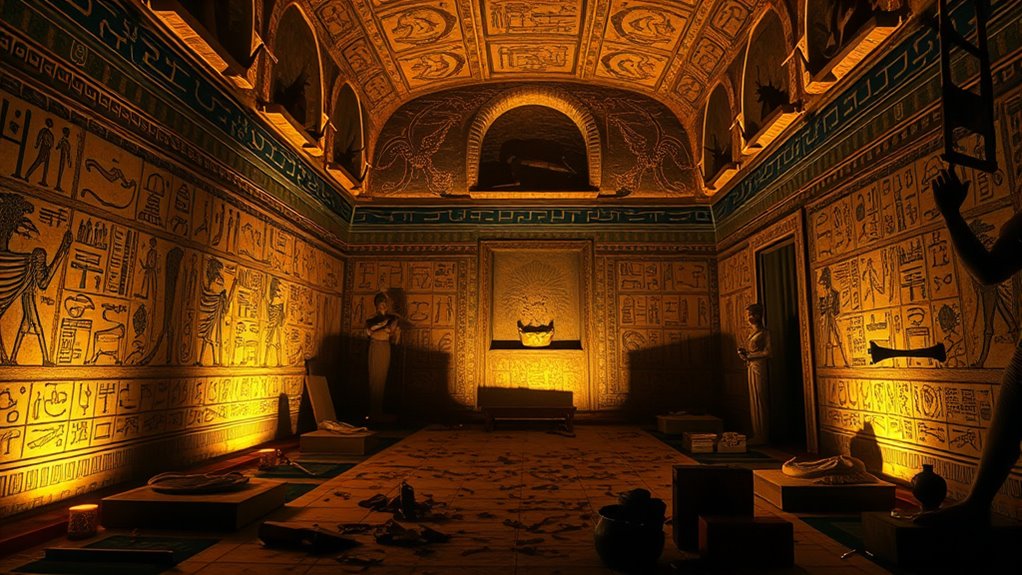

When you explore the curse of Tutankhamun’s tomb, you’ll find it’s a mix of ancient beliefs and modern stories. Discovered in 1922 by Howard Carter, the tomb’s opening was followed by a series of misfortunes and deaths among those involved, fueling fears of a supernatural curse. However, skeptics explain these incidents with natural causes and coincidence. To uncover the deeper history and lasting fascination behind this legend, keep exploring the story further.
Key Takeaways
- The curse myth originated from ancient Egyptian beliefs about protecting tombs with magical forces.
- Howard Carter’s 1922 discovery of Tutankhamun’s tomb popularized the modern legend of a supernatural curse.
- Several individuals involved in the excavation reportedly faced illnesses or deaths, fueling the curse stories.
- Scientific explanations suggest accidents, disease, and natural causes, discrediting supernatural retribution.
- Today, the curse is viewed as a media-driven myth, overshadowed by the archaeological and historical significance of the find.
Top picks for "curse tutankhamun tomb"
Open Amazon search results for this keyword.
As an affiliate, we earn on qualifying purchases.
The Discovery of the Tomb and Its Immediate Aftermath
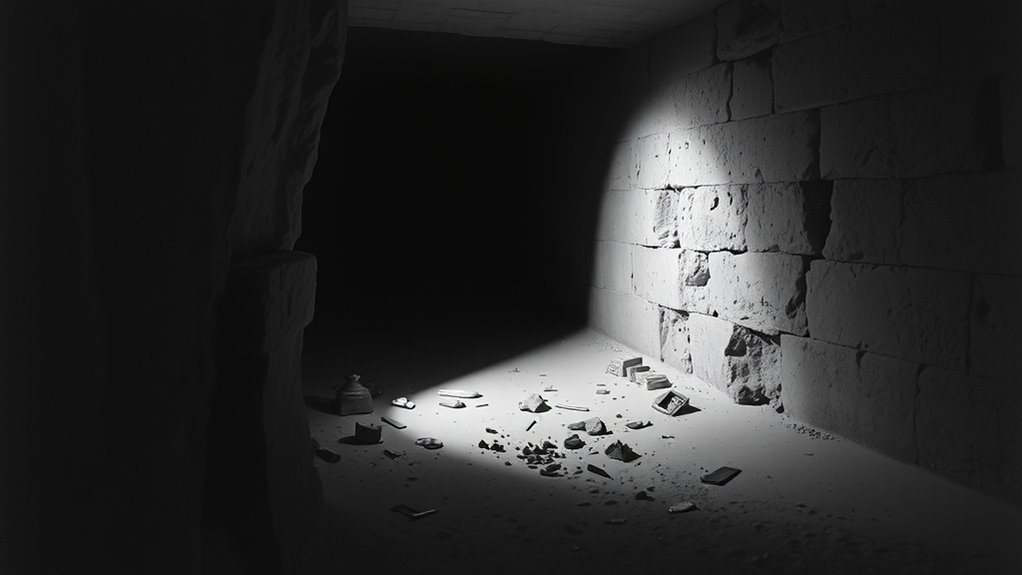
When Howard Carter finally uncovered the sealed entrance to Tutankhamun’s tomb in 1922, it marked a moment of history that captured the world’s imagination. As you step inside, you’re immersed in ancient rituals preserved for thousands of years, revealing the Egyptians’ profound beliefs about the afterlife. The tomb’s intricate artwork and artifacts echo mythical narratives about gods, kings, and eternal life. Carter’s discovery seemed to *release* a mystical world, where every chamber held secrets of a long-lost civilization. The excitement was palpable, fueling stories of curses and divine retribution. This moment wasn’t just about uncovering treasure; it was a glimpse into a culture that intertwined its rituals with myth, making the tomb’s discovery an extraordinary bridge between history and legend. The detailed craftsmanship and artifacts found within also highlight the importance of preservation techniques and study in understanding ancient civilizations. Additionally, the discovery underscored the significance of archaeological methods in uncovering and interpreting historical sites. Advances in AI in archaeology are now helping to analyze such sites more efficiently, promising new insights into our past. Modern analytical techniques are further enhancing our understanding of the materials and craftsmanship used in these ancient objects, opening new avenues for research.
The Chain of Misfortunes and Deaths Among the Excavation Team
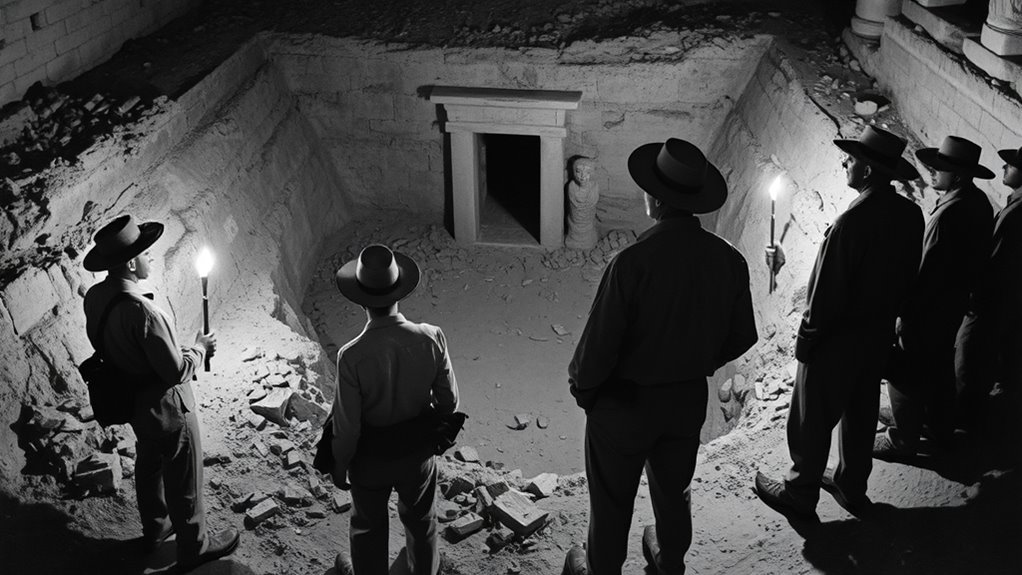
As the excavation of Tutankhamun’s tomb progressed, a disturbing pattern of misfortunes and unexplained deaths began to emerge among the team members. Some believed ancient myths and superstitious beliefs fueled these events, suggesting the tomb was cursed. Several workers fell ill unexpectedly, while others met tragic accidents, fueling fears of a supernatural force protecting the pharaoh’s resting place. The deaths were often sudden and unexplained, leading many to see them as warnings or punishment. Rumors spread that disturbing the tomb’s sacred space invoked a vengeful curse, aligning with superstitions rooted in ancient myths about curses guarding tombs. Researchers have also pointed out that dog names and other cultural symbols were sometimes found in the tomb, which some believe could have contributed to these ominous stories. These symbols, often associated with ancient rituals, might have been misinterpreted as signs of supernatural influence. Additionally, some scholars argue that superstitions surrounding tombs may have amplified fears and rumors among the team members, further fueling the perception of a curse. It is also worth noting that cost variances and other financial factors related to the excavation might have heightened tensions and anxieties among the workers, indirectly contributing to the atmosphere of superstition. You start to wonder if these tragedies were mere coincidence or if a dark, supernatural force was at play.
The Origins and Symbolism of the “Curse” Legend
The legend of a curse surrounding Tutankhamun’s tomb originates from ancient Egyptian beliefs that tombs and their contents were protected by powerful magical forces. These mystical beliefs held that disturbing a tomb could release negative repercussions, which fueled the legend’s origins. Egyptians believed that tombs contained spiritual protections and curses to safeguard the dead in the afterlife. When British archaeologist Howard Carter discovered the tomb in 1922, news spread quickly, and the idea of a supernatural curse gained traction. Symbolically, the curse represented fears of violating sacred spaces and disturbing divine order. Over time, the legend became a cultural symbol, blending ancient beliefs with modern superstition, reinforcing the idea that curses guarded the resting places of Egypt’s most sacred pharaohs. Additionally, the superstitions surrounding the curse have contributed to the enduring fascination and mystery that still surround Tutankhamun’s tomb today. These superstitions often stem from ancient Egyptian protective beliefs, which emphasized the importance of respecting the divine and sacredness of tombs. Moreover, the cultural impact of the legend continues to influence popular media and collective imagination, perpetuating the mystique of Egypt’s ancient tombs.
Skepticism and Scientific Explanations for the Incidents
Many experts believe that the supposed incidents linked to Tutankhamun’s tomb can be explained through scientific and logical reasoning rather than supernatural causes. Superstitious beliefs fueled fears of a curse, but scientific skepticism offers more plausible explanations. For instance, many of the deaths and illnesses occurred years after the tomb’s discovery, often involving pre-existing health issues or accidents. Toxic mold, bacteria, or insect infestations inside the tomb could have caused illnesses, but these risks were common in many archaeological sites. Additionally, the media sensationalized minor incidents, reinforcing the curse myth. By applying scientific skepticism, you see that these incidents are unlikely to be supernatural punishments but rather coincidences or natural consequences. This rational perspective challenges the supernatural narrative that initially fueled fears around Tutankhamun’s tomb.
The Cultural Impact and Lasting Legacy of the Curse
The supposed curse of Tutankhamun’s tomb has left an indelible mark on popular culture, shaping stories, movies, and conspiracy theories for decades. It fuels fascination with ancient beliefs about divine retribution, blending history with myth. This legacy persists despite modern skepticism, which challenges the idea of a real curse. You’ll find references to the curse in films like *The Mummy* and countless books, keeping the legend alive. The cultural impact extends beyond entertainment, influencing how people view ancient Egypt and its mysteries. Many still believe in the supernatural, while others see it as a cautionary tale about respecting history. Additionally, the reliability of payment processing plays a role in how modern businesses and institutions handle security concerns related to sensitive information. Understanding the differences between interior design and decorating can help contextualize how modern interpretations of ancient artifacts are approached, blending technical knowledge with aesthetic considerations. The enduring legacy of the curse symbolizes the timeless tension between ancient beliefs and contemporary skepticism, highlighting how myth can shape cultural narratives across generations. Moreover, the hours of retail stores reflect how public interest in these stories influences the accessibility of related exhibits and merchandise.
Frequently Asked Questions
Were Any Genuine Supernatural Forces Believed to Be Responsible for the Curse?
You might believe that ancient spirits or supernatural entities caused the curse, as many thought supernatural forces protected the tomb. Some claimed that the curse was a warning from ancient spirits to prevent interference with sacred burial sites. While skeptics see it as coincidence, believers think supernatural entities or ancient spirits were responsible for the mysterious deaths, fueling fears that unseen forces guarded Tutankhamun’s tomb.
How Did Contemporary Media Influence the Spread of the Curse Legend?
Ironically, media sensationalism fueled the legend more than any real supernatural force. You see, as stories of the curse spread, public fascination skyrocketed, feeding on headlines that amplified fears and mysteries. The media’s exaggerated coverage turned a tomb into a haunted story, making the curse seem inevitable. Your curiosity was shaped by sensational reports, demonstrating how media can transform mere rumors into cultural phenomena, regardless of truth.
What Role Did Egyptian Mythology Play in Shaping the Curse Narrative?
You see, Egyptian mythology and ancient symbolism deeply shape the curse narrative by adding mystical significance to Tutankhamun’s tomb. These myths, with their powerful symbolic meanings, evoke a sense of divine protection and wrath. The use of mythical symbolism fuels fears of supernatural punishment, making the curse seem more real and ominous. This connection between myth and symbolism helps create a compelling story that captures the imagination and heightens the tomb’s mysterious aura.
Were There Any Alternative Explanations for the Deaths Besides the Curse?
You might consider alternative explanations like ancient illnesses or tomb accidents, which could explain the deaths. Some believe that exposure to toxic mold or bacteria in the tomb caused illnesses, while others think accidents during excavation or handling might have led to fatalities. These practical reasons suggest that the mysterious deaths could be due to natural causes linked to the tomb’s environment or mishaps rather than a supernatural curse.
How Has Modern Archaeology Addressed the Fears Surrounding Ancient Tombs?
Modern archaeology addresses fears surrounding ancient tombs by emphasizing archaeological safeguards and understanding ancient rituals. You learn that careful excavation techniques and protective measures minimize risks, dispelling superstitions. Experts respect ancient rituals, ensuring respectful handling of artifacts and tombs. This approach reassures you that science and tradition work together to preserve history safely, reducing fears rooted in superstition and highlighting the importance of responsible archaeological practices today.
Conclusion
You hear the whispers of the curse, you see the shadows of misfortune, and you feel the weight of history. Whether real or imagined, the legend endures—reminding you that curiosity breeds consequences, that myths shape minds, and that history leaves its mark. As you ponder the tomb’s secrets, remember: the curse is not just of Egypt’s past but of human obsession, of stories we tell ourselves, and of mysteries we can’t escape.