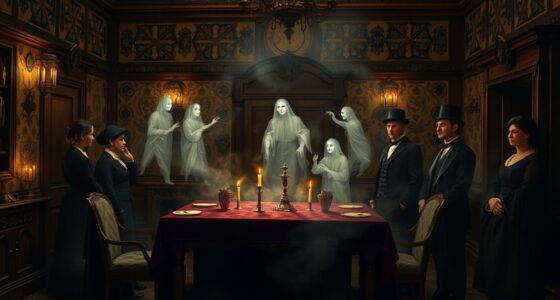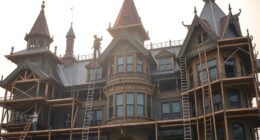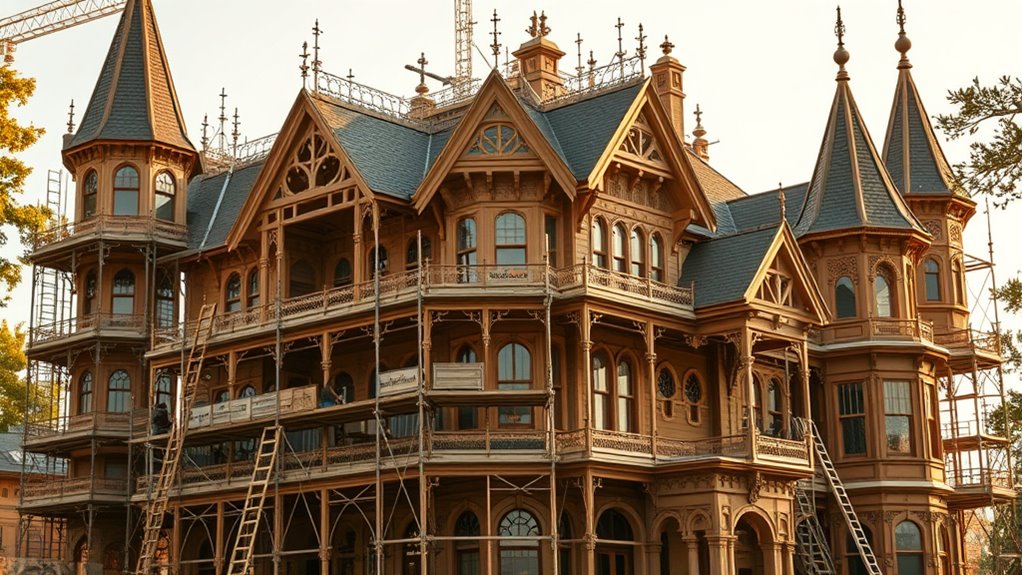

The Winchester Mystery House’s construction spanned nearly four decades, starting in 1884 and ending with Sarah Winchester’s death in 1922. Driven by her spiritual beliefs, she insisted on continuous building to appease spirits and ward off evil. The house’s bizarre, eclectic design reflects her obsession and superstition. Throughout this time, builders constantly modified the mansion, making it an ever-evolving labyrinth. If you explore further, you’ll uncover more surprising facts behind this mysterious, endlessly evolving mansion.
Key Takeaways
- The house’s construction began in 1884 and continued until Sarah Winchester’s death in 1922, spanning nearly four decades.
- Its architecture features eclectic styles, complex layouts, and bizarre features, reflecting Winchester’s spiritual beliefs and obsession.
- Construction was continuous and unplanned, driven by her desire to appease spirits and ward off evil through perpetual building.
- Sources include historical records, architectural analyses, and Winchester House tours that highlight its design, timeline, and spiritual symbolism.
- The house’s mystique stems from its endless construction, symbolic features, and the influence of spiritualism on its unique architecture.
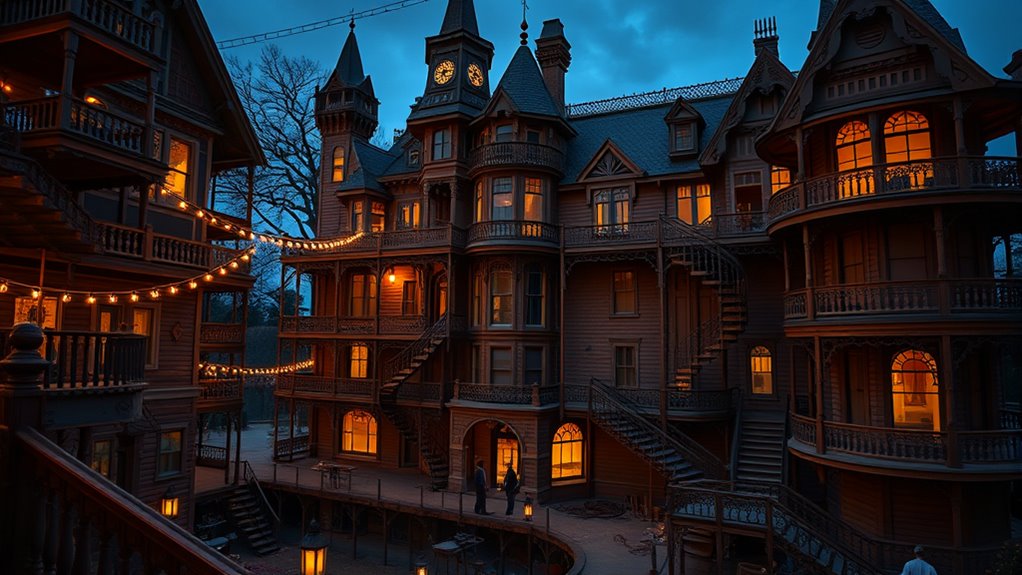
The construction of the Winchester Mystery House is a fascinating story of ambition, superstition, and relentless effort. As you explore its history, you’ll realize that its architectural design is as complex as it is mysterious. The house’s layout defies traditional logic, featuring staircases that lead nowhere, doors opening into walls, and windows overlooking other rooms. This intricate design wasn’t accidental; it was carefully crafted to embody the spiritual beliefs of its creator, Sarah Winchester. She believed that building endlessly would appease the spirits of those killed by Winchester firearms, and her architectural choices reflect this obsession. The house’s design incorporates a variety of styles, from Victorian to Queen Anne, creating an eclectic, almost whimsical appearance that hints at the ongoing, unending construction process.
Understanding the construction timeline helps you appreciate the scope and dedication involved. Sarah Winchester began building the house in 1884, shortly after her husband’s death, and continued expanding it until her own passing in 1922. Over these nearly four decades, the house grew from a modest farmhouse into a sprawling maze of over 160 rooms, countless staircases, secret passages, and bizarre architectural features. The timeline is marked by continuous work, often without a clear plan or end date, which adds to the house’s mystique. During this period, builders and craftsmen worked tirelessly, driven by Winchester’s desire to create a labyrinth that would confuse spirits. This relentless construction is evident in the house’s irregular floor plans, multiple rooflines, and unusual features, all of which evolved over time. The ongoing construction reflects not only her spiritual beliefs but also her desire to keep the house in a perpetual state of flux, never truly finished.
As you walk through the house today, you’ll notice how the architectural design reflects not only Victorian opulence but also an almost obsessive need for secrecy and protection. Sarah Winchester’s obsession with spiritualism and superstition heavily influenced her decisions, leading her to incorporate features intended to ward off evil spirits. The construction timeline reveals that she was constantly modifying the house, adding new rooms or altering existing ones based on her intuition and beliefs. This ongoing, unending process meant the house was never truly finished, giving it a sense of perpetual mystery.
Frequently Asked Questions
What Inspired the House’s Unique Architectural Style?
You’re inspired by Victorian extravagance and Gothic revival styles, which shape the house’s unique architecture. The intricate details, winding hallways, and unusual design elements reflect a mix of opulence and Gothic influence. These styles emphasize ornate decorations and dramatic features, creating a mysterious, fantastical atmosphere. The house’s architecture embodies a blend of historical grandeur and eccentricity, making it a truly iconic and enthralling structure.
Were Any Supernatural Events Reported During Construction?
Imagine you’re in the house and suddenly hear whispers—yes, ghost sightings and supernatural claims were reported during construction. People believed the spirits of those affected by Winchester rifles influenced the eerie, maze-like design. Workers and visitors alike shared stories of unexplained noises and apparitions, fueling the house’s haunted reputation. It’s like living in a horror movie, where every creak might be a ghost trying to tell you something from beyond.
How Did the House Influence Local Architecture?
You’ll notice that the Winchester Mystery House greatly influenced local architecture through its unique blend of Victorian aesthetics and architectural innovation. Its elaborate design, with intricate details and unconventional layouts, inspired other builders to embrace Victorian styles while experimenting with new structural ideas. The house’s distinctive features encouraged local architects to push creative boundaries, making the Winchester a symbol of both historical elegance and innovative craftsmanship in the community.
What Materials Were Predominantly Used in Construction?
Imagine walking through the Winchester House, where wood and brick are your primary building material choices. You notice how the construction techniques blend these materials seamlessly, creating the house’s intricate design. The house chiefly used wood for framing and interior details, while brick formed the exterior walls. This combination showcases practical building material choices and innovative construction techniques, making the house both durable and mysterious, reflecting its unique architectural style.
Are There Any Hidden Rooms or Secret Passages?
Yes, you’ll find numerous hidden passages and secret rooms throughout the Winchester Mystery House. As you explore, you might discover concealed doorways, staircases leading nowhere, or small, hidden chambers designed to surprise visitors. These secret rooms add to the house’s mysterious allure, making it a fascinating maze of hidden passages and concealed spaces that reflect Sarah Winchester’s unique vision and obsession with secrecy.
Conclusion
As you explore the Winchester Mystery House, remember that over 150 rooms were added during its 38-year construction. This relentless building spree reflects Sarah Winchester’s obsession with spiritual protection. Fascinatingly, the house’s maze-like design and staircases leading nowhere symbolize her attempts to confuse spirits. So, next time you visit, consider how one woman’s fear transformed into a legendary, mysterious mansion with a history as complex as its architecture.