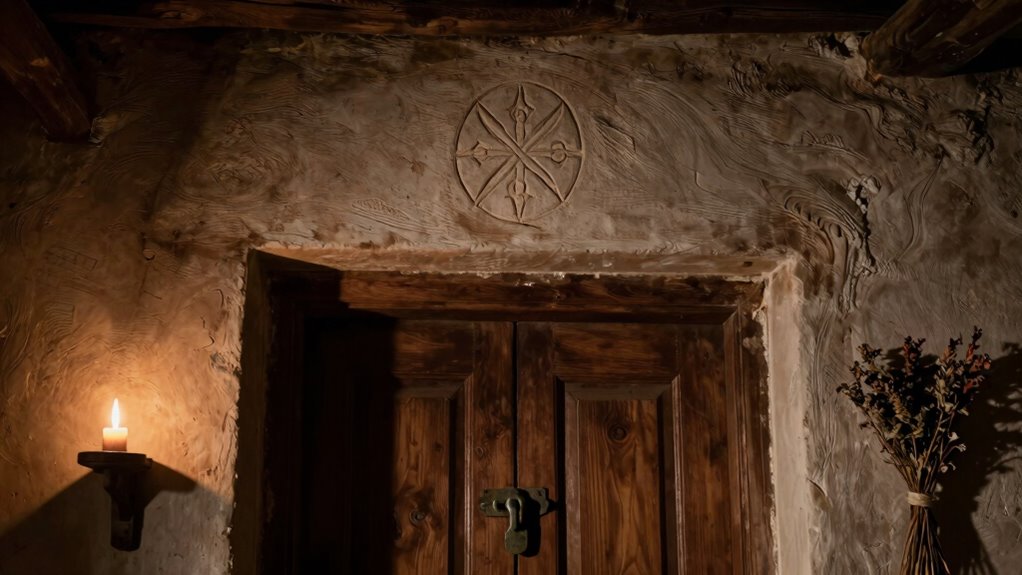

Witch marks were carved or painted near entrances, fireplaces, or vulnerable spots in homes to act as invisible shields against evil spirits. You might find symbols like crosses, stars, or sigils, each believed to hold specific protective powers. These marks were passed down through generations and served as spiritual tools to trap or repel harmful entities, reinforcing a sense of safety and security. To uncover more about how these symbols worked, keep exploring their fascinating histories.

Get books and cozy reading nights delivered free with Prime
- Fast, free delivery on millions of items
- Prime Video, Amazon Music and more included
- Member-only deals all year
Key Takeaways
- Witch marks were carved or painted near entrances to serve as invisible shields against evil spirits.
- They often included symbols like crosses, stars, or sigils believed to invoke divine protection.
- Placed in vulnerable areas, these marks aimed to trap or repel malevolent entities entering the home.
- The symbols were passed down through generations and held cultural and spiritual significance.
- Today, they are viewed as historical artifacts representing folk beliefs in safeguarding homes.
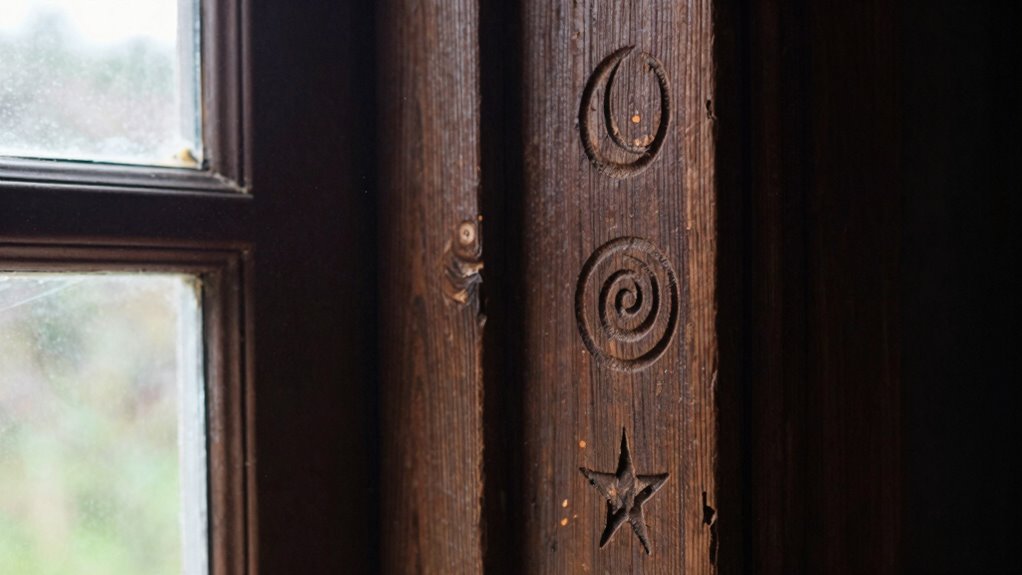
Have you ever wondered why some old homes feature strange symbols or marks carved into their walls? These markings, often called witch marks or protective symbols, have a long history rooted in centuries of tradition. Their origins trace back to a time when people believed in the power of symbols to ward off evil spirits, protect their families, and bring good luck. Historically, these marks served a practical purpose: they were thought to trap or repel malevolent entities that might otherwise enter a home or cause harm. The symbols ranged from simple crosses and circles to more complex sigils, each with a specific meaning or intended effect. These markings were typically placed near entrances, fireplaces, or other vulnerable points within the home, acting as invisible shields against negative influences.
The historical origins of these marks reveal a blend of folk beliefs, religious practices, and superstitions. In medieval Europe, for example, people carved symbols like crosses, stars, or protective runes into walls during building or renovation to invoke divine protection. Some marks were associated with specific saints or spiritual traditions, believed to carry divine power capable of warding off evil. Over time, these symbols became an integral part of folk culture, passed down through generations, often carved or painted by hand. Because many of these marks were hidden or subtle, they could be easily overlooked by outsiders, but they held deep significance for those who believed in their protective power. Additionally, some of these symbols were thought to serve as rituals for protection, reinforcing their spiritual importance. Modern research into these symbols reveals that they often incorporate protective sigils based on cultural and religious influences. The design and placement of these marks often reflected specific superstitions that aimed to maximize their protective qualities. Furthermore, some scholars suggest that these symbols were also intended to connect with divine forces and harness spiritual energy for safeguarding the household. In some cases, these symbols served as a form of ancestral protection, linking the present with longstanding traditions of safeguarding the home.
Today, modern interpretations of witch marks tend to view them through a different lens. Many see these symbols as cultural artifacts or expressions of historical beliefs rather than literal protections. Some enthusiasts and historians explore them as part of local heritage or folklore, appreciating their craftsmanship and symbolic meaning. Others incorporate them into spiritual practices or as decorative elements that evoke a sense of history and mysticism. Despite the shift in perspective, the core idea remains: these marks symbolize a desire for safety, security, and the warding off of harm. Whether seen as ancient charms or symbolic reminders of past beliefs, they continue to fascinate and inspire curiosity. In the end, these symbols remind us that humans have long sought ways to protect themselves, blending superstition, faith, and community in a shared effort to keep danger at bay.
protective witch mark wall carvings
As an affiliate, we earn on qualifying purchases.
As an affiliate, we earn on qualifying purchases.
Frequently Asked Questions
Were Witch Marks Believed to Have Magical Properties Beyond Protection?
Yes, witch marks were believed to have magical properties beyond protection. You might see them as ancient symbols with deep ritual significance, thought to harness supernatural forces. These marks weren’t just protective charms; they were considered to channel positive energy, ward off evil spirits, and even influence luck or health. Their intricate designs reflected a rich tradition of ritual symbolism, making them powerful talismans in both spiritual and everyday life.
How Did the Design of Witch Marks Vary Across Different Regions?
You’ll notice regional variations in witch mark designs, as different areas adapted symbols based on local beliefs and traditions. Design differences include the shapes, such as crosses, circles, or lines, which varied depending on the region’s supernatural perceptions. In some places, marks were simple and geometric, while in others, they were elaborate and artistic. These regional variations reflect diverse cultural influences and specific protective needs across different communities.
Were Witch Marks Used Exclusively in Residential Homes or in Other Buildings?
You’ll find that these symbolic inscriptions weren’t limited to residential homes—they also graced ancient architecture like churches, barns, and town halls. Think of them as silent guardians, woven into the very fabric of various buildings to ward off harm. These marks served as protective charms, guarding not just households but entire structures, demonstrating their widespread use in securing both personal spaces and communal landmarks from negative influences.
Did People Intentionally Hide or Conceal Witch Marks?
Yes, people often intentionally hid or concealed witch marks. They believed these hidden symbols, like protective symbols, would ward off evil spirits but needed to stay secret to avoid suspicion or persecution. Sometimes, they placed these symbols in discreet spots, under floorboards, behind walls, or covered with plaster. Concealing the marks helped guarantee their protective power remained effective while preventing outsiders from discovering and misusing them.
Are There Any Surviving Records Detailing the Creation of Witch Marks?
Yes, there are surviving records detailing the creation of witch marks. Historical documentation from witch hunts and superstitious practices often describe these marks as symbols or carvings meant to ward off evil spirits. While some records are incomplete or biased, they offer insights into how people believed in their protective power. These documents help us understand the superstitions and fears that led to the creation of witch marks in homes.
Conclusion
You might be surprised to learn that during the witch hunts, over 80% of homes in certain regions featured protective marks like symbols or crosses. These marks weren’t just superstition—they served as powerful symbols believed to ward off evil spirits and protect families. By understanding the significance of these markings, you gain insight into how ancient communities combated fear and uncertainty. Remember, these symbols reflect a deep desire for safety and spiritual protection that still resonates today.
Halloween Picks
halloween
As an affiliate, we earn on qualifying purchases.