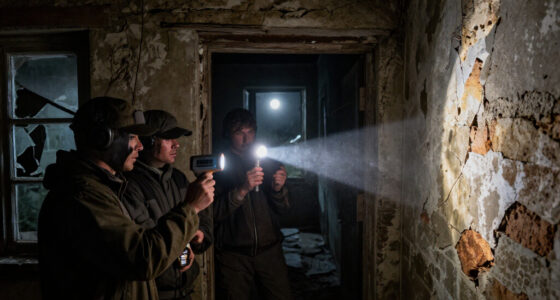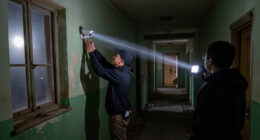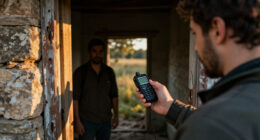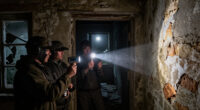
Choosing ghost hunting equipment is less about buying the biggest collection of gadgets and more about deciding how much gear you can usefully manage. A basic kit might include a flashlight, notebook, audio recorder, and one environmental meter. An advanced kit may add multiple sensors, cameras, thermal imaging, and monitoring equipment. Both can support a structured investigation, but neither device can establish that a ghost caused an unusual result.

Get books and cozy reading nights delivered free with Prime
- Fast, free delivery on millions of items
- Prime Video, Amazon Music and more included
- Member-only deals all year

Sam and Colby XPLR Spirit Box – Paranormal Detection Equipment
- ✔ Functions: AM/FM scanning, EMF meter, temperature sensors, EVP recording
- ✔ Power: AAA batteries
- ✔ Audio: Built-in microphone and speaker; headphone jack

Ghost Hunting Equipment Kit with EMF Meter, EVP Recorder, UV Flashlight, Brass Detection Rods, Infrared Thermometer, Radio, Speak…
- ✔ Brand: Deerdtride
- ✔ Number of pieces: 11
- ✔ Case dimensions: 11.8 x 7.9 x 3.8 inches
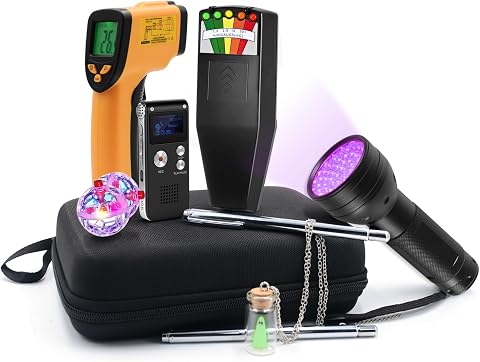
9-Piece Ghost Hunting Equipment Set
- ✔ Brand: fatyehx
- ✔ Number of pieces: 9
- ✔ Weight: 0.81 kg
The real tradeoff is coverage versus cost and complexity. A basic setup suits newcomers, casual visits, and investigators who want to document observations without juggling equipment. An advanced setup can help experienced teams record several kinds of data at once, provided they understand calibration, environmental interference, and how to review recordings critically. The sections below compare the two approaches by practical decision criteria.
At a Glance
| Criteria | Basic ghost hunting kit | Advanced ghost hunting kit | Winner |
|---|---|---|---|
| Upfront cost | Usually lower; core tools can be bought individually | Higher; specialist cameras and multiple sensors add cost | A |
| Ease of use | Straightforward for beginners and small teams | Requires setup, coordination, and practice | A |
| Range of measurements | Limited to a few instruments, often one environmental meter | Can cover more environmental readings and sensor types | B |
| Audio and visual documentation | Basic recorder and phone or camera may be enough | May include dedicated recorders, cameras, and thermal imaging | B |
| Portability | Lightweight and easy to carry | Bulkier, with batteries, mounts, and accessories to carry | A |
| Data interpretation | Fewer readings to manage, though readings still need context | More data to compare; greater risk of misreading signals | A |
| Room to expand | Easy to add equipment gradually | Often broad from the outset, but additions can be costly | Depends |
Sam and Colby XPLR Spirit Box – Paranormal Detection Equipment
The XPLR Spirit Box is our lead pick for someone who wants to bring one device and get started without organizing a case of separate tools. It combines AM/FM radio scanning with an EMF meter, temperature sensors, and EVP recording. That integrated approach makes it simpler to move between listening and basic environmental checks than either multi-piece kit, where tools have to be taken out and managed individually.Its headphone jack and built-in speaker allow for private listening or shared playback, and the backlit display is useful when a session takes place in dim conditions. At 3.84 ounces, it is notably light on the supplied specifications. The tradeoff is that combining functions does not make it the most comprehensive choice: the Deerdtride kit adds an infrared thermometer, UV flashlight, rods, and motion-activated balls. The XPLR is also AAA-powered, so long outings call for spare batteries. We would choose it for convenience, not as a substitute for dedicated instruments or evidence that a sound has a paranormal source.
Pros:
- Combines radio scanning, EMF, temperature sensing, and EVP recording in one unit.
- Very light at a listed 3.84 ounces.
- Headphone jack and speaker offer two ways to monitor audio.
- Backlit display suits dim investigation settings.
Cons:
- AAA battery power means planning for replacements during longer sessions.
- Does not include the UV light, rods, or motion props found in the larger kits.
- Radio scanning and recorded sounds can be ambiguous and need cautious interpretation.
Best for: Investigators who want a lightweight, all-in-one device for casual sessions and do not want to carry several separate tools.
Not ideal for: Buyers who want a full kit with multiple physical tools, or who need detailed controls and documentation from dedicated recording and measurement equipment.
Bottom line: We recommend the XPLR as the easiest option to carry and operate when one compact device matters more than a broad kit.
“We recommend the XPLR as the easiest option to carry and operate when one compact device matters more than a broad kit.”
Ghost Hunting Equipment Kit with EMF Meter, EVP Recorder, UV Flashlight, Brass Detection Rods, Infrared Thermometer, Radio, Speak…
For a group that wants to try several investigation activities in one outing, the Deerdtride kit is the most comprehensive option here. Its 11 listed pieces include an EMF detector, EVP recorder, infrared thermometer, UV flashlight, radio, speaker, brass detection rods, and motion-activated cat balls. Compared with the XPLR, it asks us to carry and manage separate tools, but gives us a wider range of ways to observe, record, and stage an investigation.The customizable foam case makes that assortment easier to transport and keep organized. The supplied specs also give the EMF detector a 0–20+ mG range and the recorder 8GB of capacity, stated as up to 36 hours. Those numbers help describe the equipment, but they do not validate paranormal interpretations. The main downside is that a kit’s breadth can become clutter if only a few tools fit your style. The included speaker may also be less powerful than dedicated audio gear. Compared with the smaller fatyehx set, Deerdtride offers more pieces and more stated recorder capacity, but requires a larger case and more setup.
Pros:
- Broad 11-piece selection spans audio, environmental checks, lighting, and activity props.
- Customizable foam case supports organized transport.
- Recorder lists 8GB capacity and up to 36 hours of recording.
- Infrared thermometer range is specified as -50°C to 400°C.
Cons:
- The speaker may not match the output of dedicated audio equipment.
- The variety adds bulk and can complicate setup compared with the XPLR.
- Tools such as rods and cat balls are exploratory props, not proof of paranormal activity.
Best for: Hobbyists, small groups, or gift buyers who want a broad selection of investigation props and measurement tools packed in one case.
Not ideal for: Travelers prioritizing a minimal load, or investigators who need robust audio playback and professional-grade measurement documentation.
Bottom line: We place Deerdtride first for buyers who want the widest kit and can make use of its extra pieces.
“We place Deerdtride first for buyers who want the widest kit and can make use of its extra pieces.”
9-Piece Ghost Hunting Equipment Set
The fatyehx set is a sensible middle ground for buyers who want more than the XPLR’s integrated functions but do not need the Deerdtride kit’s full 11-piece lineup. It brings together an EMF meter, EVP recorder, infrared temperature gun, UV flashlight, copper dowsing rods, cat balls, and a ghost necklace in a compact 8.7 x 6.3 x 2.8 inch case. That smaller stated footprint gives it a portability advantage over Deerdtride, especially for casual outings where the goal is to sample several activities.Its one-year warranty is a useful distinction in this comparison, while the 99.9% copper specification describes the rods’ material. Neither detail says much about the accuracy or usefulness of the other instruments. The set’s drawbacks are more pronounced than the XPLR’s: the description flags predominantly plastic construction, which may feel less durable, and some included items are novelty props. Compared with Deerdtride, it gives up two pieces and does not list the same 8GB recorder capacity, but its case is smaller. Choose it when compact storage and variety matter; skip it if sturdy construction or focused, documented measurements are your priorities.
Pros:
- Compact case is smaller in stated dimensions than the Deerdtride case.
- Includes an EMF meter, recorder, infrared temperature gun, and UV flashlight.
- Copper rods and activity props add variety for hobby investigations.
- One-year warranty is specified.
Cons:
- Predominantly plastic construction may feel less durable.
- Fewer pieces than the Deerdtride kit.
- The included novelty items do not establish supernatural activity.
Best for: Casual enthusiasts who want a small carry case with several familiar investigation tools and appreciate a stated one-year warranty.
Not ideal for: Frequent field users seeking sturdy construction, detailed instrument specifications, or a more complete assortment than the 11-piece Deerdtride kit.
Bottom line: We recommend fatyehx for a compact starter assortment when portability matters more than the broadest selection or rugged construction.
“We recommend fatyehx for a compact starter assortment when portability matters more than the broadest selection or rugged construction.”
As an Amazon Associate we earn from qualifying purchases.
Key Differences
The clearest difference is how much evidence collection the setup supports. A basic kit keeps attention on a small number of observations: what was heard, what changed, and what conditions were present. That makes it easier to log events carefully and check ordinary explanations such as drafts, nearby electronics, traffic, or building sounds. Its limitation is coverage. If a team wants synchronized audio, video, and environmental readings, a few simple tools may leave gaps.
An advanced kit offers more recording channels, not automatic proof or better conclusions. Additional meters and cameras can help experienced investigators compare events across a room or time period, but they also create more opportunities for battery failure, interference, setup errors, and ambiguous results. For most newcomers, a basic setup is the better value. The premium is worthwhile when a team has a clear recording plan, can interpret each instrument, and will use the extra equipment often.
Detailed Comparison
Upfront cost (Basic ghost hunting kit wins — major)
A basic kit wins by a major margin because it can be assembled from a few affordable tools, and the investigator can add items only when a specific need appears. Advanced kits can become expensive once dedicated cameras, thermal devices, multiple meters, mounts, and spare power are included. Pay more only if those added tools will support a repeatable method; a large kit bought for occasional curiosity is poor value.
Ease of use (Basic ghost hunting kit wins — moderate)
A basic kit is the clear, moderate-to-major winner for ease. Fewer devices mean less setup and fewer controls to learn, leaving more attention for note-taking and observation. Advanced gear asks users to manage settings, time stamps, placement, and power across several devices. That burden is manageable for a practiced team, but can distract a first-time investigator from recording what happened.
Range of measurements (Advanced ghost hunting kit wins — moderate)
The advanced kit wins by a moderate margin when it includes different environmental sensors and the team knows why each is being used. Multiple instruments may help identify whether a reported event coincided with a change in temperature, sound, or another measured condition. A basic kit covers fewer variables. More readings do not identify a supernatural cause, though; sensors measure their designed inputs, which may have ordinary explanations.
Audio and visual documentation (Advanced ghost hunting kit wins — moderate)
An advanced kit generally wins by a moderate margin through dedicated recorders, cameras, or thermal imaging, and sometimes the ability to capture more than one perspective at once. This can make later review easier when devices are synchronized and placed thoughtfully. A basic recorder or phone can still capture useful context at much lower cost. Neither setup guarantees clear recordings, and visual artifacts or unclear sounds require cautious interpretation.
Portability (Basic ghost hunting kit wins — moderate)
A basic kit wins by a moderate margin because fewer devices are easier to carry, store, and set up in unfamiliar spaces. An advanced kit may require cases, mounts, chargers, spare batteries, and time to position each device. This matters on walks, at locations with limited access, or for a small team. If the investigation takes place in one controlled location with a group, the extra load may be less important.
Data interpretation (Basic ghost hunting kit wins — minor)
A basic kit has a modest practical advantage for most users because it produces fewer readings to organize and cross-check. Advanced equipment can provide richer records, but only when users understand limitations and keep a clear log of time, location, settings, and surrounding conditions. Without that discipline, the extra data can encourage confident interpretations of noise or sensor fluctuations. The advantage shifts to B for experienced teams with a review process.
Room to expand (minor difference)
This is a close call. A basic kit makes gradual expansion affordable: start with dependable essentials, then add a device if a recurring investigation question justifies it. An advanced kit may already cover more needs, but can lock the buyer into greater cost and a more complicated setup. A wins for cautious buyers; B makes sense when the team has settled on a method and knows which equipment it will use.
Basic ghost hunting kit: Pros and Cons
Pros:
- Lower initial cost and easy gradual upgrades
- Simple to carry, set up, and learn
- Keeps attention on observation and careful notes
Cons:
- Fewer measurement types and recording angles
- May not suit teams seeking synchronized, multi-device coverage
- Basic tools still require context and cautious interpretation
Advanced ghost hunting kit: Pros and Cons
Pros:
- Can record more types of data at once
- Dedicated cameras or recorders may support later review
- Better fit for experienced teams with a defined protocol
Cons:
- Higher cost, with accessories and replacement power adding up
- More setup, maintenance, and interpretation work
- Extra readings can be mistaken for stronger evidence
Who Should Choose What
Choose Basic ghost hunting kit if:
- You are new to investigations or expect only occasional outings.
- You want to keep costs down and learn how to document observations first.
- You need a portable setup for one or two people.
Choose Advanced ghost hunting kit if:
- You investigate regularly and have a written method for placing and logging devices.
- Your team will use multiple recording channels and can review their limitations.
- You can afford the added equipment without treating its readings as proof.
Skip both if: Skip both if you expect equipment to confirm a haunting by itself; instruments record specific conditions, and unusual readings need ordinary explanations checked.
Value for Money
For most people, the basic kit is the better value. A notebook, reliable flashlight, audio recorder, and carefully chosen meter can support organized observations without a large purchase. Spend more only when an advanced device solves a recurring problem, such as recording several viewpoints or monitoring a location over time, and when the team knows how to interpret its output. Expensive equipment does not make a conclusion more reliable on its own; training, consistent logging, and ruling out ordinary causes matter more.
Final Verdict
Choose a basic ghost hunting kit if you are starting out, investigating casually, or want to learn disciplined documentation before buying specialist gear. It delivers the strongest value for most users because it is cheaper, simpler, and easier to review. Choose an advanced kit if you investigate regularly, need several synchronized recording channels, and have the skills to manage and interpret them. The deciding factor is whether you have a practical use for the extra data. If not, keep the money and build your method first.
Frequently Asked Questions
What should a beginner include in a ghost hunting kit?
Start with a dependable flashlight, notebook, basic audio recorder, spare batteries, and one instrument suited to a clear purpose. Learn each device’s limits and record times, locations, and conditions. Add equipment only when you can explain what question it will help answer.
Does more ghost hunting equipment produce better evidence?
Not automatically. More devices can capture more kinds of information, but they also create more readings to interpret and more chances for interference or setup mistakes. Clear methods and careful checks of ordinary causes matter more than the size of the kit.
Is thermal imaging worth paying extra for?
It can be useful for documenting temperature patterns, but a thermal camera does not identify ghosts. Buy one if your investigations require thermal records and you understand how surfaces, airflow, reflections, and device settings affect the image. Otherwise, a basic setup offers better value.
Can a basic kit record an investigation adequately?
Yes, for many small or informal investigations. A recorder, notes, and a small number of instruments can preserve observations and context. A basic kit is less suited to teams that need multiple simultaneous viewpoints or extended monitoring.