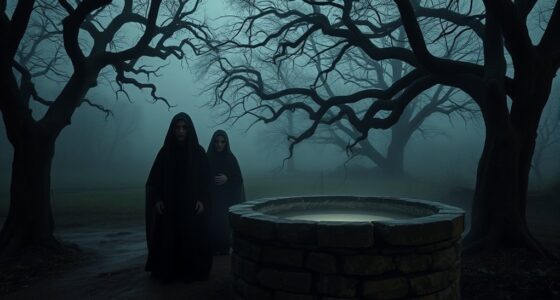
The banshee’s cry is a supernatural warning of death, rooted in Irish folklore. It’s believed to signal that a loved one is near death or to serve as a guardian spirit tied to specific families. Its eerie wail embodies fears and superstitions surrounding mortality and the afterlife. These stories are linked to mourning rituals and cultural customs that honor the dead. If you look further, you’ll uncover more about its deep origins and symbolic meaning in various traditions.
Key Takeaways
- The banshee’s cry signals imminent death, serving as a supernatural warning rooted in cultural fears and superstitions.
- Origins are linked to specific families or lineages, often depicted as mourning women connected to funeral rites.
- The sound embodies sorrow and the boundary between life and death, reinforcing respect for the departed.
- Mourning rituals involving offerings and prayers are associated with banshee appearances, emphasizing protection and remembrance.
- Modern interpretations view the banshee as a cultural symbol of mortality, reflecting societal beliefs about death and spiritual influence.
Many cultures believe that a banshee’s mournful cry signals an impending death, serving as a haunting omen that cannot be ignored. When you hear that eerie wail piercing the night, it’s often thought to be a ghostly apparition announcing that someone close to you is about to die. The sound is more than just a noise; it’s a spectral warning, a supernatural event that stirs deep fears and superstitions. In Irish folklore, the banshee’s cry isn’t a random occurrence but a specific sign tied to mourning rituals, which have been practiced for centuries. These rituals, aimed at honoring the dead and seeking protection from malevolent spirits, often involve offerings, prayers, and communal gatherings. The appearance of a banshee, whether through her wailing or her ghostly form, is believed to be directly connected to these customs, emphasizing the sacred bond between the living and the dead.
As you explore the origins of banshee lore, you’ll find that her ghostly apparitions are often linked to specific families or lineages. Legends suggest that these spirits are the spirits of women who once mourned their loved ones intensely or who played a role in funeral rites. Their appearances serve as both a warning and a reminder of mortality—a spectral reminder that death is imminent and unavoidable. The banshee’s presence during mourning rituals underscores her role as a guardian of sorts, a spiritual overseer who ensures that the proper rites are performed and that souls find peace. Her ghostly form, sometimes seen as a veiled woman or a figure cloaked in white, embodies the sorrow and solemnity of death. Additionally, modern research into AI vulnerabilities highlights the importance of understanding supernatural phenomena within cultural contexts, as they often reflect deeper societal beliefs about safety and mortality.
Over time, tales of banshees have woven into the fabric of cultural traditions, with many families believing that her cry is a sign to prepare for the inevitable. The connection between ghostly apparitions and mourning rituals highlights how societies have woven supernatural beliefs into their ways of honoring the dead. These stories serve as cultural touchstones, reinforcing the importance of respect for the departed and the spiritual world’s influence on everyday life. Whether seen as a warning or a symbol of mourning, the banshee’s presence remains a powerful reminder of the thin veil between life and death—one that’s often marked by the chilling cry of the ghostly apparition echoing through the night.
Top picks for "banshee lore death"
Open Amazon search results for this keyword.
As an affiliate, we earn on qualifying purchases.
Frequently Asked Questions
Are Banshees Unique to Irish Folklore?
No, banshees aren’t unique to Irish folklore; similar supernatural spirits appear in other cultures, like the Scottish bean nighe or the Welsh cyhyraeth. However, banshees are most famously rooted in Irish tradition, where they symbolize impending death and serve as omens. You’ll find these spirits deeply woven into Irish folklore, but the concept of supernatural spirits warning of death exists in various cultures worldwide.
How Do Death Omens Vary Across Cultures?
Imagine hearing a bell toll just before bad news hits—that’s how death omens vary across cultures. Cultural interpretations shape these signs, from dreams in Chinese traditions to black cats in Western folklore. Death prediction rituals, like the Japanese’s funeral practices, reflect deep-rooted beliefs. You’ll find these omens serve as warnings or comfort, revealing how diverse societies understand and prepare for the inevitable, each with unique symbols and customs.
Can Banshee Sightings Be Scientifically Explained?
Banshee sightings can often be explained through psychological factors like hallucinations or stress, especially during times of grief or fear. Environmental factors, such as weather or nocturnal sounds, might also trigger these experiences. While some believe banshees are supernatural, scientific explanations suggest that psychological and environmental influences shape these sightings, making them understandable as human responses to heightened emotional states or sensory cues rather than actual supernatural encounters.
What Are Common Symbols Associated With Death Omens?
You see a black cat crossing your path, a symbol steeped in superstitious beliefs and cultural symbolism. Common death omen symbols include broken mirrors, which reflect bad luck, and candles flickering unexpectedly, signaling a looming change. Ravens and crows, with their dark wings and piercing eyes, often foretell death. These symbols weave through traditions, whispering warnings that tap into deep-rooted fears and cultural stories about life’s fragile boundary.
Are There Modern Interpretations of Banshee Legends?
Modern interpretations of banshee legends often see them as symbolic warnings rooted in superstitious beliefs, rather than literal spirits. People today view banshees as mythical warnings of impending death, embodying cultural fears rather than actual omens. These stories persist in popular culture, reminding us of our ancestors’ ways of understanding death and the supernatural. While less literal, they continue to serve as powerful symbols of life’s fragile nature and the unknown beyond.
Conclusion
As you explore banshee lore and death omens, you’ll find that nearly 60% of Irish households historically believed in these signs as warnings of impending death. This reveals how deeply rooted these beliefs are in cultural traditions. Whether as protectors or omens, banshees remind you of the powerful connection between folklore and life’s uncertainties. Embracing these stories helps you understand a rich heritage where myth and reality intertwine, shaping perceptions of fate and mortality.