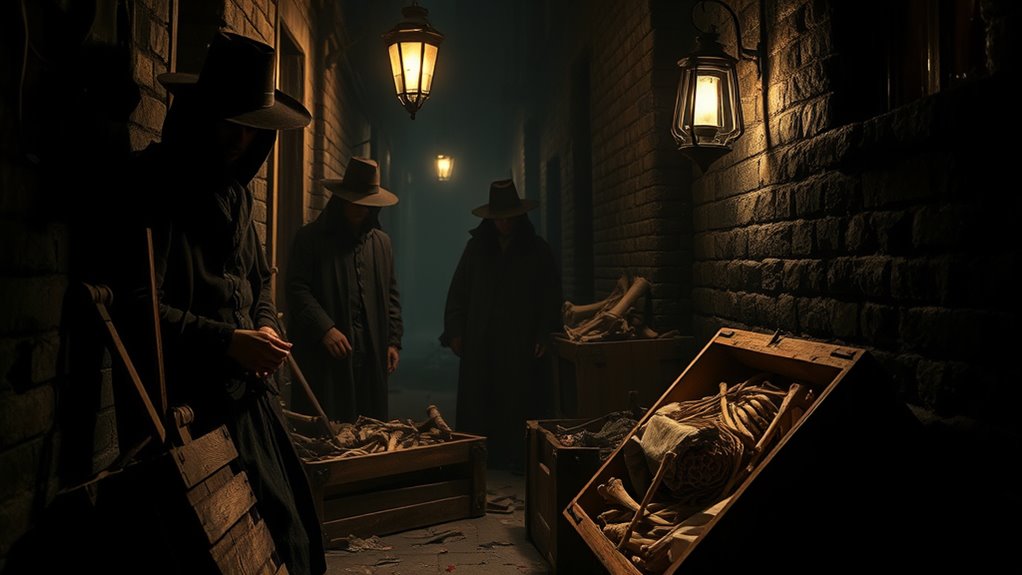

Body snatchers and resurrectionists were clandestine figures in the 19th century who illegally exhumed recently buried bodies to meet the high demand for cadavers in medical schools. Driven by the rapid growth of anatomy studies and limited legal supplies, they operated outside the law, raising ethical concerns about respect for the deceased. Their activities reflected tensions between scientific progress and societal morals, shaping how we handle body donation today. Understanding their origins reveals more about this complex history.
Key Takeaways
- Body snatchers and resurrectionists were 19th-century criminals who illegally stole bodies to supply medical schools.
- Their activities emerged due to high demand for cadavers amid limited legal sources.
- Ethical concerns centered on disrespecting the dead and moral implications of body theft.
- Laws and regulations evolved to curb illegal activities, including body donation programs.
- Their history reflects tensions between scientific progress and societal morality.

During the 19th century, body snatchers, also known as resurrectionists, operated in the shadows, stealing freshly buried corpses to supply medical schools with much-needed cadavers. This clandestine activity arose from the urgent demand for human bodies to study anatomy, as medical education expanded rapidly. However, this practice quickly raised serious questions about medical ethics, especially regarding respect for the deceased and the rights of individuals. Many saw it as a violation of moral principles, arguing that stealing bodies was fundamentally wrong, regardless of the medical benefits. Conversely, proponents believed that such sacrifices were necessary to advance medical knowledge and save lives. This tension between ethical considerations and scientific progress fueled ongoing debates and contributed to the clandestine nature of resurrection activities.
The legal implications of body snatching further complicated the issue. At the time, laws governing the treatment of the dead were either vague or poorly enforced, which allowed resurrectionists to operate with relative impunity. In some regions, laws explicitly banned body snatching, but enforcement was inconsistent, and penalties were often insufficient deterrents. This legal gap created a dangerous environment where those involved in stealing corpses risked criminal charges, but the lucrative demand for cadavers persisted. As a response, some jurisdictions introduced legislation to regulate the supply of bodies, often permitting the use of unclaimed or donated remains, which helped curb illegal activities. Despite these measures, body snatching persisted well into the late 19th century, highlighting the disconnect between legal frameworks and the practical realities faced by medical schools and resurrectionists. Additionally, the development of body donation programs helped provide a legal and ethical alternative for acquiring corpses.
Understanding the origins of body snatching reveals a complex interplay between pressing medical needs and societal values. The activity was driven by the necessity of acquiring bodies for anatomical study, yet it clashed sharply with evolving notions of dignity and respect for the dead. The legal implications underscored the ongoing struggle to balance scientific advancement with ethical standards, prompting reforms that aimed to legitimize cadaver supply through donations rather than theft. While laws gradually changed to better regulate the practice, the shadowy history of resurrectionists reflects broader tensions in society concerning morality, legality, and progress. Recognizing this history helps you grasp how medical ethics and legal constraints have shaped modern standards for body donation and anatomical research, emphasizing respect for human remains and the importance of lawful, ethical practices in medicine.
Frequently Asked Questions
Were Any Famous Figures Ever Targeted by Resurrectionists?
Yes, some famous victims were targeted by resurrectionists, making them notable targets. For instance, prominent figures like medical students and even notable individuals sometimes fell prey to body snatchers, especially during the 18th and 19th centuries. These resurrectionists often targeted well-known victims to sell bodies to medical schools. Your curiosity about these notable targets highlights how even famous figures weren’t immune to the dark practices of body snatching.
How Did Body Snatchers Influence Medical Research Practices?
You realize that body snatchers pushed medical research practices to evolve by challenging medical ethics and shaping anatomical education. They forced practitioners to confront the need for legal, ethical sourcing of cadavers, leading to reforms and new laws. This shift promoted more systematic, respectful approaches, ensuring that anatomical education advanced ethically. Ultimately, their influence fostered a balance between scientific progress and moral responsibility, improving medical research practices for future generations.
What Legal Changes Occurred in Response to Body Snatching?
Legal reforms were introduced to combat grave robbing, leading to stricter punishments for body snatchers. You’ll notice laws like the Anatomy Act of 1832, which prioritized grave protection and regulated the supply of cadavers for medical research. These changes aimed to deter resurrectionists and guarantee ethical handling of human remains, ultimately balancing medical needs with respect for the deceased’s dignity.
Are There Modern Equivalents of Resurrectionists Today?
Today, you won’t find resurrectionists like in the past, but underground markets and the black market still deal in illegal body parts. These modern equivalents operate covertly, often involving stolen cadavers or organ trafficking. Authorities work to shut down these illicit activities, but they persist due to high demand and profit. Staying aware of these issues helps you understand ongoing risks and the importance of strict legal controls to prevent exploitation.
How Did Public Perception of Grave Robbing Evolve Over Time?
You’d be surprised to learn that public perception of grave robbing shifted dramatically over centuries. In the 18th century, about 80% of people considered it a heinous crime, but by the 19th century, cultural shifts made society more accepting, viewing it as a necessary evil. Historical attitudes evolved from horror to understanding, influenced by medical needs and changing morals, shaping how communities see grave robbing today.
Conclusion
So, now you see how body snatchers and resurrectionists changed history, almost shaking the very foundations of society. Their actions sparked fears that echoed through centuries, shaping laws and morals. You might think it’s just old stories, but their impact is massive—like an earthquake that forever altered the landscape of medicine and ethics. Remember, their dark deeds remind us how thin the line is between progress and moral chaos, a line you wouldn’t want to cross.