
Charnel houses and ossuaries originated in medieval Europe as practical solutions to overcrowded cemeteries, storing bones after exhumation to make space. They also serve cultural and religious purposes, symbolizing respect for the dead and spiritual beliefs about mortality and resurrection. Often ornate, these structures reflect societal views on remembrance and tradition. Exploring their origins reveals how communities balance practical needs with spiritual values—continue exploring to uncover their deeper historical and cultural significance.
Key Takeaways
- Charnel houses and ossuaries originated in medieval Europe to address overcrowded cemeteries and efficiently store human remains.
- They often feature decorative arrangements of bones, reflecting respect and religious symbolism associated with death and resurrection.
- These structures serve as cultural symbols, honoring ancestors and embodying societal beliefs about mortality and spiritual salvation.
- Their design and placement highlight societal attitudes toward death, remembrance, and the connection between the living and the deceased.
- Today, ossuaries are valued for their historical, artistic significance and as tangible links to past burial practices and cultural heritage.
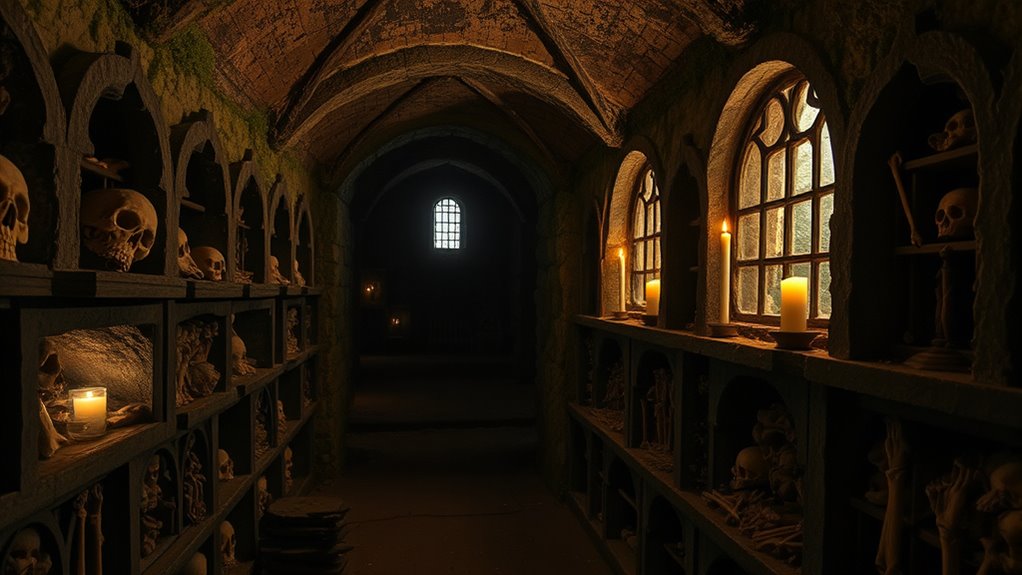
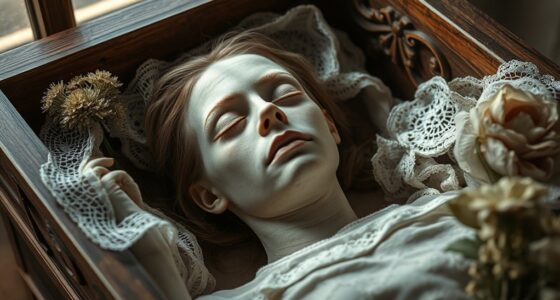
Charnel houses and ossuaries serve as practical solutions for storing and honoring the remains of the deceased when burial space runs out. Throughout history, many societies faced limited land available for traditional burials, prompting innovative approaches to managing human remains. These structures became not only functional but also deeply embedded in funeral practices and cultural symbolism. You might notice that in some cultures, ossuaries are more than just storage facilities—they are repositories of historical symbolism representing beliefs about death, remembrance, and the afterlife. Their design and purpose often reflect specific religious or societal values, making them significant beyond their utilitarian role.
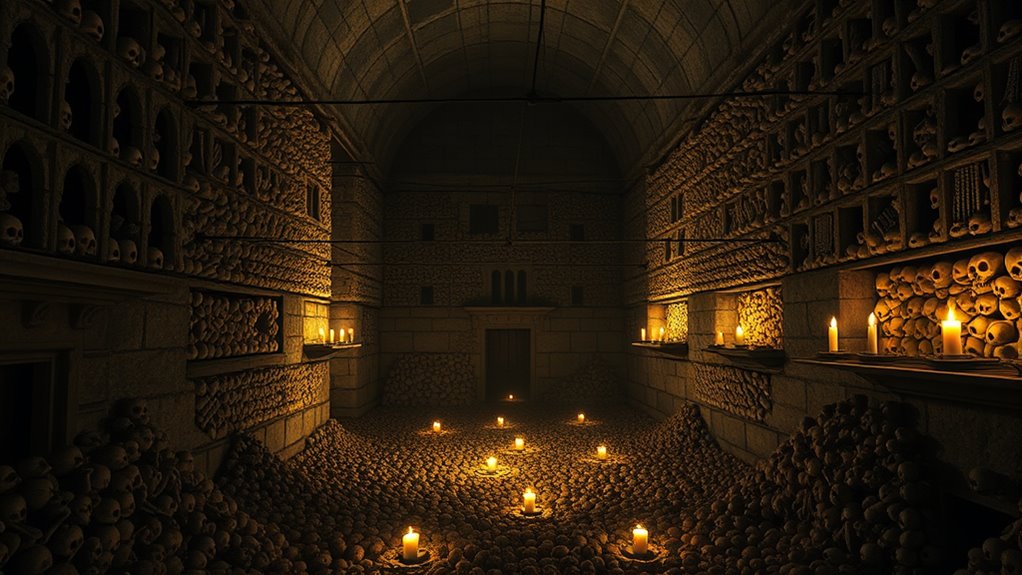
You’ll see that in medieval Europe, ossuaries gained prominence as a response to overcrowded cemeteries. Churches and monasteries built these spaces to efficiently store bones, which were often exhumed when graves became full. This practice was rooted in the belief that the body’s physical remains should be respected, even if moved or stored in a different location. The arrangement of bones in decorative patterns or stacked within ornate structures highlighted a respect for the dead and reinforced religious teachings about mortality and resurrection. These practices weren’t random; they symbolized the hope of spiritual salvation and the importance of honoring ancestors.
Medieval ossuaries reflected respect for the dead and hope for salvation through hierarchical, decorative arrangements of bones.
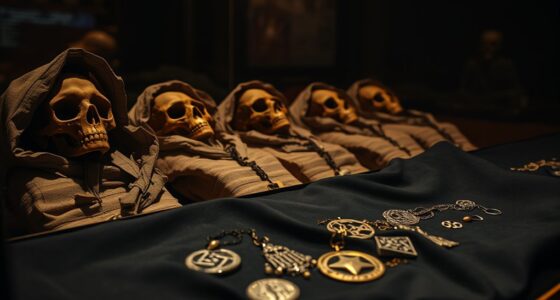
In many cultures, the use of charnel houses and ossuaries also signified the transition from life to death, serving as a tangible reminder of mortality. The spatial arrangement of bones often carried symbolic meanings—some structures arranged bones in patterns representing religious icons or cosmic symbols. Such symbolism was meant to remind the living of their mortality while emphasizing the importance of spiritual life. Funeral practices involving ossuaries often included rituals of reverence, prayers, or offerings, demonstrating a continued connection to the deceased beyond burial.
You’ll find that the historical symbolism tied to these structures also reflects societal attitudes toward death. In some cases, ossuaries became pilgrimage sites, where visitors paid respects or sought spiritual blessings. Their often elaborate design and placement in churches or cemeteries underscored their cultural importance. They served as a bridge between the living and the dead, embodying the community’s respect for past generations and their shared beliefs about mortality and eternal life. Additionally, modern interest in these structures has been influenced by cultural heritage preservation, emphasizing their historical and artistic significance.
In essence, charnel houses and ossuaries are more than just storage spaces. They are cultural artifacts that reveal how societies have historically navigated the delicate balance between practical needs and spiritual beliefs. Their origins and symbolism continue to influence how we think about death, remembrance, and the enduring bonds between the living and those who have passed on.

40 Inch Medieval Foam Conan The Barbarian Atlantean Foam Sword for Movie Replica Cosplay LARP Costume Halloween
Superb Material: This Medieval sword made of high-density foam, sturdy and will not cause any harm, Silver-colored. It…
As an affiliate, we earn on qualifying purchases.
As an affiliate, we earn on qualifying purchases.
Frequently Asked Questions
How Are Ossuaries Constructed and Maintained Over Time?
You construct ossuaries using traditional techniques like stone carving, masonry, or masonry, depending on available materials. To maintain them over time, you apply preservation methods such as controlling humidity, preventing water damage, and cleaning to remove dirt and biological growth. Regular inspections help identify issues early, ensuring the ossuary stays intact and preserves its contents, allowing it to serve its purpose for generations.
What Are the Most Famous Examples of Charnel Houses Worldwide?
You’ll find the Sedlec Ossuary in Czech Republic, famous for its bone architecture and crypt burial, as a top example. The Capuchin Crypt in Rome also showcases intricate bone arrangements, reflecting their purpose. These sites attract visitors worldwide, highlighting the artistry involved in creating lasting displays from human remains. Their unique design emphasizes respect and remembrance through carefully arranged bones, making them some of the most iconic charnel houses globally.
How Do Cultural Beliefs Influence Ossuary Designs?
Cultural beliefs shape ossuary designs through symbolic motifs that reflect spiritual values and beliefs about death. You’ll notice that ritual practices influence how bones are arranged, often emphasizing reverence or remembrance. For example, some cultures incorporate specific symbols or patterns to honor the deceased, ensuring that designs align with their worldview. These elements make ossuaries more than storage; they become meaningful expressions of cultural identity and spiritual beliefs.
What Legal Regulations Govern the Use of Ossuaries Today?
You must follow legal compliance and regulatory standards when using ossuaries today. Laws govern aspects like proper storage, respectful handling, and documentation. You need to obtain permits, adhere to health and safety regulations, and respect cultural sensitivities. By complying with these rules, you guarantee the dignity of the departed and the safety of the living. Staying informed about local, national, and international regulations helps you use ossuaries responsibly and ethically.
Are Ossuaries Used for Any Religious Ceremonies Currently?
Yes, ossuaries are still used in some modern religious practices and funeral rituals. You might see them in certain Catholic, Orthodox, or other religious communities that incorporate ancestor veneration or specific burial customs. These practices often involve placing bones in ossuaries as part of honoring the deceased, reflecting a tradition that persists today. They serve as a meaningful way to connect with cultural heritage and spiritual beliefs.

Sinromrich Bone White Resin Skull Sculpture – High Fidelity Model for Halloween Decor, Home Decoration, Artistic Display & Trophy
【High Fidelity & Life Size】: White skull model is a high fidelity 1:1 life size replica of a…
As an affiliate, we earn on qualifying purchases.
As an affiliate, we earn on qualifying purchases.
Conclusion
So, next time you see a charnel house or ossuary, remember you’re gazing into a silent testament of humanity’s enduring desire to honor the departed. These sacred vaults aren’t just storage; they’re stories etched in stone, memories woven through time. Don’t just walk past them—pause and consider the echoes of history they carry. After all, isn’t it fitting that in death, we find a connection that binds us all across ages and cultures?

Sands Original Products USS Cairo Ironclad Model Ship – 10-Inch Civil War Replica – Union Navy Warship – Historical Naval Decor, Military History Gift & Collectible Nautical Display
Historic "Pook Turtle" Replica: This precision 10-inch scale model captures the unique profile of the USS Cairo, the…
As an affiliate, we earn on qualifying purchases.
As an affiliate, we earn on qualifying purchases.

The Death Saint: A Supernatural Vatican Techno-Thriller (Shadow of the Vatican Book 1)
As an affiliate, we earn on qualifying purchases.
As an affiliate, we earn on qualifying purchases.