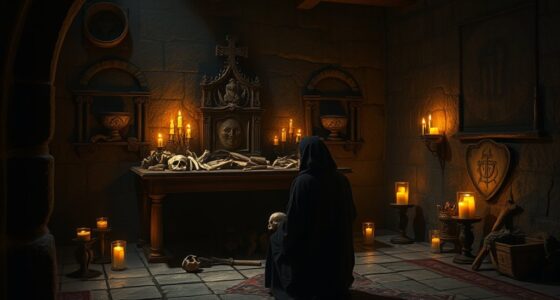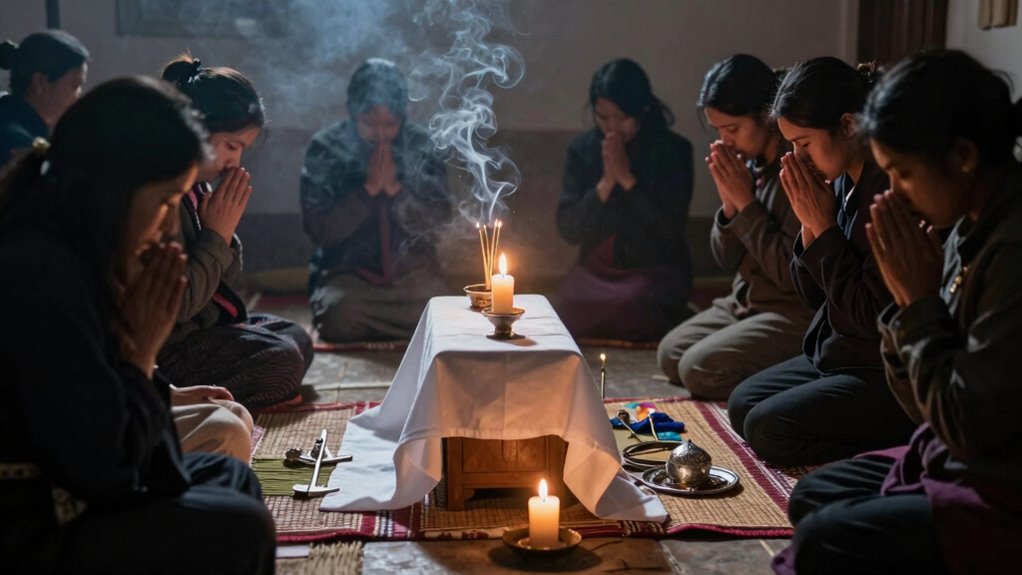

When you watch over the dead, you participate in sacred rituals that honor the departed and guide their spirits. These rituals often include keeping vigil, offering prayers or chants, and dressing the body in respectful attire. You may also create a sacred space for reflection and remembrance, helping both the living and the dead find peace. By engaging in these traditions, you uphold cultural values and support community bonds—if you explore further, you’ll discover more about these meaningful ceremonies.
Key Takeaways
- Watching over the dead involves vigil practices where loved ones stay with the body to offer respect and support the spirit’s transition.
- Rituals may include prayers, chants, or recitations to guide the soul and provide spiritual protection during the vigil.
- It often signifies emotional connection, allowing mourners to express grief and honor the deceased’s memory.
- Vigil customs vary culturally, sometimes involving specific clothing, positioning, or symbolic objects to symbolize the journey to afterlife.
- The practice fosters community bonding, collective mourning, and reinforces cultural or religious beliefs about death and the afterlife.
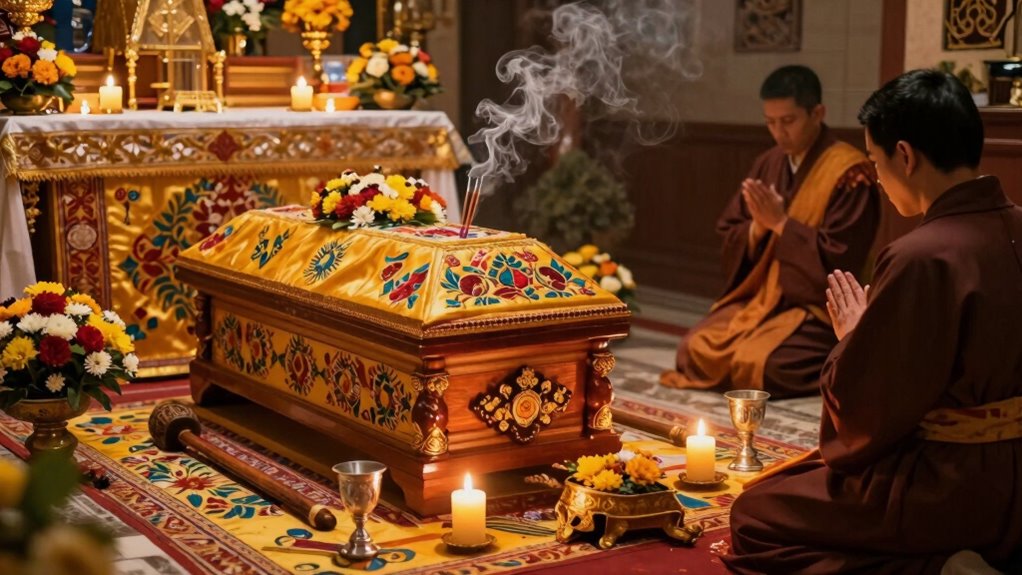
Throughout history, cultures around the world have developed rituals to watch over the dead, reflecting deep respect and a desire to guarantee their peaceful passage. These funeral customs and mourning traditions serve as a bridge between the living and the departed, helping those left behind process grief while honoring the memory of the deceased. When you observe these rituals, you participate in a centuries-old expression of community, belief, and reverence that varies widely across societies but always centers on respect for life and what comes after.
In many cultures, funeral customs involve specific rites that symbolize the transition of the soul and offer comfort to mourners. For example, some traditions include laying out the body in a way that allows loved ones to pay their final respects, offering a moment of closure. These practices often include prayers, chants, or ceremonies designed to guide the spirit and preserve its dignity. Mourning traditions might also involve wearing particular clothing, such as black attire, or adhering to a set period of mourning, marking the community’s collective support and shared grief. These customs serve as a structured way to express sorrow and solidarity, reinforcing social bonds during times of loss. Recognizing funeral customs as a vital part of cultural identity helps deepen understanding of how different societies approach death.
Mourning traditions often extend beyond the funeral itself, encompassing periods of remembrance and reflection. These might include annual memorials, storytelling, or maintaining a designated space for remembrance. When you engage in these practices, you reinforce the cultural values surrounding death and assure that the memory of the departed remains alive within the community. These rituals not only honor individual lives but also serve as a collective affirmation of life’s impermanence and the importance of respect for those who have passed. Additionally, understanding the cultural significance behind these customs fosters greater empathy and appreciation for diverse ways of grieving and remembering loved ones.
In essence, watching over the dead through funeral customs and mourning traditions is an act of profound connection. It helps you, and your community, navigate the complex emotions of loss while maintaining a sense of continuity and respect for the cycle of life and death. These rituals remind us that even in death, there is a sacred space for memory, reverence, and hope for peace. Understanding mourning rituals and their significance can deepen your appreciation for how different cultures cope with grief and the afterlife, fostering empathy and respect for diverse practices.

Nuanchu 24 Set Funeral Memorial Candles Holders Funeral Keepsakes Favors Memorial Candle Holders 2.4 x 2.4 Inches Celebration of Life Supplies Sympathy Gifts Service Grief Share Gifts (Classic Style)
Comprehensive Memorial Package: our all-inclusive package offers everything you need for a memorable tribute; It includes 24 memorial…
As an affiliate, we earn on qualifying purchases.
As an affiliate, we earn on qualifying purchases.
Frequently Asked Questions
How Do Different Cultures Interpret the Significance of Watching Over the Dead?
You see, different cultures interpret watching over the dead through various ritual variations and cultural symbolism. In some traditions, it symbolizes honoring and guiding spirits, ensuring peace in the afterlife. Others see it as a way to protect the living from restless spirits. These rituals reflect deep cultural values, emphasizing respect, remembrance, and spiritual connection, which help communities cope with loss and maintain a bond with their ancestors.
What Emotional Effects Do These Rituals Have on the Participants?
You feel a wave of emotional catharsis washing over you as you participate in these rituals, like a tide cleansing your soul. Watching over the dead offers psychological comfort, anchoring you in shared tradition and purpose. It helps release grief, transforming sorrow into silent strength. These rituals become a safe harbor, allowing you to process loss and find peace amid the storm of emotions, forging a deeper connection with life and death.
Are There Modern Adaptations of Traditional Watching-Over Rituals?
Yes, modern funeral traditions often incorporate adaptations of traditional watching-over rituals. Many people now include spiritual guardians or symbolic acts like lighting candles or creating memorial spaces to honor the deceased. These practices help you feel connected and provide comfort during grief. You might also see virtual vigils or personalized ceremonies, blending old customs with contemporary expressions of remembrance, all aimed at supporting emotional healing and maintaining a spiritual connection.
How Do These Rituals Influence Grief and Mourning Processes?
Around 65% of bereaved individuals find that engaging in watching-over rituals provides spiritual comfort during mourning. These rituals help you process grief by fostering cultural continuity, connecting you to traditions that honor the deceased. They offer a sense of stability and community, easing emotional pain. By participating in these practices, you reinforce your cultural identity and find solace, transforming mourning into a meaningful, shared experience that supports healing.
What Are Common Misconceptions About Watching Over the Dead?
Many believe watching over the dead is just a somber duty, but it’s often misunderstood as purely spiritual guardianship. In reality, funeral customs vary widely and serve to honor the deceased, offering comfort to the living. Watching over the dead encourages connection and remembrance, not just ritual. It’s a meaningful act that helps families process grief, fostering a sense of ongoing spiritual guardianship and cultural continuity.
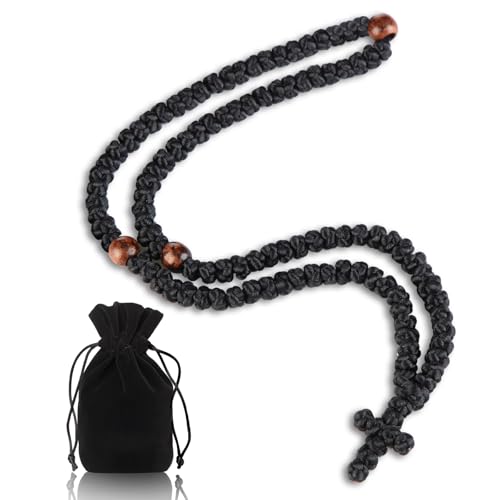
Otuuz Handmade Orthodox Prayer Rope 100 Knots with Braided Cross and Red Beads Orthodox Prayer Rope with Icon of the Mother of God Card Greek Cross Christian Charm Gifts
Set Includes: you will receive 1 100-knot Orthodox prayer rope with 1 card with an Orthodox icon of…
As an affiliate, we earn on qualifying purchases.
As an affiliate, we earn on qualifying purchases.
Conclusion
As you participate in watching over the dead, you become part of a profound tradition that spans cultures. Did you know that nearly 60% of people worldwide still observe some form of vigil or ritual? These acts of care and remembrance connect you to a long history of honoring those who’ve passed. Embracing these customs, you help keep their memory alive, reaffirming the timeless bond between the living and the departed.
respectful body dressing kit
As an affiliate, we earn on qualifying purchases.
As an affiliate, we earn on qualifying purchases.

Large in Remembrance of Me Embroidery Altar Frontal Holy Communion Table Cloth Cover, 88.2×52 in Communion Table Cloths for Church for Gatherings Baptism Ceremonies (Gold Embroidery)
Holy Communion;This tablecloth comes with nice "In Rembrance Of Me" gold embroidery. Helps create a solemn worship atmosphere
As an affiliate, we earn on qualifying purchases.
As an affiliate, we earn on qualifying purchases.