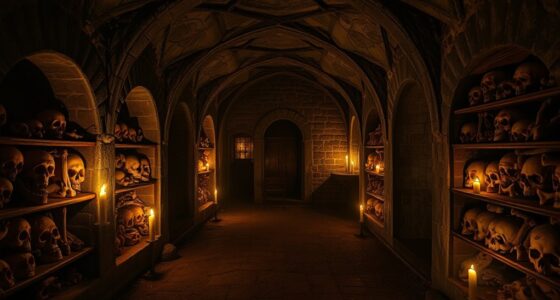
Revenant beliefs in medieval Europe stem from deep superstitions about death and the afterlife, where you might see spirits returning if proper rituals aren’t followed. These ghostly apparitions are seen as warnings or signs of unrest, emphasizing that death isn’t always final. Such fears reinforced social norms around burial rites and moral behavior, with communities taking drastic measures to prevent harm. If you continue exploring, you’ll uncover how these beliefs shaped community practices and spiritual fears during that time.
Key Takeaways
- Revenant beliefs originated from medieval superstitions about death, emphasizing the fragile boundary between life and the afterlife.
- Ghostly apparitions were seen as warnings or unresolved spirits, reflecting fears of improper death rituals.
- These beliefs reinforced social norms urging proper burial rites to prevent revenants and maintain spiritual order.
- Communities used exhumation, staking, or burning bodies as measures to stop revenants from returning.
- Revenant fears highlighted death as a dangerous transition, emphasizing constant vigilance to protect social and spiritual stability.
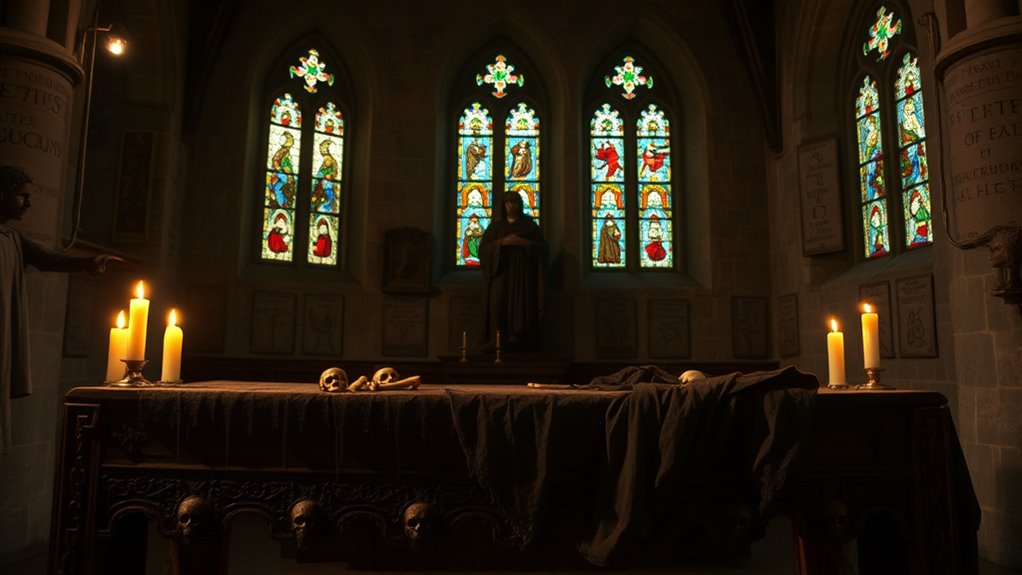
In medieval Europe, beliefs about revenants—ghosts or reanimated corpses—shaped how communities understood death and the afterlife. These ideas stemmed from deep-seated medieval superstitions that viewed the boundary between the living and the dead as fragile and easily crossed. People feared that the dead could return to the world of the living if proper rituals weren’t observed, which led to widespread anxiety and caution around death and burial practices. Ghostly apparitions, in particular, played a significant role in these superstitions. Seeing a ghost wasn’t just a sign of unrest; it was often believed to be a warning or a message from the beyond, a tangible reminder that the dead’s spirit hadn’t found peace. Incorporating natural elements into burial sites was sometimes thought to help prevent revenants from returning. You might have heard stories of revenants rising from their graves, driven by unresolved sins or wrongdoings. Medieval superstitions held that such revenants could cause harm, spreading disease, destruction, or chaos in their communities. These beliefs weren’t just the product of superstition but served as social controls—encouraging proper burial rites and moral behavior. When a corpse was suspected of returning as a revenant, communities often took drastic measures, like exhuming the body or performing rituals to prevent the revenant’s return. Sometimes, they would stake the body or burn it, believing these acts would stop the ghostly apparition from causing further havoc. Your ancestors saw revenants as more than just spirits; they were tangible threats that could manifest with frightening, ghostly apparitions. These spectral forms weren’t always clear or peaceful—they could be twisted, terrifying figures that haunted the living, often seen at night or in secluded places. Such ghostly apparitions reinforced the idea that death wasn’t final and that the dead might still have unfinished business. This fear of revenants and their ghostly apparitions kept communities vigilant and rooted in superstitions, shaping laws, customs, and even local folklore. People believed that improper disposal of the dead or neglecting funeral rites could invite revenants back into the world, so they paid close attention to how they honored their dead. In essence, medieval superstitions about revenants and ghostly apparitions reflected a worldview where death was not an absolute end. Instead, it was a transition fraught with danger, requiring constant vigilance. These beliefs served to maintain social order, ensure proper death rituals, and remind everyone that the spirits of the dead could return if their rest wasn’t secured. The terror of revenants and their ghostly appearances underscored the fragile boundary between life and death, a boundary that medieval communities desperately sought to protect through their superstitions.
Frequently Asked Questions
How Did Revenant Beliefs Influence Medieval Legal Practices?
You see, revenant beliefs deeply influenced medieval justice by fueling accusations of revenant activity, which often led to harsh punishments. When someone was suspected of being a revenant, courts took revenant accusations seriously, sometimes even conducting exhumations or trials based on these beliefs. This mindset shaped medieval justice, prioritizing supernatural explanations over rational evidence, and often resulted in executions or exile for those accused of revenant activities.
Were Revenant Fears Linked to Specific Social Classes or Regions?
You’ll find revenant fears were often linked to regional folklore variations, with rural communities especially haunted by tales of restless spirits. Social class disparities played a role too; lower classes faced harsher beliefs and more frequent accusations of revenant activity, while the upper classes were less affected. These fears reflected local cultural fears and economic struggles, shaping regional responses and beliefs about the supernatural in medieval Europe.
What Role Did Religious Institutions Play in Combating Revenants?
Religious institutions played a vital role in combating revenants by performing medieval exorcisms and clerical rituals to rid the spirits. You’d witness priests and monks conducting these sacred rites to protect communities from vengeful spirits. They believed that through prayer, holy water, and ritual purification, they could banish revenants and guarantee spiritual safety. These practices reinforced the church’s authority in addressing fears of the undead and maintaining social order.
How Did Revenant Legends Evolve After the Medieval Period?
Like shadows stretching into new forms, revenant legends evolved beyond medieval fears, blending superstitious rituals and folklore variations. You’d notice stories shifting from vengeful spirits to symbolic warnings, often reflecting societal anxieties. As communities adapted, these legends morphed into moral lessons or cautionary tales, illustrating how fears transform over time. You see, legends evolve, but their core remains—a reflection of human nature’s eternal struggle with mortality and the unknown.
Are There Parallels Between Revenant Beliefs and Modern Ghost Stories?
You’ll notice that modern ghost stories have supernatural echoes of medieval revenant beliefs, showing cultural continuities. Both feature spirits returning from the dead to convey messages or seek justice, reflecting fears and morals across eras. These parallels reveal how societies interpret death and the supernatural, maintaining similar themes of unrest and divine justice. Your fascination with ghost stories connects deeply to these ancient fears and cultural narratives that persist today.
Conclusion
As you reflect on revenant beliefs, remember they symbolize more than spirits— they embody fears, guilt, and the unknown lurking within us all. Just as the revenant rises from the grave, your own doubts may resurface when least expected. By confronting these shadows, you gain insight and strength. In embracing these symbols, you understand that confronting the past helps shape your future, turning fears into lessons, and darkness into a guiding light.