
In long-exposure photography, artifacts like sensor noise and light trails occur due to how your camera captures light over extended periods. Sensor noise appears as grain or speckles because electronic components generate random signals, especially in low-light or high ISO conditions. Light trails form when moving light sources create streaks across the image, revealing motion invisible in real-time. Understanding these effects helps you control or creatively embrace them, and there’s more to discover about how these artifacts influence your photos’ artistic and technical quality.

Get books and cozy reading nights delivered free with Prime
- Fast, free delivery on millions of items
- Prime Video, Amazon Music and more included
- Member-only deals all year
Key Takeaways
- Sensor noise results from electronic signal random fluctuations amplified during long exposures, especially in low-light and high-ISO settings.
- Light trails are caused by moving light sources during extended shutter open times, capturing motion invisible to the naked eye.
- Longer exposures increase the visibility and length of light trails but can also amplify sensor noise in dark areas.
- Proper camera stabilization (tripod) and exposure planning control the formation of artifacts, balancing sharpness, noise, and trail effects.
- Understanding the physics of light and sensor behavior enables photographers to intentionally minimize or creatively incorporate these artifacts.

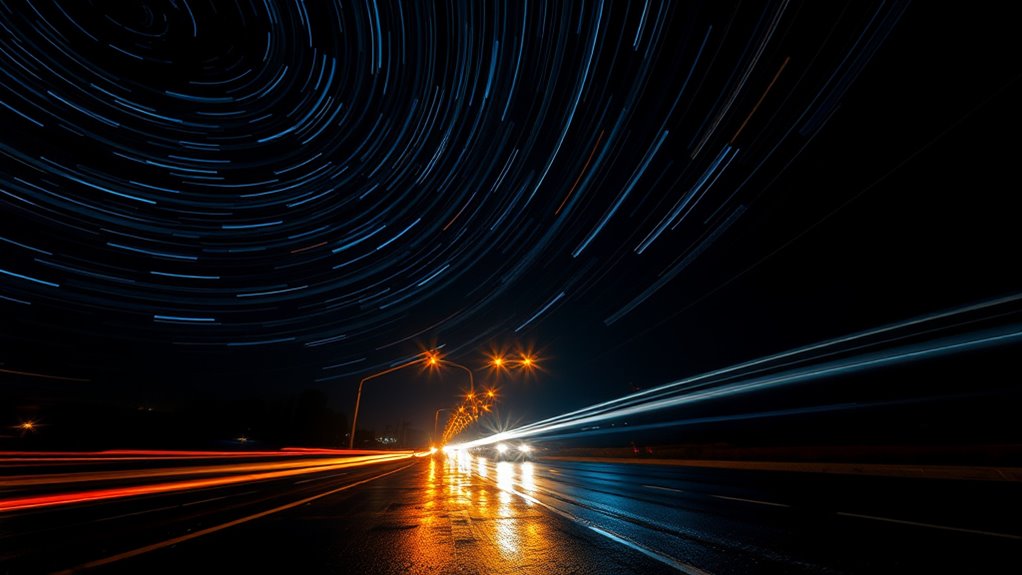
Long-exposure photography captures motion and light over extended periods, but it also introduces unique artifacts that can add or detract from your images. One common artifact you’ll encounter is sensor noise, which appears as grainy or speckled areas, especially in dark regions of your shot. When you leave your camera’s shutter open for several seconds or minutes, the sensor is exposed to light and heat for a prolonged time. This exposure causes the sensor’s electronic components to generate random signals, resulting in unwanted speckles that can diminish image quality. Sensor noise is more prominent in low-light conditions or when using higher ISO settings, which amplify the sensor’s sensitivity but also the noise. To reduce this, you can shoot at lower ISO levels, use noise reduction software in post-processing, or invest in a camera with a better sensor designed for long exposures. Despite this, some photographers embrace sensor noise as an artistic element, adding a gritty, atmospheric feel to their images. Understanding sensor noise helps you decide when to embrace or minimize them. Light trails are another defining artifact of long-exposure photography. These are streaks of light created by moving light sources during the extended shutter open time. For example, passing cars with their headlights and taillights produce continuous streams of light that carve through your frame, revealing dynamic motion that’s invisible to the naked eye in real-time. Light trails can add a sense of energy and movement, making your photo more engaging, but they also require careful planning. You need to select a scene with moving lights and decide on the appropriate exposure duration—too short, and the trails won’t form; too long, and they may become overly chaotic or wash out the image. Positioning your camera to capture the desired light flow is vital, often involving a tripod to keep the camera steady and prevent unwanted blurring of static elements. Light trails can also be manipulated creatively by adjusting your camera’s aperture or using filters, giving you control over their brightness and length. Understanding these artifacts helps you decide when to embrace or minimize them. Sensor noise can be mitigated or used creatively, while light trails can be harnessed to tell stories of motion and passage. Both are intrinsic to long-exposure photography’s unique aesthetic, offering opportunities to experiment and add depth to your images. Recognizing how these artifacts form enables you to plan your shots better, optimize your camera settings, and ultimately produce more compelling photographs that reflect both the technical and artistic potentials of long-exposure techniques.
As an affiliate, we earn on qualifying purchases.
Frequently Asked Questions
How Do Weather Conditions Affect Long-Exposure Artifacts?
Weather conditions greatly influence long-exposure artifacts by altering atmospheric effects. For instance, fog or haze diffuses light, creating softer, more dreamlike images, while rain or snow can introduce streaks or noise. Wind can cause camera shake or moving debris, affecting clarity. You’ll notice that clear, calm skies produce sharper images, whereas turbulent weather adds unique, unpredictable artifacts. Always consider weather influence when planning your shots to achieve desired artistic effects.
Can Post-Processing Eliminate Long-Exposure Artifacts Effectively?
Can you truly eliminate long-exposure artifacts with post-processing? Yes, you can reduce digital noise and minimize motion blur using editing tools like noise reduction filters and sharpening techniques. But, keep in mind, overdoing it may result in loss of detail or a plastic look. Are you willing to strike a balance? Carefully applying these adjustments helps preserve the natural feel of your image while improving clarity.
What Camera Settings Optimize Artifact Clarity?
You should use a low ISO setting and a narrow aperture to optimize artifact clarity. Verify your camera’s sensor is well calibrated, reducing noise and unwanted artifacts. Adjust the aperture to control diffraction effects that can influence artifact visibility. By fine-tuning these settings and maintaining proper sensor calibration, you’ll achieve clearer images with minimized long-exposure artifacts, capturing the scene’s details more accurately.
Are Specific Lenses More Prone to Creating Artifacts?
Yes, certain lenses are more prone to creating artifacts like lens distortion and chromatic aberration during long exposures. Typically, cheaper or lower-quality lenses tend to produce more of these issues. Wide-angle lenses and those with complex optical designs often exhibit more distortion, while older or less advanced lenses may show chromatic aberration. Using high-quality, well-corrected lenses can markedly reduce these artifacts and improve image clarity.
How Does Sensor Size Influence Artifact Formation?
Sensor size considerably influences artifact formation because larger sensors, with bigger sensor dimensions, typically reduce noise and improve image quality. Your camera’s pixel architecture also plays a role; larger sensors often feature bigger pixels, which help minimize artifacts during long exposures. Conversely, smaller sensors with dense pixel layouts are more prone to artifacts like noise and ghosting, especially in low-light or long-exposure conditions.
Conclusion
Now that you understand the science behind long-exposure artifacts, you can anticipate the dance of light and shadow, the streaks and smudges that bring your photos to life. Embrace the flicker of stars, the blur of motion, and the glow of trails. With this knowledge, you can craft images that tell stories, evoke emotion, and capture moments in time—artifacts that mirror the vibrant, dynamic world around you.
Fall Picks
fall essentials
As an affiliate, we earn on qualifying purchases.