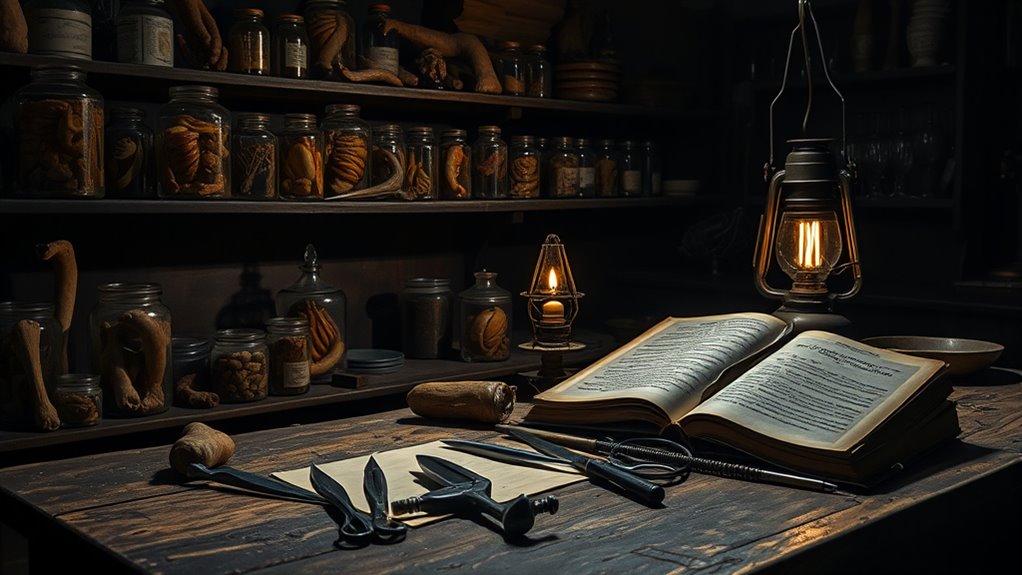

In the 19th century, the cadaver trade began because medical schools and anatomists needed more bodies for study and dissection, but legal sources couldn’t keep up with demand. This led to unethical practices like grave robbing and illegal sales, as laws were weak or poorly enforced. Society struggled with morality and legality, prompting reforms and ethical debates. If you want to learn more about how these issues shaped medical history, keep exploring.
Key Takeaways
- The cadaver trade emerged due to soaring demand for bodies in 19th-century medical education and dissection.
- Ethical concerns arose from sourcing bodies from unclaimed or marginalized populations, often without consent.
- Legal loopholes and weak enforcement fueled grave robbing and illegal cadaver trade.
- Public outrage over disrespectful practices led to legal reforms and stricter regulations.
- The period’s practices highlight the complex moral, legal, and societal conflicts surrounding medical advancement.
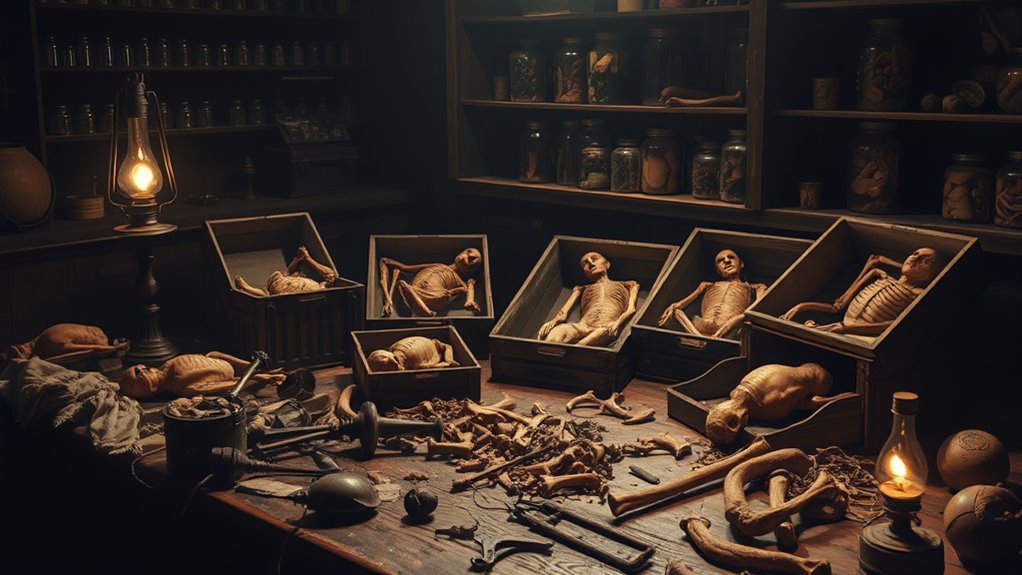
In the 19th century, the demand for cadavers skyrocketed as medical schools and anatomists sought bodies for dissection and study. This surge in need created a complex environment where ethical considerations and legal frameworks struggled to keep pace with rising demands. Medical ethics, which emphasize respect for human dignity and rights, often clashed with the practical needs of medical education. Many practitioners believed that dissecting bodies was essential for advancing medical knowledge, but the methods of acquiring these cadavers frequently crossed ethical boundaries. You might find that, in many cases, the bodies used for dissection came from unclaimed or marginalized populations, sparking controversy about consent and morality. The lack of clear ethical guidelines led to practices that, today, would be considered deeply unethical. Conversely, some institutions attempted to establish standards to guarantee respect for the deceased, but enforcement was inconsistent, and the temptation to bypass regulations was high.
Legal regulations played a vital role in shaping the cadaver trade during this period. You’d see that laws regarding body procurement were often vague or poorly enforced, which created loopholes for those looking to supply bodies outside accepted norms. In many regions, legislation aimed to regulate the donation of bodies, but these laws were limited and sometimes ignored entirely. The shortage of legally obtained cadavers meant that black markets flourished, and grave robbing became a widespread problem. You’d notice that unscrupulous individuals, sometimes operating with impunity, exhumed bodies from cemeteries to sell to medical schools. These illegal activities led to public outrage and heightened fears about the sanctity of burial sites. Governments eventually responded by passing stricter laws, yet enforcement remained inconsistent, and illegal trade persisted.
The tension between the need for cadavers and the desire to uphold medical ethics and abide by legal regulations created a tumultuous environment. Medical practitioners and institutions often found themselves caught between scientific progress and moral responsibility. The illegal trade thrived in this gray zone, driven by the urgent demand for bodies and the lack of exhaustive laws. Over time, the recognition of ethical issues and public concern prompted reforms—such as the introduction of body donation programs and clearer legal standards. Still, the complex history of the cadaver trade in the 19th century reflects a period marked by moral dilemmas, legal gaps, and societal conflicts that continue to influence medical ethics today.
Top picks for "cadaver trade 19th"
Open Amazon search results for this keyword.
As an affiliate, we earn on qualifying purchases.
Frequently Asked Questions
How Did Societal Attitudes Toward Body Donation Evolve During the 19TH Century?
During the 19th century, societal attitudes toward body donation shifted as public perception gradually became more accepting, despite lingering cultural taboos. You might notice that people started viewing body donation as a valuable act contributing to medical progress. This change helped reduce fears and moral concerns, making donation more socially acceptable. Still, cultural taboos persisted for some, influencing how openly society discussed and embraced body donation during that era.
What Legal Reforms Impacted the Cadaver Trade in Different Countries?
Imagine the law as a guardian, shielding the dead while respecting their dignity. Countries like the UK and US enacted coroners’ laws and donation policies that cracked down on illegal cadaver trafficking. These reforms mandated proper disposal and transparent donation processes, transforming society’s view of the body from a commodity to a gift. You can see how legal boundaries redefined respect for the deceased, fostering trust and ethical science.
Were There Notable Figures Involved in or Opposing the Cadaver Trade?
You’ll find notable figures on both sides of the cadaver trade debate. People like William Burke and William Hare gained notoriety for their gruesome involvement, while opposition movements, including medical reformers and moral advocates like Thomas Wakley, fought to stop illegal practices. These figures shaped public opinion and pushed for legal reforms, highlighting the complex moral and ethical issues surrounding the trade during that era.
How Did the Cadaver Trade Influence Medical Education and Practices?
The cadaver trade heavily impacted medical education by providing more students with access to human bodies for hands-on learning, which improved surgical skills and understanding of anatomy. However, it often bypassed principles of bodily autonomy and relied on unethical procurement methods. This trade pushed the medical community to reconsider ethics, leading to reforms that emphasized consent and proper legal channels, shaping more humane practices today.
What Were the Ethical Debates Surrounding Body Procurement Methods?
Think of body procurement as a tangled web of morals. You face ethical debates about consent issues and moral controversies, especially when bodies were taken without permission. Critics argue it violated moral boundaries and individual rights, sparking fierce moral controversies. You must weigh the need for medical progress against respecting human dignity. These debates highlight the complex ethics behind acquiring bodies and the importance of consent in medical research.
Conclusion
As you reflect on the 19th-century cadaver trade, you realize how it shaped medical progress despite its dark origins. Did you know that up to 60% of bodies used in anatomy studies were illegally obtained? This statistic highlights the desperation and moral dilemmas faced then. Understanding this history deepens your appreciation for modern ethical standards and the complex legacy left behind by those early struggles to advance medicine.