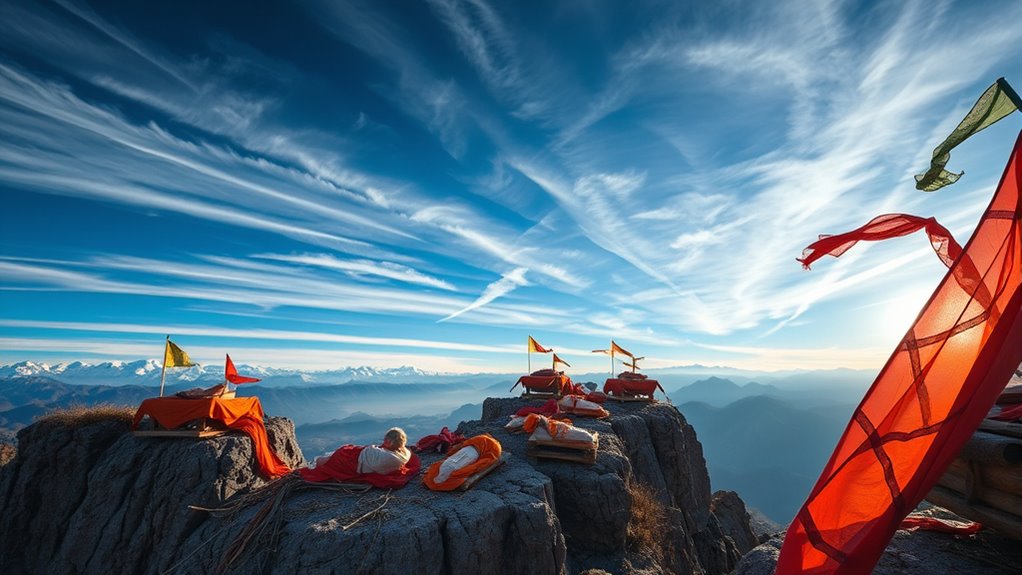

Tibetan sky burials are a sacred ritual rooted in Buddhist beliefs that emphasize returning the body to nature to promote spiritual liberation. You’ll see bodies left on mountaintops where vultures consume them, symbolizing the cycle of life, death, and rebirth. This practice highlights respect for the environment and the soul’s journey beyond physical life. If you explore further, you’ll discover the deeper spiritual symbolism and cultural significance behind this unique practice.
Listen free for 30 days with Audible
Thousands of audiobooks and originals — cancel anytime.
As an affiliate, we earn on qualifying purchases.
Key Takeaways
- Tibetan sky burials are a sacred funerary practice honoring the cycle of life, death, and rebirth rooted in spiritual beliefs.
- The ritual involves exposing the body on a mountaintop for vultures and scavengers, symbolizing spiritual liberation.
- It reflects respect for nature, viewing the body as a vessel and emphasizing the soul’s journey beyond physical death.
- The practice embodies the philosophy of interconnectedness, emphasizing death as a transformation and a sacred transition.
- Vultures are seen as messengers of spiritual liberation, reinforcing the ritual’s spiritual symbolism and cultural significance.

Tibetan sky burials are a unique and profound funerary practice rooted in spiritual beliefs and respect for the natural world. This ritual reflects a deep understanding of life, death, and the cycle of existence, emphasizing the importance of returning the body to nature so that it can nourish other living beings. As you explore this tradition, you’ll see that it’s not just about disposing of a body but about performing a sacred act that embodies spiritual symbolism and connects the living with the spiritual dimension.
The core of Tibetan sky burials involves a series of carefully coordinated funeral rituals. After a person passes away, their body is prepared with specific rites that honor their journey into the next stage of existence. Typically, the body is left exposed on a mountaintop or a designated sky burial site, where it is offered to vultures and other scavengers. This act signifies the impermanence of physical form and the belief that the soul continues beyond death. The ritual sends a powerful message about the transient nature of life and our connection to the universe, reinforcing the spiritual symbolism that life is an ongoing cycle of birth, death, and rebirth.
Throughout the sky burial process, practitioners invoke prayers and mantras, which serve to guide the soul and sanctify the ritual. These funeral rituals are deeply spiritual, emphasizing compassion, generosity, and the idea that giving one’s body to nature is a final act of kindness. The vultures, seen as sacred messengers, symbolize the liberation of the soul and the shedding of earthly attachments. Their role in the sky burial highlights a profound respect for the natural order, illustrating that death is not an end but a transformation. This perspective is central to Tibetan spiritual symbolism, where the physical body is merely a vessel, and true essence resides in the soul’s journey. Understanding this practice offers insight into how Tibetan culture views death as a essential part of spiritual life. The sky burial embodies a philosophy that life is interconnected with nature and that respecting the environment is a spiritual duty. It’s a ritual that reinforces community bonds, spiritual teachings, and reverence for all living things. By participating in or simply observing these funeral rituals, you gain a deeper appreciation for the Tibetan worldview—one that sees death not as an ending but as a sacred transition, deeply embedded in spiritual symbolism and respect for the natural cycle of life.

Jovivi Tibetan 8mm 108 Natural Tiger Eye Gemstone Beads Prayer Mala Bracelet Necklace
- Unisex Prayer Bead Mala: 8mm 108 Tibetan Buddhist beads
- Adjustable Length: 86.4cm (34 inches) stretchable design
- Versatile Wear: Can be worn as bracelet or necklace
As an affiliate, we earn on qualifying purchases.
As an affiliate, we earn on qualifying purchases.
Frequently Asked Questions
How Do Sky Burials Influence Local Ecosystems?
Sky burials impact local ecosystems by supporting wildlife scavenging, which helps recycle nutrients naturally. You might notice birds and scavengers like vultures feeding on remains, playing a crucial role in maintaining environmental balance. While they generally have minimal environmental impact, it’s important to monitor these practices, as excessive scavenging could disrupt local biodiversity. Overall, sky burials contribute to a unique ecological cycle that benefits the surrounding environment.
Are Sky Burials Practiced Outside Tibet?
You’ll find sky burial symbolism and cultural significance mainly within Tibetan communities, but similar practices occur elsewhere, like in Mongolia and parts of India. Outside Tibet, these rituals aren’t widespread, often due to different religious beliefs or legal restrictions. If you’re curious, it’s important to understand that sky burials symbolize offering the body to nature and emphasize spiritual transcendence, making them deeply meaningful in cultures that practice them.
What Materials Are Used in Sky Burial Rituals?
In sky burial rituals, you’ll find materials like ritual offerings such as barley, flour, and butter, which symbolize respect and generosity. These offerings are placed on the body to honor the deceased and facilitate their spiritual journey. The ritual symbolism emphasizes the impermanence of life and the cycle of death and rebirth, helping participants connect spiritually and guarantee the soul’s peaceful passage to the next domain.
How Do Sky Burials Compare to Other Tibetan Death Rituals?
Think of sky burials like the story of Icarus—an ascent toward the heavens. Compared to other Tibetan death rituals, sky burials emphasize ritual symbolism and cultural significance, highlighting the body’s return to nature and spiritual liberation. Unlike cremation or burial, sky burials involve exposing the body to the elements, symbolizing detachment and offering a final act of compassion, connecting the living with the divine in a profound, sacred dance.
What Are the Modern Challenges Facing Sky Burial Practices?
You face modern challenges with sky burial practices, including ethical considerations surrounding the treatment of bodies and ensuring respect for cultural preservation. As urbanization and tourism increase, authorities and communities must balance tradition with safety and public health concerns. You need to navigate these issues carefully, advocating for cultural sensitivity while adapting practices to modern contexts, ensuring sky burials remain a meaningful part of Tibetan spiritual life amid changing societal landscapes.
Conclusion
While sky burials might seem stark or even unsettling, they reveal a profound respect for nature and the cycle of life. You see, in a world obsessed with permanence, Tibetans embrace impermanence, offering their loved ones to the sky. It’s a powerful reminder that life and death are intertwined, just like the sky and earth. So, next time you look up, remember that sometimes, letting go is the most meaningful act of all.
Flea & tick season Picks
flea and tick prevention
As an affiliate, we earn on qualifying purchases.