Werewolf trials in early modern Europe stem from widespread fears of supernatural evil, rooted in folklore, religious anxieties, and social tensions. Communities believed that some individuals could transform into wolves or beasts, often seen as working with malevolent forces. These accusations fueled hysteria, leading to brutal trials based on superstition and coerced confessions. If you keep exploring, you’ll uncover how these fears reflected deeper societal concerns about morality and chaos during that time.
Key Takeaways
- Werewolf trials stemmed from societal fears, superstitions, and religious anxieties about transformations and evil forces during early modern Europe.
- They reflected broader witchcraft hysteria, often merging accusations of sorcery and beast-like transformations.
- Trials aimed to confront perceived supernatural threats, with evidence based on rumors, confessions, or torture.
- These persecutions symbolized societal efforts to maintain order by scapegoating individuals believed to be working with malevolent forces.
- Ultimately, they reveal how collective fears and superstition fueled violence, paranoia, and tragic human consequences.
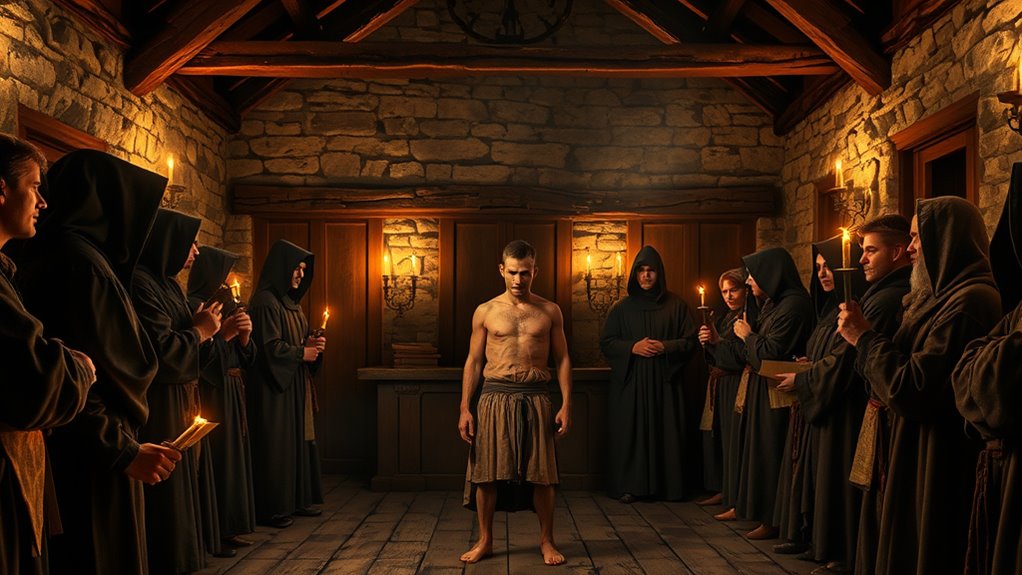
During the early modern period in Europe, accusations of werewolf sightings and attacks led to a wave of trials that reflected societal fears and superstitions. These events weren’t isolated; they were deeply intertwined with the widespread fear of witchcraft that had gripped communities for centuries. You might find it surprising, but many werewolf accusations were rooted in the same fears that fueled medieval witchcraft hysteria. People believed that some individuals could transform into wolves or other beasts, often in league with malevolent forces. This belief stemmed from a mixture of folklore, religious anxieties, and social tensions, which created a fertile ground for accusations. When someone exhibited unusual behaviors, or if a series of misfortunes befell a community, suspicions could quickly turn to supposed werewolves or witches.
The social panic surrounding these accusations was intense. Authorities and local communities alike saw these figures as threats to societal order and morality. The fear was so pervasive that accusations could escalate into brutal trials, often with little evidence beyond superstition. In these trials, accusations of werewolf activity were sometimes made alongside charges of witchcraft, further fueling the hysteria. You should understand that this was a period when the boundaries between supernatural fears and everyday life blurred. People genuinely believed that werewolves and witches were working together, spreading evil and chaos. As a result, the trials became a way for society to confront and eliminate these perceived threats, whether real or imagined.
The link between medieval witchcraft and social panic is essential to understanding these trials. Witch hunts and werewolf accusations shared common themes: fear of the devil’s influence, suspicion of outsiders, and a desire to purge perceived evil. The trials served as catharsis for communities, a way to channel collective anxieties into tangible action. Accused individuals often faced harsh interrogations, and confessions—sometimes extracted under duress—became key evidence. The trials reflected not just fear of supernatural beings, but also deeper societal issues like paranoia, scapegoating, and the desire for control amid uncertain times. Moreover, the rise of persecution and hysteria during this period fueled these events further. Ultimately, these werewolf trials reveal how superstition, reinforced by social panic, could lead to tragic consequences, with real human lives affected by collective fears rooted in centuries-old beliefs.

The Werewolf Book: The Encyclopedia of Shape-Shifting Beings (The Real Unexplained! Collection)
As an affiliate, we earn on qualifying purchases.
As an affiliate, we earn on qualifying purchases.
Frequently Asked Questions
How Did Societal Fears Influence the Perception of Werewolves?
Your societal fears, rooted in superstitious beliefs and religious tensions, greatly shaped how werewolves were perceived. People viewed them as dangerous, evil creatures linked to witchcraft and moral decay. These fears fueled accusations and trials, as communities sought to protect themselves from perceived threats. The combination of superstition and religious conflict created a climate where suspicion ran high, making werewolves symbols of societal anxieties and moral panic.
Were There Any Regions With Notably Fewer Werewolf Trials?
You’ll notice that some regions, like parts of Italy and Spain, had particularly fewer werewolf trials compared to Central Europe. These regional variations in trial frequency stem from cultural differences, local legal practices, and societal fears. In areas where witch hunts were less intense or where beliefs about werewolves weren’t as prominent, the number of trials remained low. This shows how societal fears directly influenced the regional variations in werewolf trial occurrences.
What Role Did Gender Play in Accusations and Trials?
Gender played a significant role in werewolf accusations and trials. You’ll notice that women were more frequently targeted due to prevalent gender stereotypes linking them to witchcraft accusations. Men accused of werewolf activities often faced different motives, sometimes political or criminal. These biases shaped who was accused and how trials unfolded, reinforcing societal views that women were inherently more susceptible to evil influences, fueling the hysteria and persecution during that era.
How Did Legal Procedures Vary Across Different Regions?
You’ll notice regional legal variations considerably influenced werewolf trial procedural differences. In some areas, authorities relied heavily on confessions, often extracted under torture, while others prioritized witness testimonies. Legal procedures also differed in the use of evidence and the role of local courts. These variations reflect diverse legal traditions, affecting how accusations were handled and how justice was administered during the trials across different parts of Europe.
Were Any Modern Beliefs Rooted in These Early Trials?
Like seeds planted long ago, some modern superstitious beliefs still sprout from the folklore influences of early werewolf trials. These trials helped shape ideas about evil, curses, and supernatural creatures, which continue to influence popular culture and superstitions today. You might see echoes of these beliefs in stories, movies, and myths that link wolves and shape how people view the mysterious and the unknown in our world.
The Werewolf Book: The Encyclopedia of Shape-Shifting Beings (The Real Unexplained! Collection)
As an affiliate, we earn on qualifying purchases.
As an affiliate, we earn on qualifying purchases.
Conclusion
You see, the werewolf trials reveal more than just fear; they reveal the fears of a society afraid of the unknown. They show how suspicion can turn into hysteria, how superstition can overshadow reason. They remind you that in times of uncertainty, humans often seek scapegoats, whether beasts or witches. And in understanding these trials, you understand the power of belief, the danger of ignorance, and the importance of questioning what you’re told.

Everyday Folklore: An almanac for the ritual year
As an affiliate, we earn on qualifying purchases.
As an affiliate, we earn on qualifying purchases.

Early Modern England 1485-1714: A Narrative History
paper edition
As an affiliate, we earn on qualifying purchases.
As an affiliate, we earn on qualifying purchases.