

The idea that ghosts can’t cross running water is just a myth from folklore, not backed by scientific or paranormal evidence. Many investigations show spirits crossing rivers and streams freely. This belief likely originated from cultural stories symbolizing boundaries or cautioning about natural features. In reality, spirits are considered non-physical and can move through obstacles like water without hindrance. To discover the truth behind this longstanding myth, explore further below.
Key Takeaways
- The belief that ghosts can’t cross running water originates from folklore and superstition, not scientific fact.
- There is no credible evidence supporting the idea that water prevents spirits from moving freely.
- Paranormal investigations have documented spirits crossing rivers and streams without issue.
- Water historically symbolized boundaries or purification in various cultures, shaping such myths.
- The myth reflects cultural perceptions rather than reality; spirits are believed to move through natural obstacles freely.
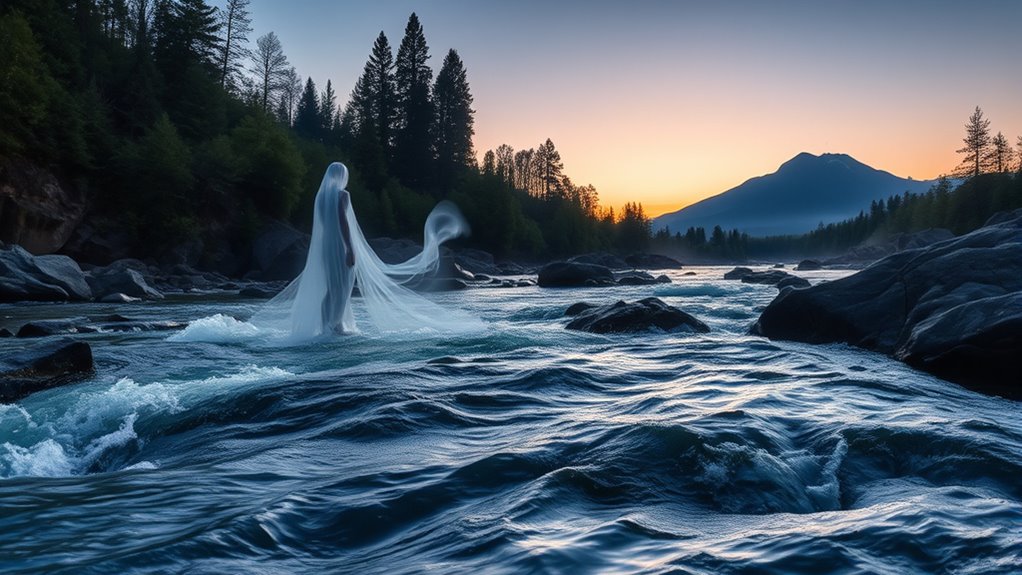
Many people believe that ghosts cannot cross running water, a myth rooted in folklore and superstition. This idea has persisted for centuries, often used to explain why spirits seem confined to certain areas or unable to move freely between locations. In reality, this belief stems from cultural notions about spiritual boundaries, where running water is thought to act as a barrier for supernatural entities. These superstitions reflect a broader tendency within supernatural beliefs to assign physical properties to spirits, emphasizing boundaries that separate the living from the dead. Such ideas create a sense of control and understanding over the unknown, even if there’s no scientific backing.
Many believe ghosts can’t cross running water, but it’s a myth rooted in folklore, not fact.
In truth, there’s no credible evidence to suggest that ghosts are physically hindered by flowing water. Many paranormal investigations have documented spirits crossing rivers, streams, and other bodies of water without issue. These accounts challenge the notion that water can serve as an insurmountable barrier for spirits. Instead, the belief likely originated from ancient cultural stories meant to reinforce spiritual boundaries and maintain social order. People wanted to believe that certain natural elements, like water, had protective or restrictive powers over supernatural forces. This reinforced the idea that the physical world could influence or contain spiritual entities, which fit into their worldview and understanding of the afterlife.
Furthermore, the myth about ghosts and running water often reflects deeper cultural fears and superstitions. In some traditions, water symbolizes purification or a boundary between worlds, making it a symbolic barrier rather than a literal one. These superstitions may have served as cautionary tales, encouraging respect for certain natural features or discouraging meddling with the supernatural. However, modern experiences and reports disprove the notion that water acts as a barrier. Spirits are believed to be non-physical entities, capable of moving freely through physical obstacles, including flowing water. Ghosts crossing rivers or streams during investigations show that natural water sources do not prevent their movement. Additionally, cultural interpretations often shape how these supernatural boundaries are perceived and reinforced.
Ultimately, the idea that ghosts can’t cross running water is a myth rooted more in cultural symbolism and supernatural beliefs than in reality. It’s a reflection of how humans have historically tried to understand and control the mysterious aspects of life and death. By recognizing that these stories are part of folklore rather than fact, you can better appreciate the fluid nature of paranormal phenomena. Running water doesn’t hold spiritual power over spirits; rather, it’s a symbol that has been woven into cultural narratives to explain the unexplainable. In the end, spirits are believed to be free to move across water just as they are across any other physical or spiritual boundary.
Frequently Asked Questions
Are There Historical Cases Supporting This Myth?
There are no solid historical cases supporting the myth that ghosts can’t cross running water. Supernatural barriers like this often stem from cultural differences, where stories reflect local beliefs and traditions. In some cultures, running water symbolizes a boundary spirits can’t cross, but these are more symbolic than factual. You should view these stories as folklore, not evidence, since they vary widely across different regions and histories.
Do Different Cultures Have Varying Beliefs About Ghosts and Water?
You’ll find that different cultures have unique water beliefs and varying attitudes toward ghosts crossing water. Some believe water acts as a barrier, preventing spirits from moving freely, while others see water as a spiritual pathway. These cultural variations influence how communities interpret ghost stories and rituals. Your understanding of these water beliefs reveals how deeply cultural traditions shape perceptions of the supernatural and the significance of water in spiritual contexts.
Can Modern Science Explain Why Ghosts Supposedly Can’t Cross Water?
They say “water is a symbol of spiritual boundaries,” and modern science offers no proof that ghosts can’t cross water. Instead, these stories stem from cultural beliefs and symbolism, not scientific fact. Water might symbolize a barrier in legends, but scientifically, it’s just a physical obstacle. So, if you’re curious, remember that these ideas are rooted in tradition, not empirical evidence.
Are There Documented Exceptions to This Myth?
Yes, there are documented exceptions to the water crossing ghost restrictions myth. Some stories and paranormal reports describe spirits crossing rivers or streams, defying the idea that water blocks their path. These instances suggest that ghost behavior isn’t always limited by natural elements like water crossing. While science struggles to explain these phenomena, folklore and anecdotal evidence continue to challenge the belief that ghost restrictions always prevent crossing running water.
How Did This Myth Originate Historically?
Like a whisper carried by the wind, this myth likely sprouted from supernatural folklore and cultural symbolism, where running water symbolizes purity and spiritual boundaries. Historically, people believed ghosts were bound by these natural elements, unable to cross rushing streams. This idea helped explain the unseen world’s mysteries, reinforcing cultural beliefs that water acts as a barrier between the living and the dead, shaping stories passed through generations.
Conclusion
While many believe ghosts can’t cross running water, there’s little concrete evidence to support this myth. Skeptics argue that such beliefs are rooted in cultural stories rather than fact, and dismissing them outright ignores the complex ways folklore shapes perceptions. Ultimately, whether you see it as truth or superstition, questioning these ideas invites a deeper understanding of how stories influence our views of the supernatural. After all, belief often hinges on perspective, not proof.