
Light anomalies are unusual visual effects caused by the interaction of light with atmospheric conditions, surfaces, and natural phenomena. You might see mirages that bend light or halos around the sun or moon, which are caused by refraction through ice crystals. These effects often appear strange or otherworldly, especially during sunsets or sunrises. Exploring these phenomena will deepen your understanding of how light can be naturally manipulated, leading you to discover even more intriguing secrets behind these illusions.

Get books and cozy reading nights delivered free — and shop member deals
- Fast, free delivery on millions of items
- Access to Prime Big Deal Days deals on October 6–7
- Prime Video, Amazon Music and more included
Key Takeaways
- Light anomalies are unusual visual phenomena caused by natural interactions between light, atmospheric conditions, and surfaces.
- They include optical illusions like mirages, halos, and sundogs, resulting from light refraction and reflection.
- Atmospheric particles and temperature gradients contribute to these phenomena, especially during sunrise, sunset, or specific weather.
- Light anomalies can be fleeting or long-lasting, often appearing surreal and challenging to explain initially.
- Studying these phenomena enhances understanding of atmospheric optics and the complex behavior of light in nature.
Light anomalies are unusual visual phenomena that challenge our understanding of how light behaves in different environments. These phenomena often seem to defy the normal rules of optics, creating enthralling illusions and surprising effects. When you encounter a light anomaly, you’re witnessing a natural phenomenon that tricks your eyes and brain into perceiving something unusual. These effects can be fleeting or long-lasting, but they always prompt you to question what you’re seeing. Many of these anomalies originate from complex interactions between light and the atmosphere, surfaces, or atmospheric conditions, making them both fascinating and mysterious.
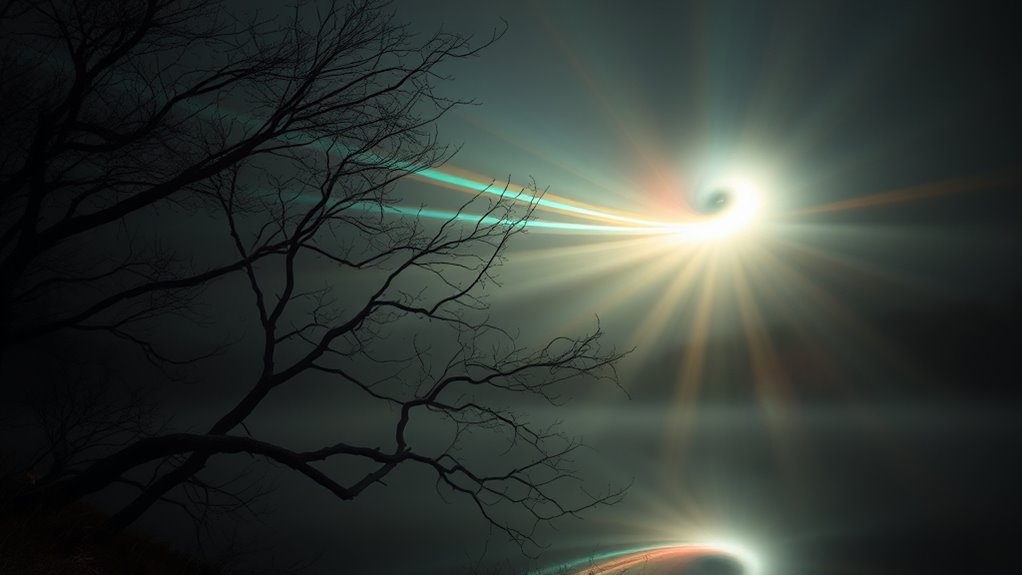
One of the most intriguing aspects of light anomalies is their connection to optical illusions. Optical illusions play a significant role in how we interpret these phenomena, as they manipulate visual cues to produce perceptions that differ from reality. For example, mirages are classic natural phenomena often mistaken for something extraordinary. They occur when light bends or refracts through layers of air with different temperatures, creating the illusion of water or distant objects that aren’t really there. This effect is a prime example of how light can be bent and manipulated naturally, leading to illusions that seem almost magical. Similarly, phenomena like halos and sundogs are optical illusions caused by the refraction of light through ice crystals in the atmosphere. These atmospheric conditions create rings or bright spots around the sun or moon, giving the appearance of celestial phenomena that appear otherworldly.
Optical illusions like mirages, halos, and sundogs reveal how light bends and creates otherworldly phenomena in nature.
You might also notice light anomalies during sunsets or sunrises, where the sky appears to shimmer or change colors unexpectedly. These are often caused by light scattering and atmospheric particles, producing vibrant displays that seem to dance across the sky. Such natural phenomena highlight the delicate interplay between light and the environment, reminding you that what you see isn’t always an accurate reflection of reality. Sometimes, these effects are amplified by weather conditions, pollution, or even specific geological features, making each sighting unique. Additionally, advances in understanding atmospheric optics help explain many of these phenomena, shedding light on their underlying mechanisms.
Understanding light anomalies involves recognizing their roots in natural phenomena and optical illusions. They reveal how light interacts with various elements in the environment, producing effects that appear surreal or inexplicable at first glance. Whether it’s a mirage on a hot day, a halo around the sun, or a shimmering aurora, these anomalies challenge your perception and deepen your appreciation for the complex behavior of light. By studying these phenomena, you gain insight into the fascinating ways nature manipulates light, reminding you that the visual world is often more mysterious than it seems.
As an affiliate, we earn on qualifying purchases.
Frequently Asked Questions
How Do Light Anomalies Affect Astronomical Observations?
Light anomalies can considerably impact your astronomical observations by causing light distortion, which makes celestial objects appear blurry or misshapen. This interference can lead to data corruption, reducing the accuracy of your measurements and making it harder to analyze phenomena precisely. As a result, you’ll need to apply corrections or filter out affected data to guarantee your observations remain reliable and scientifically valuable.
Can Light Anomalies Be Caused by Atmospheric Conditions?
Yes, atmospheric conditions can cause light anomalies. Atmospheric distortion, caused by variations in air density and temperature, bends and scatters light as it travels through the atmosphere. Weather phenomena like fog, rain, or turbulence can intensify these effects, creating shimmering or streaking effects in astronomical observations. These atmospheric influences are temporary and can vary greatly, making it essential for astronomers to account for them when analyzing light anomalies.
Are There Technological Methods to Detect All Light Anomalies?
Imagine your gadgets as overzealous detectives, constantly on the lookout for trouble. Yes, there are technological methods to detect all light anomalies, using sensor calibration to fine-tune their sharp eyes. Anomaly detection techniques, like machine learning algorithms, analyze data patterns to spot even the sneakiest flickers or flashes. While perfect detection remains elusive, these tools come close, turning your devices into vigilant guardians of the night’s luminous secrets.
How Do Light Anomalies Influence Optical Equipment Calibration?
Light anomalies substantially influence optical equipment calibration by causing spectral distortions that lead to calibration errors. When these anomalies occur, you might notice shifts in color accuracy or focus issues, which compromise measurement precision. To maintain calibration integrity, you need to detect and correct these anomalies promptly, often through advanced sensors or software adjustments. Ignoring them can result in inaccurate data, affecting the overall performance of your optical systems.
Can Light Anomalies Be Mistaken for Extraterrestrial Phenomena?
Yes, you can mistake light anomalies for extraterrestrial phenomena. Bright bioluminescent organisms and atmospheric refraction often produce bizarre, beautiful, and baffling light displays that can mimic alien activity. When you witness shimmering silhouettes or glowing glints, it’s essential to take natural sources into account before jumping to extraterrestrial conclusions. Recognizing these natural nuances helps you differentiate between earthly phenomena and potential signs of space visitors.
Conclusion
Understanding light anomalies reveals just how mysterious our universe can be. Did you know that over 80% of the universe’s mass remains unseen, largely due to these anomalies? This staggering figure shows how much there is left to explore and understand. By studying these irregularities, you’ll gain a deeper appreciation for the complexities of light and the cosmos. Keep observing and questioning—light anomalies might just hold the key to many cosmic secrets.
Fall Picks
fall essentials
As an affiliate, we earn on qualifying purchases.