
Sacred space is carefully marked off from the profane by boundaries that symbolize its spiritual importance. These boundaries, like walls or thresholds, create a clear separation between ordinary life and places of ritual or reflection. They direct your attention and evoke reverence, signaling that you’re entering a special domain. Understanding how boundaries shape these spaces helps you see the deeper meaning behind their design—and if you look closer, you’ll discover even more about how they influence your experience.
Key Takeaways
- Sacred spaces are marked by physical and symbolic boundaries that separate them from ordinary, profane environments.
- Boundaries and thresholds in sacred spaces evoke reverence and signal a transition from mundane to spiritual domains.
- Sacred spaces focus attention and guide behavior, emphasizing their ritual significance through spatial separation.
- They symbolize metaphysical divides, highlighting the difference between the profane and the sacred.
- Boundaries in sacred spaces preserve cultural traditions, foster community identity, and reinforce spiritual meaning.
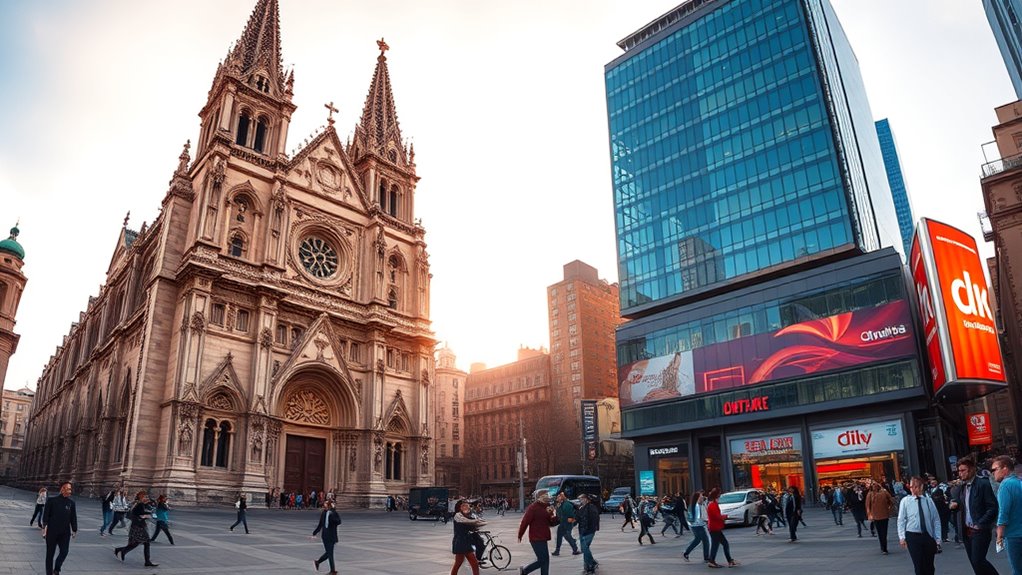
Walking through the boundaries that separate the sacred from the profane reveals how spaces are imbued with meaning and purpose. These boundaries aren’t just physical barriers; they serve as markers that define different types of experience and behavior. When you enter a sacred space, you’re stepping into an area that holds ritual significance, where the ordinary transforms into the extraordinary. These spaces are carefully structured through spatial boundaries—walls, altars, or even symbolic markers—that set them apart from the mundane. They create a sense of separation, signaling to you that what happens here is different, special, and deserving of reverence.
Understanding these boundaries helps you see how they shape your perception and behavior. For example, you might notice that sacred spaces often have specific entrances or thresholds, which you cross with a sense of respect or anticipation. These thresholds act as physical and symbolic divisions—think of a temple gate or a church door—that mark the crossing from everyday life into a domain of spiritual or cultural significance. They emphasize that what occurs within is not just another activity but an act of devotion, reflection, or ritual.
Thresholds mark the sacred from the ordinary, inviting reverence and anticipation.
The spatial boundaries in sacred spaces often serve to contain and focus attention, guiding your movements and interactions. They foster a sense of reverence, making you aware of the importance of the environment and your role within it. These boundaries also help to delineate different zones within the sacred space itself—such as a sanctuary versus a congregation area—each holding different levels of ritual significance. Such arrangements reinforce the hierarchy and symbolism embedded in the space, reminding you of the sacred order it embodies.
Furthermore, these boundaries often symbolize more than just physical separation; they represent a metaphysical divide between the profane and the sacred. When you cross into a sacred space, you’re not only moving physically but also entering a different domain of meaning. The design and structure of these boundaries are intentional, crafted to evoke a sense of awe and to facilitate spiritual or communal connection. They serve as visual and spatial cues that elevate your awareness, guiding your behavior and expectations.
Additionally, the concept of sacred space can extend to cultural and communal practices, where boundaries help preserve traditions and collective identity. They serve as a reminder that these spaces are repositories of shared beliefs, history, and values, fostering a sense of belonging and continuity.
In essence, spatial boundaries within sacred spaces aren’t arbitrary; they’re essential to the ritual significance of the environment. They shape your experience, marking the transition from the everyday to the sacred and helping you recognize the special purpose of the space. When you respect these boundaries, you honor the cultural and spiritual significance that these spaces hold, deepening your understanding and engagement with their profound meanings.
Top picks for "sacr profane space"
Open Amazon search results for this keyword.
As an affiliate, we earn on qualifying purchases.
Frequently Asked Questions
How Do Cultural Differences Influence Sacred and Profane Spaces?
Cultural differences shape how you perceive sacred and profane spaces through cultural symbolism and spatial boundaries. You might see certain places as sacred because of religious or historical significance, while others are profane due to everyday use. These boundaries vary across cultures, influencing your behavior and respect for these spaces. Understanding these differences helps you appreciate diverse perspectives and recognize how cultural context molds your experience of sacred versus profane environments.
Can a Space Be Both Sacred and Profane Simultaneously?
You might think a space can’t be both sacred and profane, but it’s more common than you realize. Sacred boundaries and profane zones can overlap, creating a complex dynamic where a place holds spiritual significance for some while remaining ordinary for others. This duality transforms space into a living, breathing entity—embracing both reverence and everyday use—proving that sacred and profane can coexist in one remarkable location.
What Role Do Rituals Play in Defining Sacred Space?
Rituals play a vital role in defining sacred space by emphasizing its ritual significance and establishing clear spatial boundaries. As you participate in rituals, you reinforce the sacred nature of the space, marking it as distinct from profane areas. These actions symbolize reverence and help maintain the sanctity, ensuring that the space remains a focal point for spiritual or cultural connection. Rituals therefore solidify the sacred character of a space.
How Has Modern Architecture Impacted Sacred Spaces?
Think of modern architecture as a key to urban sanctuaries, transforming sacred spaces into symbols of contemporary identity. You see architectural symbolism shaping these areas, blending tradition with innovation. It impacts how you experience sacred spaces, making them more accessible yet sometimes diluting their spiritual essence. By redefining form and function, modern architecture influences your connection to the sacred, creating environments that reflect evolving cultural values while maintaining their spiritual significance.
Are There Universal Symbols That Distinguish Sacred From Profane Areas?
Yes, there are universal symbols that distinguish sacred from profane areas, often through symbolic markers like altars, crosses, or specific architectural features. You can recognize sacred spaces by clear spatial boundaries, such as fences or steps, that set them apart. These markers and boundaries help convey their spiritual significance and guarantee respect and reverence, making it easier for you to identify and approach these areas with understanding and reverence.
Conclusion
As you explore the line between sacred and profane space, you might notice how everyday places suddenly feel more meaningful—perhaps a quiet park or a bustling market. It’s almost like the universe nudges you, revealing that the divine can hide in plain sight. When you start seeing these spaces through a different lens, you realize that the sacred isn’t just distant or rare; it’s quietly woven into your daily life, waiting for you to notice.