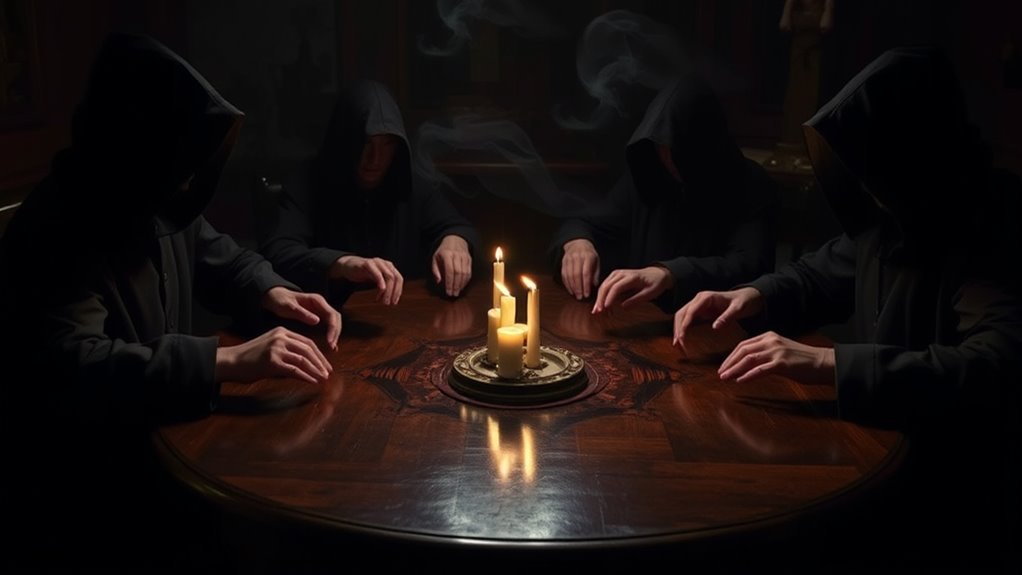

In the 19th century, table-tipping and seances became popular as people believed they could communicate with spirits through objects moving mysteriously. Participants often thought spirits guided these movements to send messages. However, scientific investigations reveal that involuntary muscle actions, known as ideomotor effects, and hidden mechanisms explain most phenomena. Despite skepticism, many still sought spiritual connection, but further exploration shows how illusions and human perception play key roles in such practices. Keep exploring to discover more about these intriguing phenomena.
Key Takeaways
- 19th-century table-tipping and seances aimed to communicate with spirits and were widely popular among the public.
- Skeptics and scientists demonstrated that movements were due to natural causes like involuntary muscle actions.
- Phenomena often involved hidden mechanisms or participant manipulation, explained by the ideomotor effect.
- Scientific investigations revealed that many supposed spirit influences were illusions or tricks, not supernatural events.
- Despite skepticism, the desire for spiritual connection persisted, highlighting the complex interplay between belief and illusion.
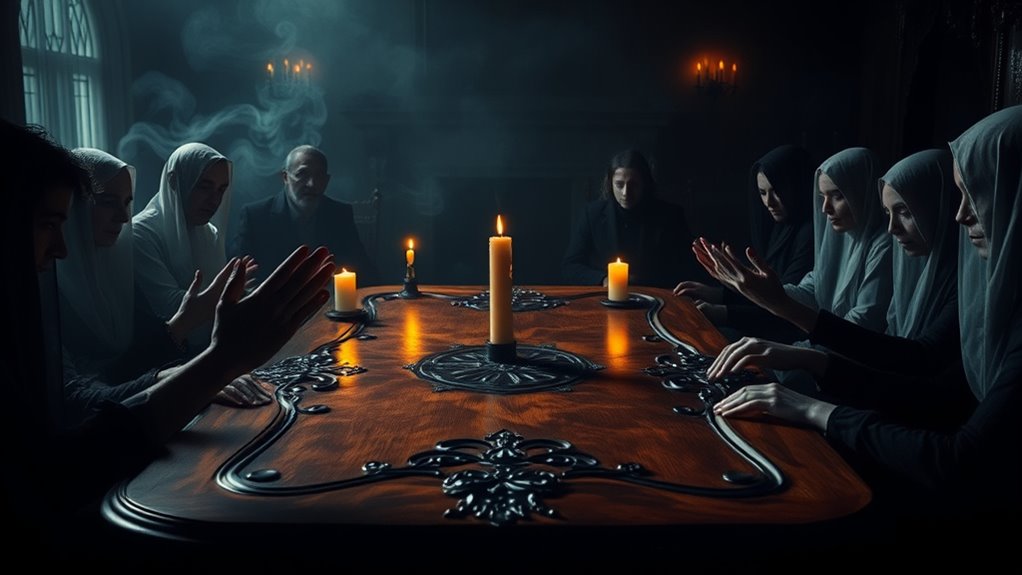
During the 19th century, table-tipping and seances gained widespread popularity as ways to communicate with spirits. People flocked to these gatherings, believing they could connect with loved ones who had passed away or access hidden spiritual knowledge. However, this surge in interest wasn’t without skepticism. Many skeptics questioned whether these phenomena were genuine or simply tricks. Over time, scientific investigations attempted to uncover the truth behind these practices, revealing a complex interplay between belief, illusion, and genuine mystery.
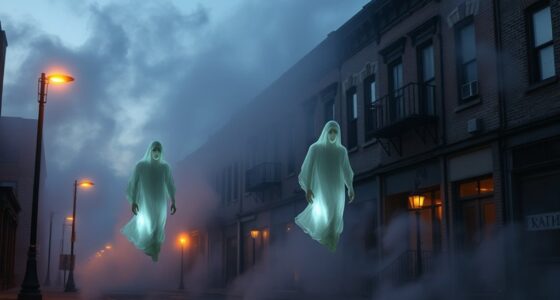
19th-century seances and table-tipping captivated many, blending belief, illusion, and scientific skepticism.
In the early days, many believed that spirits could manipulate physical objects, like tables or Ouija boards, to deliver messages from the beyond. These sessions often involved participants placing their hands on a table or planchette, which would then move seemingly on its own accord. But as skepticism grew, investigators started scrutinizing these movements more closely. They found that, in many cases, the movements were caused by involuntary muscle movements—known as ideomotor effects—rather than supernatural forces. This led to widespread doubts about the authenticity of seances and table-tipping as communication with spirits.
Scientific investigations played a *vital* role in shaping perceptions of these phenomena. Researchers, both amateur and professional, set up experiments to test whether the movements and sounds could be explained by natural causes or intentional deception. Many experiments revealed that, under controlled conditions, the supposed spirit influences disappeared. For example, when séance tables were examined carefully, they often showed signs of being manipulated or moved by hidden mechanisms or by participants deliberately or unconsciously applying force. These findings fueled the argument that many of these phenomena were illusions or tricks rather than evidence of the supernatural. Additionally, understanding the ideomotor effect helped explain why participants often moved objects unconsciously, further undermining claims of supernatural influence.
Despite the scientific skepticism, the allure of communicating with the dead persisted. Many practitioners continued to believe in the spiritual origins of their experiences, citing personal or anecdotal evidence that defied scientific explanation. Some even claimed that the investigations failed to account for certain phenomena that appeared inexplicable. Yet, the weight of scientific scrutiny pushed many to view table-tipping and seances as entertainment or psychological phenomena rather than genuine contact with spirits.
Today, the legacy of these investigations reminds us that human perception can be easily fooled and that our desire for connection with the beyond often blurs the line between reality and illusion. While some still believe in the spiritual aspects, the scientific investigations have largely demystified many of the physical phenomena associated with table-tipping and seances, emphasizing natural explanations over supernatural claims.
Frequently Asked Questions
Can Table-Tipping Be Performed Alone or Only in Groups?
You can perform table-tipping solo, but group dynamics often enhance the experience. When you practice alone, it relies solely on your movements and belief, making it more challenging to produce results. In a group, the collective energy can amplify the effects, making the phenomenon more likely to occur. While solo practice is possible, many find that working with others increases the chances of successfully tipping the table.
Are Certain Materials or Surfaces Better for Table-Tipping Sessions?
Think of the surface as a calm lake, where ripples can reflect spirits’ whispers. You’ll want materials with smooth, even surface properties for better results, like polished wood or glass. These surfaces reduce friction and irregularities, making table-tipping more responsive. Avoid rough or textured surfaces that can hinder movement. Choosing the right material transforms your session into a clear, undisturbed reflection of unseen energies.
How Can I Distinguish Genuine Spirit Activity From Trickery?
To distinguish genuine spirit activity from trickery, stay alert to psychic deception and environmental cues. Watch for sudden, unexplainable movements or sounds that aren’t caused by participants. Trust your instincts and observe if the activity persists despite skeptical scrutiny. Conduct sessions in well-lit environments, and ask for clear, observable phenomena. Genuine spirits often produce consistent, respectful signs, while trickery relies on distractions or hidden aids.
Is There a Risk of Negative Spirits During Seances?
Yes, there is a risk of negative spirits or negative energy during seances, which can sometimes lead to spirit possession or unsettling experiences. To protect yourself, set strong intentions, create a safe environment, and remain skeptical of any signs of malevolent activity. Trust your instincts and end the session if you feel uncomfortable or notice negative energy. Taking these precautions helps minimize the risk of encountering harmful spirits.
What Are the Legal Considerations Surrounding Seance Practices?
You need to be aware of legal risks when conducting seances, as laws vary by region. Make certain you’re adhering to local regulations and obtaining any necessary permits to avoid fines or legal action. Regulatory compliance is essential, especially if you’re operating as a business or public practitioner. Failing to follow these rules could lead to legal trouble, so always research your area’s specific laws and consult legal experts if needed.
Conclusion
As you explore table-tipping and seances, remember they invite gentle whispers from the beyond, softly guiding curious minds. While the spirits may seem to dance just out of reach, it’s your openness that truly opens the door. Embrace the mystery with a mindful heart, knowing that sometimes what’s unseen holds the deepest secrets. In this delicate dance, trust your intuition, and let the gentle flow lead you where curiosity wishes to go.