
Table-tipping and seances are practices from 19th-century spiritualism where mediums claim to communicate with spirits through physical phenomena like knocking sounds, moving objects, or rocking tables. You might have seen tables tilt or rock during a gathering, often with participants lightly touching them to “help” spirits send signals. While some see these as genuine contact, skeptics argue they’re tricks or subconscious movements. If you’re curious, exploring more reveals the fascinating history behind these mysterious cues.
Key Takeaways
- Seances, popular in the 19th century, involved mediums communicating with spirits through various phenomena, including table-tipping.
- Table-tipping features tables rocking or tilting, believed to be signals from spirits during spiritualist gatherings.
- Participants lightly placed hands on tables to facilitate movements, interpreting them as supernatural responses.
- Skeptics argue that table movements are caused by subconscious muscle movements or trickery, not spirits.
- Modern views see seances as historical entertainment or psychological phenomena, reflecting ongoing human curiosity about the afterlife.
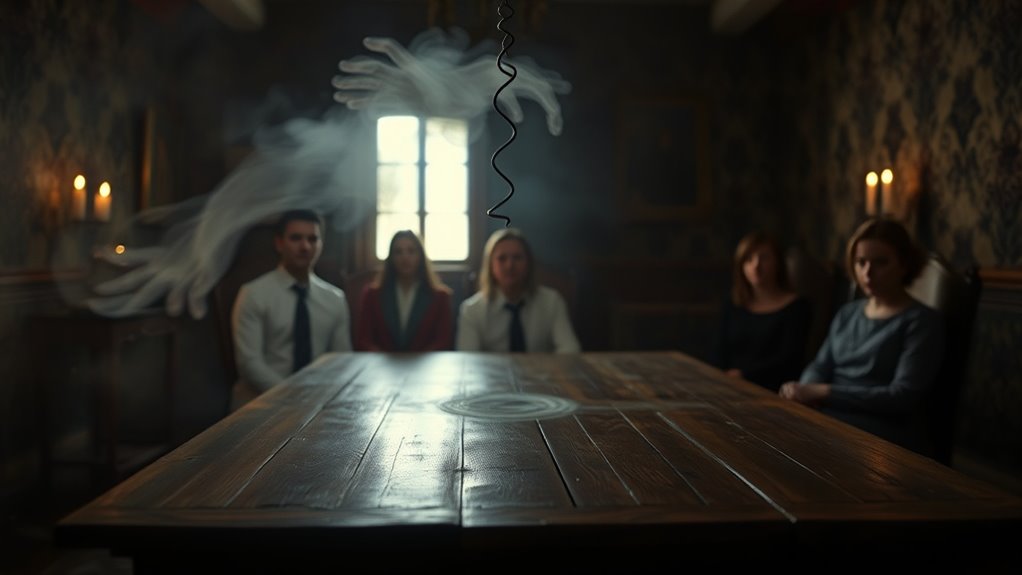
Have you ever wondered how table-tipping and seances became popular as ways to communicate with spirits? These practices emerged during a time when people desperately sought connections beyond the physical world, driven by curiosity, grief, or spiritual beliefs. Psychic phenomena, which include a range of perceived supernatural events, played a central role in fueling this fascination. In the 19th century, especially during the Victorian era, seances became a widespread social activity, often held in private homes or dedicated spiritualist churches. You might be surprised to learn that some of the earliest cases that popularized these methods were rooted in what are now called historical cases—events documented by witnesses who claimed to experience direct contact with spirits through mediums or by using tools like the Ouija board.
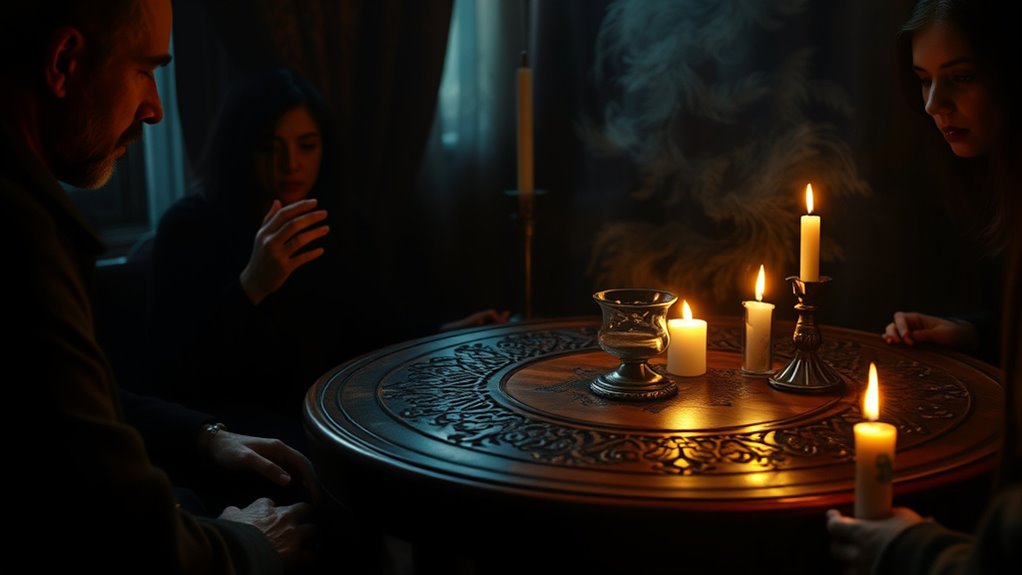
During those early days, many believed that spirits could communicate messages from the afterlife, offering comfort or warnings to the living. Seances typically involved a medium, who acted as a conduit for spirits, and a group of sitters who would ask questions and observe phenomena like knocking sounds, moving objects, or even apparitions. Table-tipping, in particular, became an iconic feature of these gatherings. Participants would place their hands lightly on a table, and seemingly inexplicable movements—such as the table rocking or tilting—would occur. These movements were often interpreted as spirits signaling their presence or answering questions.
Seances involved mediums and sitters, with table movements seen as spirits signaling their presence.
Historical cases of table-tipping and seances helped establish a pattern that persisted over decades. For example, the Fox sisters in the 1840s gained fame when they claimed to communicate with spirits through rapping sounds. Their story sparked a wave of interest in spiritualism, which spread rapidly across the U.S. and Europe. Skeptics, however, argued that such phenomena could be explained through tricks, subconscious movements, or deliberate hoaxes. Despite this, the allure of psychic phenomena persisted, and many continued to believe in the possibility of genuine spiritual communication. The psychic phenomena associated with these practices continue to influence modern perceptions of the supernatural.
Today, these practices are viewed with a mix of skepticism and fascination. Some see them as entertainment or psychological phenomena, while others believe they can still serve as genuine contact points with the spiritual domain. Whether you accept them as real or not, it’s undeniable that table-tipping and seances have left a lasting mark on cultural history, shaping how humans have sought to understand life after death. The historical cases from the past underscore just how powerful and enduring this desire to connect with spirits truly is.
spiritualist seance kit
As an affiliate, we earn on qualifying purchases.
As an affiliate, we earn on qualifying purchases.
Frequently Asked Questions
What Are the Psychological Effects of Participating in Seances?
Participating in seances can lead to psychological effects like heightened groupthink conformity, where you might prioritize the group’s beliefs over your own judgment. You could also experience cognitive dissonance, feeling torn between what you perceive and what you’re told, which may cause discomfort or doubt. These effects make you more susceptible to suggestions and reinforce shared beliefs, sometimes blinding you to rational thinking or personal skepticism during the session.
How Can One Distinguish Genuine Table-Tipping From Tricks?
Like peeling back layers of fog, you can spot genuine table-tipping by scrutinizing for psychological deception and physical manipulation. Watch for sudden movements, inconsistent rhythms, or hands that stay still when the table moves. Trust your instincts—if it feels too smooth or rehearsed, it’s likely tricks. Genuine phenomena often defy logical explanation, so question any suspicious behaviors and look for signs of deliberate manipulation.
Are There Legal Considerations for Hosting Seances?
When hosting seances, you should consider legal implications and liability concerns. It’s important to ascertain you’re not violating any laws related to fraud or false advertising, especially if you charge for participation. Additionally, be aware of safety regulations, as mishandling or neglecting safety could lead to liability issues if someone gets hurt. Consulting local laws and possibly obtaining permits can help you avoid legal trouble and protect yourself and your guests.
What Historical Figures Popularized Table-Tipping Phenomena?
You might find it surprising, but the spiritualist movement’s pioneers, like Andrew Jackson Davis and D. D. Home, popularized table-tipping phenomena. They believed in mediumship development, using these séances to bridge worlds. These figures acted as catalysts, turning table-tipping into a popular method to communicate with spirits. Their influence spread across the 19th century, fueling curiosity and skepticism alike, shaping modern spiritualist practices we still see today.
Can Seances Be Conducted Remotely or Only in Person?
Seances can be conducted remotely, allowing for remote participation through video calls or online platforms. Virtual séance benefits include convenience and wider accessibility, enabling you to connect with spirits from anywhere. You just need a stable internet connection and a respectful atmosphere. While some believe in the effectiveness of in-person sessions, remote seances open new possibilities for exploring paranormal communication, making it easier for more people to experience the phenomenon.
table-tipping spirit communication tools
As an affiliate, we earn on qualifying purchases.
As an affiliate, we earn on qualifying purchases.
Conclusion
As you explore the mysterious world of table-tipping and seances, remember that these practices are like whispers from the beyond, beckoning you to question what lies beyond our understanding. While they can feel enchanting, approach with caution—sometimes the greatest truths are hidden in the shadows. Keep your curiosity alive, but stay grounded, for the veil between worlds is thin, and crossing it can be as delicate as a butterfly’s wing.
mediumship séance supplies
As an affiliate, we earn on qualifying purchases.
As an affiliate, we earn on qualifying purchases.
psychic phenomena demonstration set
As an affiliate, we earn on qualifying purchases.
As an affiliate, we earn on qualifying purchases.