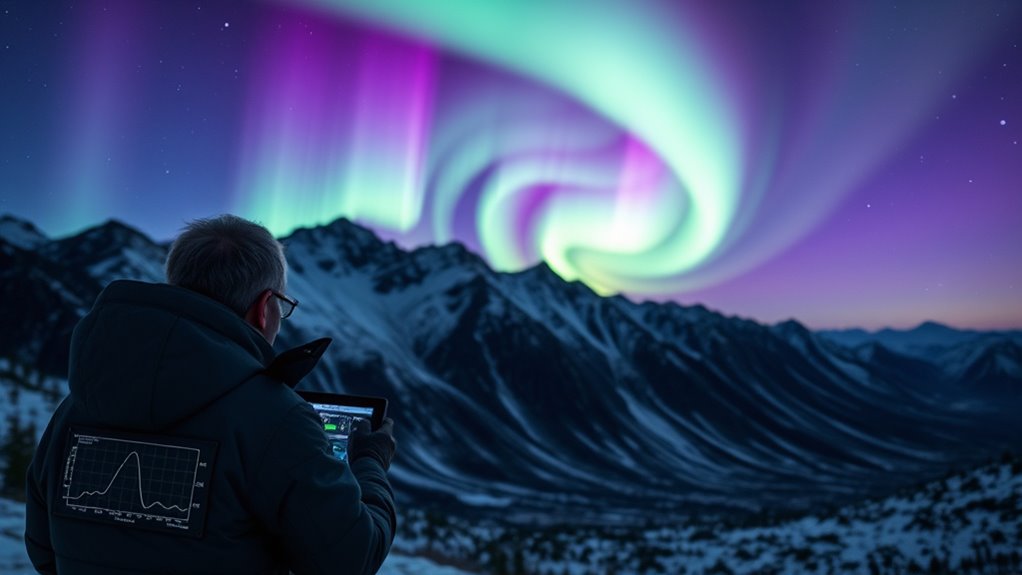

Earth’s magnetic field is generated by the movement of molten iron in its outer core, creating a dynamic shield that extends into space. This geomagnetic field interacts with solar wind, a stream of charged particles from the Sun, causing phenomena like auroras and geomagnetic storms. During solar activity peaks, this interaction intensifies, impacting technology and navigation. If you’re curious about how these processes work and their effects, you’ll find more fascinating details ahead.
Key Takeaways
- Earth’s magnetic field is generated by fluid motion of molten iron in its outer core, creating a dynamic magnetic environment.
- Interactions between solar wind and Earth’s magnetic field cause geomagnetic activity, including auroras and magnetic storms.
- Solar phenomena like solar flares and coronal mass ejections disturb the magnetosphere, leading to fluctuations and geomagnetic disturbances.
- These magnetic fluctuations can disrupt satellite operations, radio communications, and power grids worldwide.
- Understanding geomagnetism helps predict space weather effects and protects technological infrastructure from solar-induced activity.
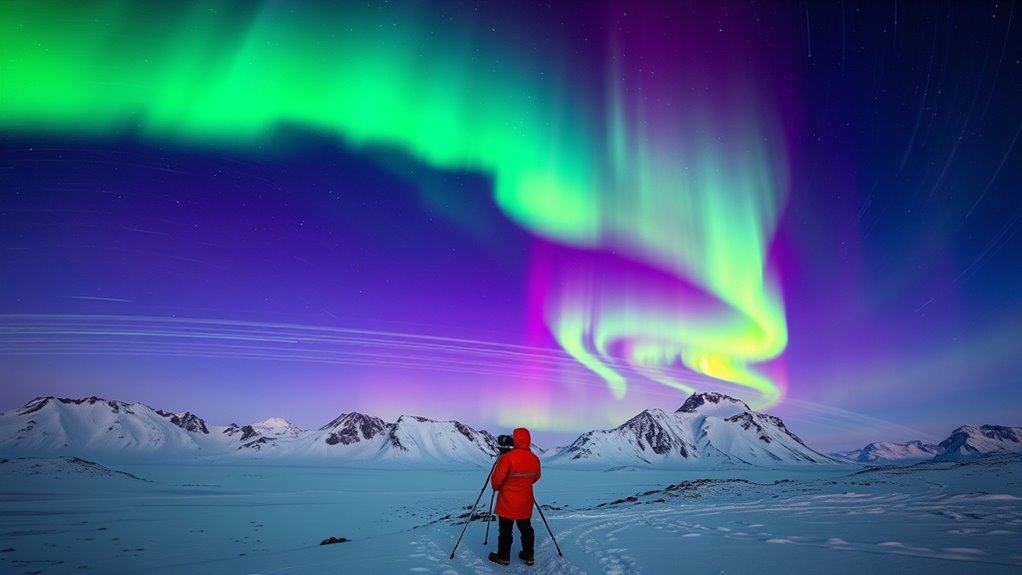
Geomagnetism is the natural phenomenon caused by the Earth’s magnetic field, which results from the movement of molten iron in its outer core. This dynamic process generates a magnetic field that extends from the planet’s interior into space, creating a protective shield known as the magnetosphere. As you explore this field, you’ll find that the magnetic poles—where the magnetic field lines converge—are essential to understanding how Earth’s magnetism works. These poles are not fixed; they wander over time due to changes in the Earth’s core, influencing navigation systems and compasses worldwide. The magnetic poles also define the auroras, which are spectacular light displays caused by charged particles interacting with Earth’s magnetic field.
The magnetosphere acts as a barrier against solar wind—a stream of charged particles emitted by the Sun. Solar wind constantly bombards Earth’s magnetic field, and in response, the magnetosphere deflects most of these particles, preventing them from reaching the surface. However, some particles become trapped in the Earth’s magnetic field lines, especially near the poles, leading to phenomena like the aurora borealis and aurora australis. When solar wind intensifies during solar storms, it can disturb the magnetosphere, causing geomagnetic activity that might impact satellite operations, radio communications, and even power grids on Earth. This interaction between solar wind and Earth’s magnetic field is a key driver of geomagnetic storms, which often produce visually stunning but potentially disruptive effects.
Understanding how the magnetic poles and solar wind interact helps you grasp the importance of Earth’s magnetic field in protecting life and technology. During periods of increased solar activity, such as solar flares or coronal mass ejections, the influx of energetic particles can cause fluctuations in the magnetic field. These fluctuations can lead to geomagnetic disturbances, affecting navigation systems, disrupting radio signals, and creating beautiful auroras at high latitudes. The dynamic nature of Earth’s magnetic field is a testament to the complex internal processes within the planet and its constant battle with solar energy. Additionally, geomagnetism plays a crucial role in guiding migratory species and influencing animal navigation systems that rely on Earth’s magnetic cues.

FLIR E5 Pro - Commercial Thermal Imaging Camera with Wifi. High Resolution Infrared Camera with FLIR Ignite Cloud
Model E5 Pro: Handheld IR camera measures temperatures from -20°C to 400°C (-4°F to 752°F)
As an affiliate, we earn on qualifying purchases.
Frequently Asked Questions
How Does Geomagnetism Affect Modern Technology?
Geomagnetism impacts your technology by disrupting satellite signals and power grids during solar flares. These intense bursts of energy can weaken magnetic shielding, causing electrical surges and communication failures. You might experience issues with GPS, radio, or even blackouts. To protect your devices, engineers design magnetic shielding that deflects harmful solar particles, ensuring your technology remains functional even during solar activity.
Can Geomagnetic Activity Influence Human Health?
Think of geomagnetic activity as a gentle tide washing over your body, influencing your well-being. Magnetic field impacts can cause subtle human health effects, like sleep disturbances, headaches, or fatigue. While research is ongoing, you may notice your body reacts during intense geomagnetic storms. Stay mindful of these changes, as understanding magnetic field impacts helps you better manage your health during periods of heightened geomagnetic activity.
What Are the Primary Natural Sources of Geomagnetic Disturbances?
You should know that the primary natural sources of geomagnetic disturbances are solar wind and magnetic anomalies. Solar wind, a stream of charged particles from the sun, interacts with Earth’s magnetic field, causing fluctuations. Magnetic anomalies, areas with irregular magnetic properties in Earth’s crust, also disrupt the magnetic field. Together, these factors create geomagnetic disturbances that can affect communication systems, satellites, and even power grids on Earth.
How Are Scientists Able to Predict Geomagnetic Storms?
While predicting storms is complex, scientists rely on real-time data from magnetic sensors and solar wind observations. They monitor solar activity for signs like solar flares and coronal mass ejections, which can trigger geomagnetic storms. By analyzing this data, they forecast potential disturbances, giving us vital warning time. This proactive approach helps protect satellites, power grids, and communication systems from the disruptive effects of space weather.
Are There Any Long-Term Climate Effects Linked to Geomagnetic Changes?
You might wonder if geomagnetic changes impact climate long-term. While secular variation causes gradual shifts in Earth’s magnetic field, current research suggests limited direct effects on climate modulation. These magnetic changes influence space weather, but there’s no strong evidence linking them to significant long-term climate effects. However, ongoing studies continue to explore potential subtle influences, so staying updated will help you understand any future discoveries in this area.

FOXWELL RT280 Thermal Imaging Camera, 320 X 240 2.8" LCD Screen Thermal Camera, TISR Resolution 240 x 180, 25Hz Handheld Infrared Cameras with Laser, PC Analysis, Photo & Video Recording, 8GB
【Enhanced Thermal Clarity for Precise Inspections】The RT280 handheld thermal imaging camera features a 2.8-inch 320×240 LCD screen for...
As an affiliate, we earn on qualifying purchases.
Conclusion
As you explore into the mysteries of geomagnetism and reported activity, one thing becomes clear: there’s still so much we don’t fully understand. Every new discovery hints at secrets waiting to be uncovered, leaving you on the edge of anticipation. Could these phenomena hold the key to future breakthroughs or hidden dangers? Keep exploring, because the next revelation might just change everything you thought you knew about our planet’s magnetic secrets. The story isn’t over yet.

FLIR TG165-X Thermal Imaging Camera with Bullseye Laser: Commercial Grade Infrared Camera for Building Inspection, HVAC and Electrical
MODEL TG165-X: 4,800 pixel IR camera measures temperatures from -25°C to 300°C (-13°F to 572°F)
As an affiliate, we earn on qualifying purchases.

Klein Tools TI223 Mobile Thermal Imaging Camera, Thermal Imager for iOS and Android, 19,200 Pixels, Wide Temperature Range of -4 to 752-Degree Fahrenheit, Professional Infrared Camera
19,200-PIXEL RESOLUTION: High-quality thermal imaging camera delivers excellent resolution for troubleshooting hot and cold spots in electrical and...
As an affiliate, we earn on qualifying purchases.