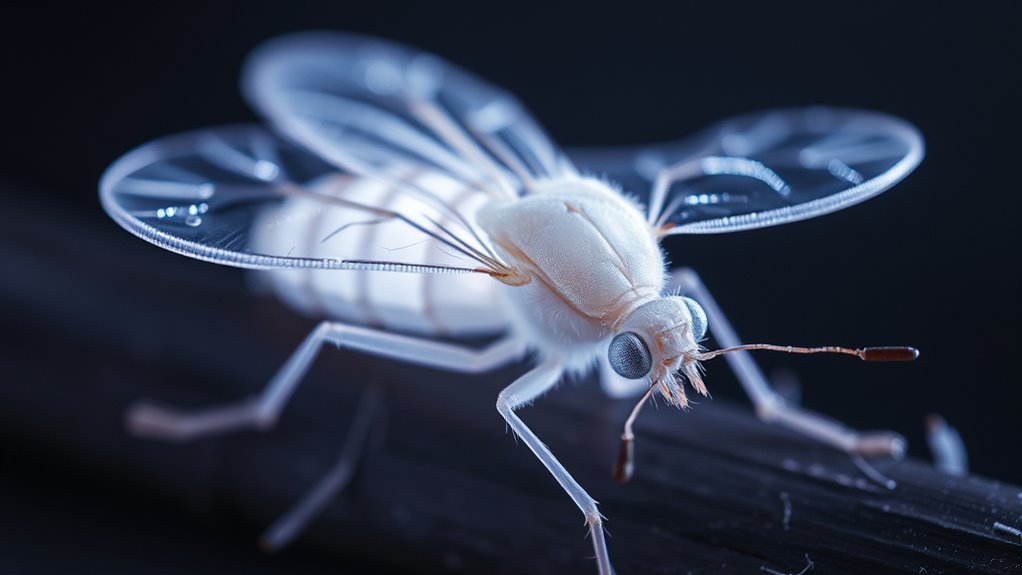

Infrared light helps cameras see in low-light conditions by detecting near-infrared wavelengths, which are invisible to humans. Fascinatingly, many insects can also perceive these wavelengths, seeing infrared as a heat source or signal. This causes insects to be attracted to infrared-equipped cameras, sometimes obstructing footage or gathering around the lens. Understanding this interaction reveals why insects behave this way around IR devices, and exploring further shows you how to minimize these effects effectively.
Key Takeaways
- Many insects can perceive near-infrared wavelengths, making IR light attractive to them, especially at night.
- Insects use infrared cues for navigation, feeding, and mating, mistaking IR sources for food or mates.
- Infrared illumination in cameras emits light that insects interpret as heat or signals, leading to increased attraction.
- The attraction of insects to IR can cause obstructions, residues, or interference with camera footage and operation.
- Understanding insect IR sensitivity helps in selecting camera settings and lighting to minimize insect attraction.
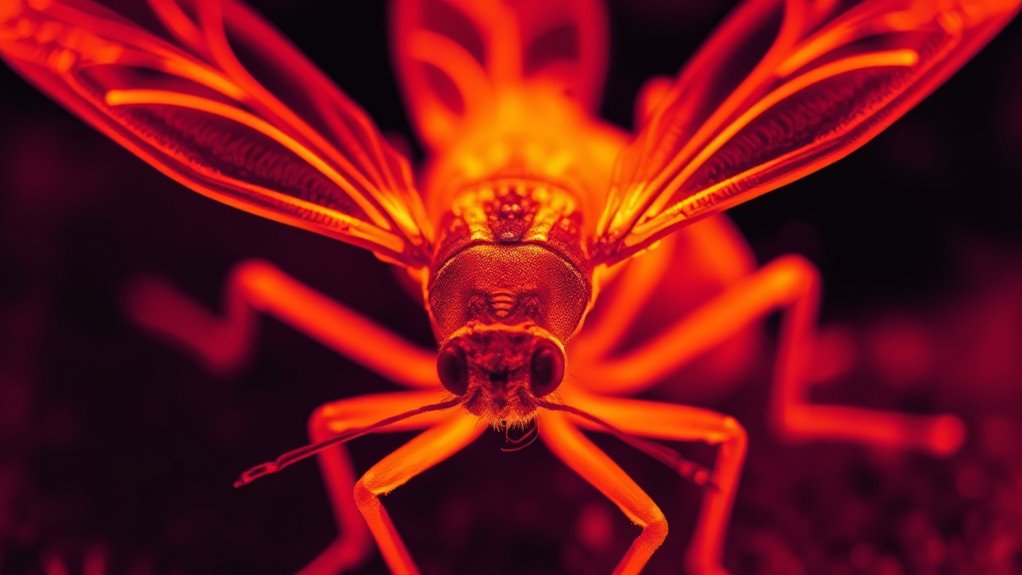
Infrared light plays a significant role in how cameras capture images in low-light conditions, but it can also attract insects that are sensitive to this wavelength. When you use infrared illumination, your camera sensor detects this invisible light to produce clear images in darkness. However, many insects have evolved to perceive infrared or near-infrared wavelengths, which can influence their behavior around illuminated cameras. Understanding this interaction helps you grasp why insects might gather near infrared-equipped devices, especially at night. Additionally, the behavioral responses of insects to infrared light are complex and vary among species, affecting how they interact with illuminated devices. Your camera sensor is designed to detect specific wavelengths of light, typically visible and sometimes near-infrared. When infrared light is emitted, the sensor registers it as part of the scene, enabling high-quality imaging without visible illumination. But for insects, this light can be a beacon. Certain insects, such as moths and beetles, have sensory organs that are highly sensitive to infrared or similar wavelengths, making infrared sources particularly attractive to them. As a result, when your camera emits infrared light, it may inadvertently draw insects toward it, with some even perceiving it as a source of heat or a signal of a nearby food source.
Infrared light attracts insects sensitive to this wavelength, increasing their activity around illuminated cameras at night.
Insect behavior around infrared light is driven by their evolved sensitivity to specific wavelengths, which they use for navigation, feeding, and avoiding predators. Many insects are naturally drawn to light sources—an instinct that can be amplified by infrared illumination. They may approach the camera, thinking it’s a natural part of their environment, or mistaking infrared signals for cues related to food or mates. This attraction can lead to increased insect activity near your camera, often creating the impression that it’s a magnet for bugs.
This behavior impacts not only the clarity of your footage but also the longevity of your equipment. Insects gathering around the camera can interfere with its functioning, cause physical obstructions, or leave residues that affect lens clarity. Recognizing that your camera’s infrared light can influence insect behavior is vital, especially if you’re aiming for discreet or unobstructed surveillance. To mitigate this, you might consider using cameras with adjustable infrared settings or employing alternative lighting solutions that are less attractive to insects.
Top picks for "science behind infrar"
Open Amazon search results for this keyword.
As an affiliate, we earn on qualifying purchases.
Frequently Asked Questions
Do All Insects React to Infrared Light Similarly?
Not all insects react to infrared light similarly. Your observation depends on their insect behavior and infrared sensitivity, which vary widely among species. Some insects might ignore infrared signals, while others could be attracted or repelled by them. You should expect differences based on their sensory adaptations. Understanding these variations helps you interpret insect responses more accurately, especially when using infrared light in camera studies or trapping techniques.
Can Infrared Light Harm or Disturb Insects?
Ever wonder if infrared light harms insects? Generally, infrared light is safe and doesn’t disturb insect behavior because it’s outside their visible spectrum. Infrared insect behavior remains unaffected, making it a useful tool for observation. However, prolonged exposure or intense infrared light might cause discomfort or minor disturbances in some insects. Always consider infrared light safety to confirm your observations don’t interfere with natural insect activity.
Why Do Some Insects Appear to Glow in Infrared Images?
You notice some insects glow in infrared images because of infrared reflection. Their exoskeletons or bodies reflect infrared light differently than their surroundings, creating a distinct glow. This glow occurs because certain materials or surfaces on insects have high reflectivity in the infrared spectrum. As a result, infrared cameras capture this reflection, making the insects appear to glow, highlighting their presence even in darkness or obscured conditions.
How Does Camera Sensitivity Affect Insect Detection With Infrared?
Your camera’s sensitivity directly impacts how well you can detect insects with infrared. Higher sensitivity allows the infrared sensor to pick up even faint signals, making insects more visible. Proper camera calibration guarantees accurate detection, while understanding different infrared sensor types helps you choose the best equipment for your needs. Adjusting sensitivity settings and selecting the right sensor type improves your chances of spotting insects in infrared images effectively.
Are There Specific Infrared Wavelengths More Attractive to Insects?
You’ll find that certain infrared wavelengths, especially in the near-infrared range around 850 to 950 nanometers, are more attractive to insects due to their sensitivity to specific insect wavelengths. Infrared attraction depends on the insect species and their visual or sensory receptors. By targeting these preferred insect wavelengths with your camera’s infrared light, you can improve detection and observation, making your setup more effective for studying or monitoring insect activity.
Conclusion
Now, as you observe insects through infrared cameras, remember they’re revealing secrets hidden in the dark, yet remain invisible to the naked eye. Their tiny movements contrast sharply with the vast, silent universe of infrared light that unearths them. This juxtaposition reminds you that even the smallest creatures can unlock incredible insights, bridging nature and technology. As you explore this unseen world, you realize how much remains hidden, waiting for your curiosity to uncover it.