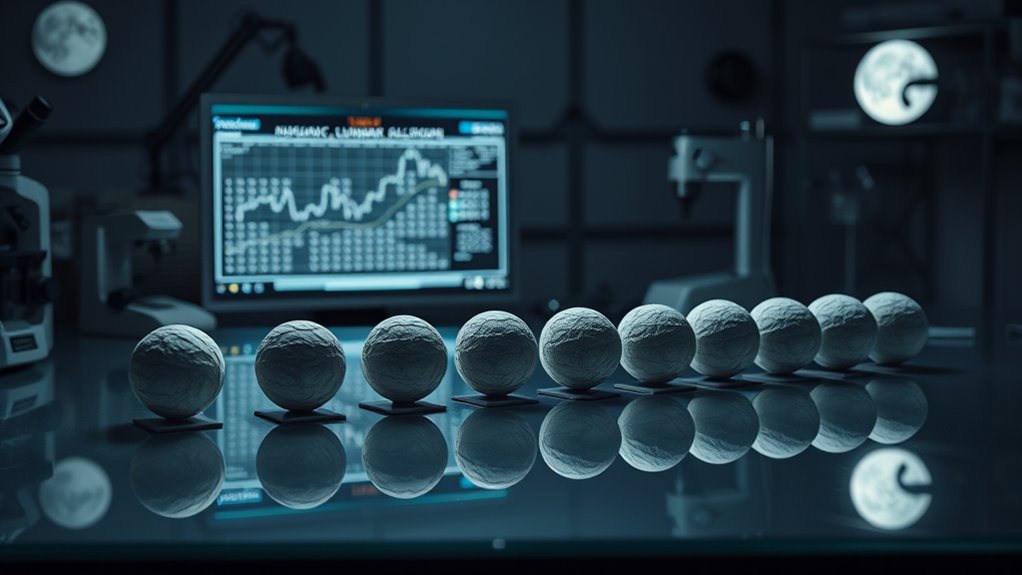

Lunar cycles are thought to influence human behavior and societal activity due to shifts in moonlight, gravitational effects, and cultural beliefs. During full moons, increased tidal forces may subtly affect our bodies of water, potentially impacting sleep, mood, and impulsivity. While some studies observe spikes in emergency visits and crises during these phases, results are mixed. To uncover the true science behind these patterns, keep exploring how lunar cycles might affect case frequency.
Key Takeaways
- Some studies suggest increased emergency and psychiatric cases during full moons, but findings are inconsistent.
- Lunar phases influence tidal forces, which may subtly affect human physiology due to body water content.
- Psychological factors, such as cultural beliefs and expectations, may contribute to perceived behavioral changes during lunar cycles.
- Scientific evidence linking lunar cycles directly to case frequency remains inconclusive, requiring further research.
- Societal observations of activity fluctuations around lunar phases highlight ongoing interest but lack definitive causation proof.
Many researchers have noted a potential link between lunar cycles and the frequency of certain cases, such as emergency room visits, psychiatric incidents, and criminal activity. This connection often revolves around the different moon phases, which are believed to influence human behavior and societal patterns. While the scientific community remains divided on the strength of this relationship, some studies suggest that the changing moon phases can indeed impact people’s actions, partly through tidal effects that extend beyond the oceans and into human physiology. Additionally, some researchers hypothesize that the biological rhythms of humans may synchronize with lunar cycles, further influencing behavioral patterns. Moon phases, which include the new moon, crescent, quarter, and full moon, create variations in moonlight and gravitational pull. These fluctuations are thought to influence not just the tides in the oceans but also the internal fluids within our bodies. The tidal effects generated by the moon’s gravitational pull are well-documented in marine environments, where they cause regular rise and fall of sea levels. Some theorists propose that these same tidal effects could subtly impact human biology, especially since our bodies are composed of mostly water. During a full moon, when tidal effects are strongest, there’s a hypothesis that people may experience changes in sleep patterns, mood, and even impulsivity, which could lead to increases in certain incidents. Research into these phenomena shows mixed results. Some studies find a higher incidence of emergency room visits and psychiatric crises during full moons, while others see no significant correlation. It’s important to note that these findings might be influenced by psychological factors, such as the expectation of increased activity during a full moon, rather than a direct physiological response. Nonetheless, the idea persists that moon phases could subtly influence human behavior, with the tidal effects playing a role in how our bodies react during different lunar stages. You might notice that hospitals and law enforcement agencies sometimes observe fluctuations in activity aligned with lunar cycles. While this isn’t definitive proof of causation, it fuels ongoing curiosity and research into the science behind lunar cycles and case frequency. The connection between moon phases and behavioral changes remains a fascinating intersection of astronomy, psychology, and sociology. Whether it’s the gravitational pull influencing our biological rhythms or simply a psychological effect rooted in tradition and observation, the influence of tidal effects and moon phases continues to be a topic worth exploring. As science advances, you can expect more clarity on how these celestial patterns truly affect human behavior and societal dynamics.
sleep tracking device
As an affiliate, we earn on qualifying purchases.
As an affiliate, we earn on qualifying purchases.
Frequently Asked Questions
How Do Lunar Cycles Influence Human Behavior Beyond Case Frequency?
Lunar cycles can influence your psychological effects and sleep disruptions. As the moon phases change, you might notice shifts in your mood, increased anxiety, or feelings of restlessness. Sleep quality can also suffer, with some experiencing difficulty falling asleep or waking up frequently. These effects are linked to hormonal changes and psychological responses to lunar cues, making your mental health and sleep patterns more sensitive to the moon’s phases.
Are There Specific Lunar Phases Linked to Increases in Case Severity?
You might notice that certain moon phases, like the full moon, can act as a magnet, pulling up case severity levels. During these times, the moon phase seems to amplify emotions and tensions, leading to more severe cases. The full moon, in particular, is linked to spikes in case severity, making it a powerful reminder that lunar cycles aren’t just celestial events—they can influence the intensity of human responses.
Can Lunar Cycles Predict Other Health-Related Events Besides Case Frequency?
You can’t reliably predict other health-related events solely based on moon phases. While some studies suggest that moon phases might influence sleep patterns, the evidence isn’t strong enough to forecast specific health issues. Your sleep quality might fluctuate with lunar cycles, but other health events depend on many factors beyond moon phases. Rely on medical advice and evidence-based practices for managing your health, rather than lunar predictions.
Do Cultural Beliefs Affect the Perception of Lunar Influence on Cases?
Yes, cultural beliefs substantially influence how you perceive lunar effects on cases. Superstitious beliefs and cultural interpretations shape your view, often linking full moons or new moons to increased incidents or behaviors. These perceptions can lead you to notice patterns that align with cultural narratives, even if scientific evidence is lacking. Your cultural background plays a key role in whether you see lunar influence as real or just superstition.
How Does Moonlight Intensity Impact the Correlation Between Lunar Cycles and Case Frequency?
Like a moonlit night revealing hidden secrets, increased moonlight intensity heightens the perceived link between lunar cycles and case frequency. When lunar illumination is brighter, you might notice more activity or incidents, as moonlight seems to amplify the moon’s influence. This correlation can seem stronger, prompting you to pay closer attention during nights with intense moonlight, where the moon’s glow appears to cast a magnetic pull on behaviors and events.
mood journal app
As an affiliate, we earn on qualifying purchases.
As an affiliate, we earn on qualifying purchases.
Conclusion
As you ponder the gentle dance of the moon’s phases, you might notice subtle shifts in case frequencies, almost like a quiet rhythm guiding events. While the connection isn’t always clear-cut, embracing the mystery can bring a calming sense of harmony. Remember, the universe often whispers its secrets softly. So, enjoy the subtle ebb and flow, trusting that nature’s gentle rhythm offers its own kind of reassurance and balance.
psychiatric crisis emergency kit
As an affiliate, we earn on qualifying purchases.
As an affiliate, we earn on qualifying purchases.
moon phase calendar
As an affiliate, we earn on qualifying purchases.
As an affiliate, we earn on qualifying purchases.