

Your brain transforms chaotic background noise into meaningful voices by processing sound waves into electrical signals, which travel along neural pathways. It recognizes patterns by filtering out irrelevant sounds and focusing on speech features like frequency, amplitude, and timing. The auditory cortex then analyzes these signals, enhancing voices and suppressing noise. Thanks to neural plasticity, your brain continually adapts, improving speech understanding even in noisy environments. Keep exploring to discover more about how your brain makes sense of sound.

Get books and cozy reading nights delivered free with Prime
- Fast, free delivery on millions of items
- Prime Video, Amazon Music and more included
- Member-only deals all year
Key Takeaways
- The auditory system converts sound vibrations into electrical signals for neural processing.
- Neural networks recognize and filter specific sound patterns, distinguishing speech from noise.
- The auditory cortex analyzes signals to enhance voices and suppress background noise.
- Neural plasticity allows the brain to adapt and improve speech recognition through experience.
- Environmental exposure sharpens neural filtering, enabling the brain to interpret chaotic sounds as meaningful voices.
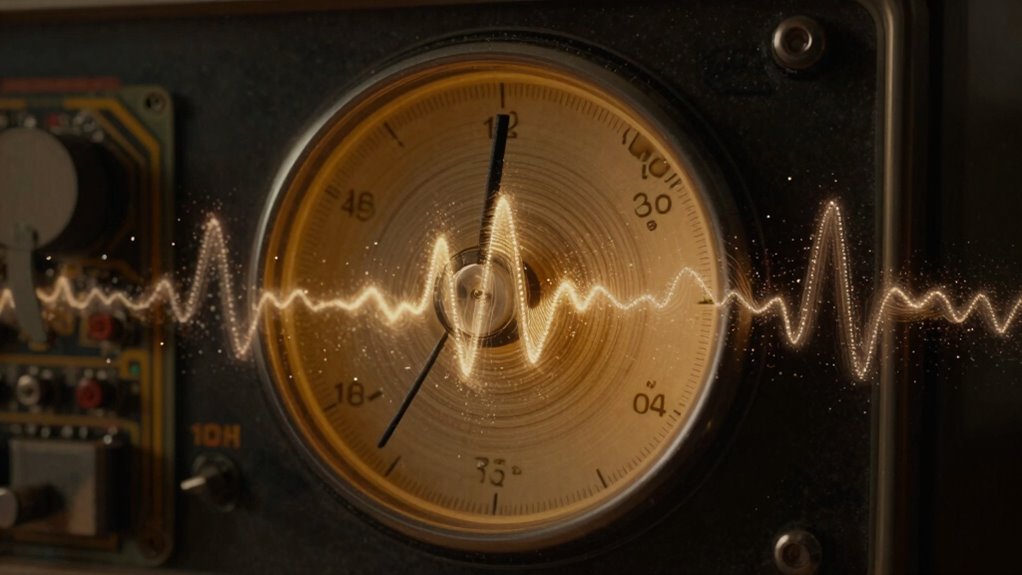
Have you ever wondered how seemingly random noise can transform into clear, meaningful voices? It’s a fascinating process, one that hinges on the brain’s incredible ability to interpret and organize chaotic signals. Your brain’s neural wiring and signal processing skills work together seamlessly to turn static into speech. When sound waves reach your ears, they’re initially just raw data—vibrations in the air. Your auditory system then converts these vibrations into electrical signals, which travel along complex neural pathways. This is where neural wiring becomes essential. Your brain’s neural networks are finely tuned to recognize patterns, filtering out irrelevant noise and focusing on meaningful sounds. Over time, your brain learns to distinguish speech from background noise, constantly refining its signal processing abilities.
Signal processing in your brain is a sophisticated operation. It involves breaking down the incoming electrical signals into smaller, manageable components, like analyzing the frequency, amplitude, and timing of sounds. This analysis happens in various parts of the auditory cortex, where neurons are specifically wired to detect speech patterns. These neurons function like an intricate filter, enhancing the clarity of voices while suppressing the noise. Your brain effectively reconstructs the signals, emphasizing the linguistic features that make speech intelligible. This process is so efficient that, most of the time, you don’t even realize how much work is happening behind the scenes. Additionally, this remarkable ability relies on neural plasticity, allowing your brain to adapt and improve its filtering skills through experience. Developing this skill further can be supported by targeted auditory training, which helps refine your neural filtering.
Furthermore, the neural wiring involved in this process is highly adaptable, which is why training or repeated exposure can significantly improve speech recognition in noisy environments. The brain’s capacity for neural adaptation ensures that these skills can develop further with practice and exposure. This flexibility highlights just how dynamic and responsive the human brain truly is.
Your neural wiring is vital because it adapts based on your experiences and environment. For example, if you spend time in noisy places, your brain gets better at filtering out distractions, sharpening its signal processing skills. This adaptability is part of what makes human communication so flexible. It’s not just about hearing sounds; it’s about your brain actively interpreting, organizing, and making sense of the chaos into meaningful voices. Without this neural wiring and advanced signal processing, the muffled static would stay indecipherable, and conversations would be impossible to follow. Instead, your brain continually learns and improves, turning the noise into the rich, dynamic voices you understand every day. So, the next time you listen to someone speak clearly amid a noisy room, remember the incredible neural wiring and signal processing that make it all possible.
As an affiliate, we earn on qualifying purchases.
Frequently Asked Questions
What Types of Noise Can Be Transformed Into Meaningful Signals?
You can transform various types of noise, like white noise or static, into meaningful signals through signal processing techniques. Auditory illusions often emerge when your brain interprets random sounds as recognizable voices or patterns. By filtering, amplifying, or analyzing these noises, you can reveal underlying structures or messages, making seemingly meaningless sounds into valuable, interpretable signals. This process highlights how noise can become a source of meaningful auditory information.
How Long Does the Conversion Process Typically Take?
Conversion time varies, but it often takes seconds to minutes, much like tuning a radio to find a clear station amid static. During this process, algorithms analyze the noise, balancing data privacy with accuracy. For example, in speech recognition, refining signals can take a few moments, ensuring the voice is clear without compromising privacy. The key is optimizing algorithm accuracy while respecting data privacy, making the process both quick and reliable.
Can Machines Fully Interpret the Transformed Voices?
Yes, machines can interpret transformed voices, thanks to artificial intelligence and acoustic modeling. AI algorithms analyze the patterns in the converted sounds, allowing the system to understand speech with high accuracy. Acoustic modeling helps the machine recognize phonemes and words, making full interpretation possible. While some challenges remain, especially with noisy environments or accents, ongoing advancements are steadily improving machines’ ability to comprehend transformed voices effectively.
What Are the Practical Applications of This Noise-To-Voice Technology?
They say “where there’s a will, there’s a way,” and noise-to-voice technology proves that. You can use it for audio enhancement, making distant or muffled sounds clearer. It also aids in signal reconstruction, restoring lost voices in communication systems or for forensic analysis. These practical applications enhance everyday interactions, guarantee better communication, and improve security, turning chaos into clarity and making the impossible possible through innovative audio processing.
Are There Ethical Concerns With Transforming Noise Into Voices?
Yes, there are ethical concerns with transforming noise into voices. You need to take into account privacy implications, as this technology could inadvertently capture and reproduce private conversations or sensitive data. Consent challenges also arise, since people might not realize their noise is being turned into voices or used without permission. Ensuring transparent practices and obtaining clear consent are essential to address these ethical issues and protect individual rights.
Conclusion
As you listen closely, the chaos of noise begins to shimmer, like a storm giving way to dawn. From the wild, untamed static, whispers emerge—meaningful voices breaking through the darkness. It’s as if the universe is weaving a tapestry from scattered threads, transforming chaos into clarity. In this dance of randomness, you see how even the loudest noise can bloom into a symphony of understanding, reminding you that order often hides within the chaos.
Fall Picks
fall essentials
As an affiliate, we earn on qualifying purchases.