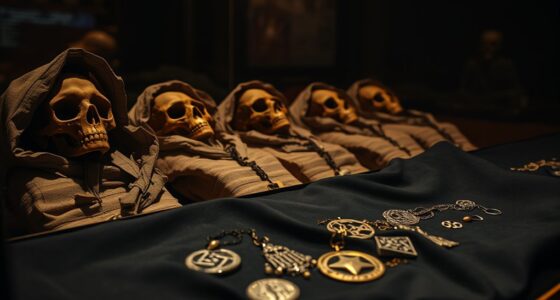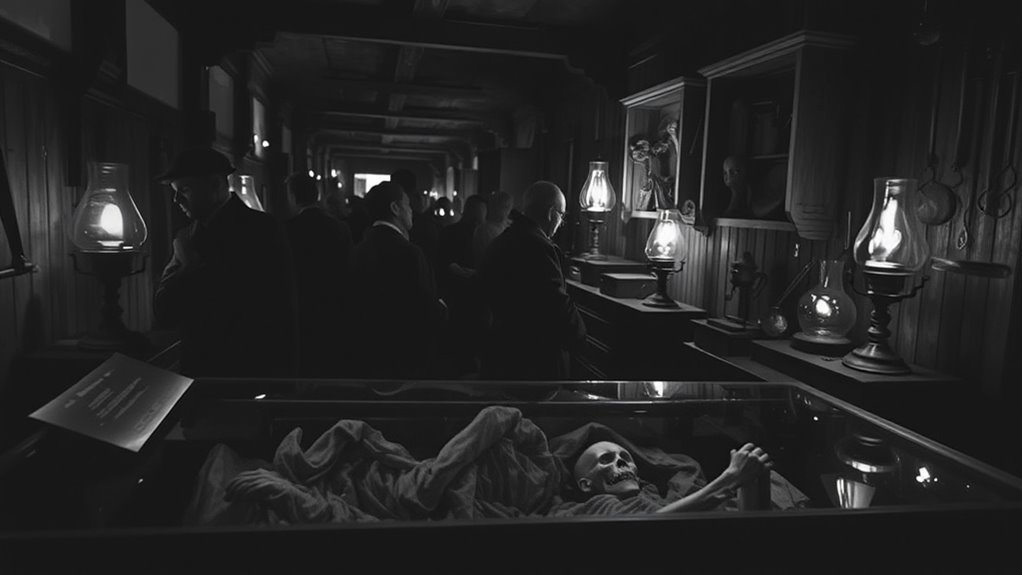

Fears of being buried alive stem from cultural beliefs, superstitions, and medical uncertainties that led societies to worry about premature declarations of death. These anxieties prompted safety innovations like signaling coffins and air vents, often driven by societal fears more than actual risk. Mistakes in diagnosing death, especially with conditions mimicking natural death, fueled the panic. Understanding these origins reveals how cultural and medical misconceptions shaped history—and if you continue exploring, you’ll uncover how these fears influenced science and safety measures.

Get books and cozy reading nights delivered free — and shop member deals
- Fast, free delivery on millions of items
- Access to Prime Big Deal Days deals on October 6–7
- Prime Video, Amazon Music and more included
Key Takeaways
- Historical fears of being buried alive originated from cultural superstitions, religious beliefs, and stories fueling public hysteria.
- Medical uncertainties and misdiagnoses contributed to premature declarations of death, escalating burial-related anxieties.
- Innovations like safety coffins and signaling devices emerged mainly from societal fears rather than medical necessity.
- Cultural narratives and myths reinforced the obsession with avoiding premature burial, shaping medical and societal responses.
- Modern science has nearly eliminated the risk, highlighting how cultural fears historically influenced medical practices and innovations.

Throughout history, fears of being buried alive have sparked widespread panic and even shaped medical practices. These fears often stemmed from deep-seated cultural beliefs and misconceptions about death and the afterlife. Many societies, influenced by religious and superstitious notions, believed that the moment of death was not always clear-cut, leading to genuine anxiety about premature burial. This cultural fear was amplified by stories of people waking up in coffins, which fueled public hysteria and prompted the development of safety measures like signaling devices and special coffins with air vents. Yet, at the core of these fears were medical misconceptions about the signs of death. Medical science at different points in history lacked the precision and understanding we have today, so doctors sometimes pronounced death prematurely or delayed declaring it, unintentionally increasing the risk of burial alive. In some cases, conditions such as coma, catatonia, or certain neurological disorders mimicked death, further fueling fears that death could be mistaken or that someone might wake up too late.
You might not realize how these cultural fears influenced medical practices. For example, during the 18th and 19th centuries, some doctors developed elaborate “safety coffins” equipped with bells or breathing tubes, designed to alert loved ones if the person was buried alive. These inventions stemmed directly from the widespread anxiety rooted in both medical misconceptions and cultural fears. Many believed that death was reversible or that early symptoms of life could be overlooked, leading to dangerous assumptions. In some cultures, stories of punishment or divine retribution after death added to the anxiety, reinforcing the belief that one could be mistakenly declared dead. This societal backdrop created a climate where the fear of premature burial became almost an obsession, shaping both popular myth and medical caution.
Today, advances in medicine and forensic science have all but eradicated the genuine danger of being buried alive, but the historical panic reveals much about human fears and misunderstandings. It underscores how cultural fears can influence medical practice, leading to innovations born out of anxiety rather than necessity. Understanding these origins helps us appreciate how fears, misconceptions, and societal beliefs can intersect with science—sometimes with unintended consequences. While modern medicine has dispelled many of these fears, the stories from the past serve as a reminder of how powerful cultural and medical misconceptions can be in shaping history and public consciousness.
safety coffins with signaling devices
As an affiliate, we earn on qualifying purchases.
As an affiliate, we earn on qualifying purchases.
Frequently Asked Questions
How Did Burial Practices Influence Fears of Being Buried Alive?
Your fears of being buried alive stem from resurrection fears and the design of coffins. As people worried about waking up underground, coffin designs evolved with safety features like bells and air tubes to prevent panic. These innovations show how burial practices directly influenced fears, making you more anxious about being trapped. The combination of resurrection fears and coffin designs fueled the panic, prompting efforts to improve safety and ease anxieties.
What Role Did Medical Advancements Play in Ending These Panics?
Medical innovation and technological progress played vital roles in ending these panics. As you witness advancements like improved diagnostic tools and monitoring devices, you realize they help confirm death more accurately. This progress reduces the fear of premature burial, giving you confidence in medical assessments. By refining death detection methods, society gains reassurance, and the widespread panic about being buried alive gradually diminishes, thanks to these essential innovations.
Were There Any Documented Cases of People Actually Waking up Buried?
Imagine a silent coffin, darkness pressing in; did anyone truly wake up buried alive? Documented cases are rare, but some accounts suggest individuals might have awakened during coffin experiments or with early alarm devices. These stories, like whispers from the past, fuel fears. While medical advancements aimed to prevent such horrors, the possibility remains a haunting reminder of the fragile line between life and death.
How Did Societal Fears Shape Literature and Art During These Periods?
You see, societal fears about being buried alive fueled literature and art through supernatural symbolism that reflected cultural anxieties. Writers and artists used dark imagery and ghostly themes to express fears of death’s unpredictability and loss of control. These works serve as cautionary tales, emphasizing the importance of medical certainty and the supernatural, shaping cultural perceptions by tapping into collective fears and transforming them into haunting, symbolic representations.
What Modern Parallels Exist to Historical Burial Panic Fears?
Like shadows lurking in modern corridors of fear, you see parallels in medical hysteria and social anxieties today. These fears, much like past burial panics, reveal how unseen dangers ignite collective dread. Today’s obsession with pandemics and mental health crises mirror historic terrors, fueling anxiety and misinformation. You might feel trapped in this web of uncertainty, yet understanding these parallels helps you confront and navigate the fears that threaten to bury you alive in doubt.
Conclusion
As you reflect on these chilling panics, you realize they reveal more than just fears of death—they expose our deepest anxieties about control and certainty. Could history’s echoes of being buried alive happen again? Or is there something lurking beneath modern fears we haven’t yet faced? Keep your eyes open; the past has a way of creeping back when you least expect it. After all, some fears refuse to stay buried forever.
Fall Picks
fall essentials
As an affiliate, we earn on qualifying purchases.