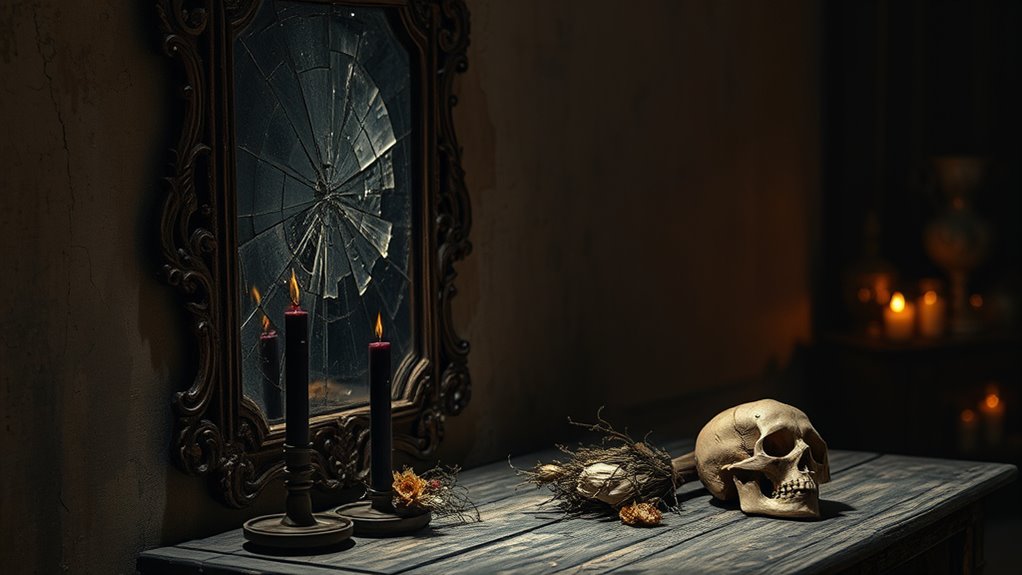

Covering mirrors during mourning is an ancient practice rooted in the belief that mirrors act as spiritual portals that can trap or influence souls. Many cultures think covering mirrors protects the departed and the living from negative energies or restless spirits. The customs also honor the deceased and maintain spiritual boundaries. This tradition reflects a deep connection between reflection, spirit, and afterlife. If you look further, you’ll uncover more about the rich history and varied cultural meanings behind this somber act.
Key Takeaways
- Covering mirrors during mourning originates from beliefs that mirrors can trap or imprison the spirit of the deceased.
- The practice is rooted in various cultural traditions, including Jewish, Latin American, and Eastern customs.
- It serves to protect the living from negative spiritual influences and prevent the spirit from appearing in reflections.
- Covering mirrors also honors the deceased, symbolizing respect and maintaining spiritual boundaries during mourning.
- The tradition highlights the spiritual significance of mirrors as portals connected to the soul and afterlife.
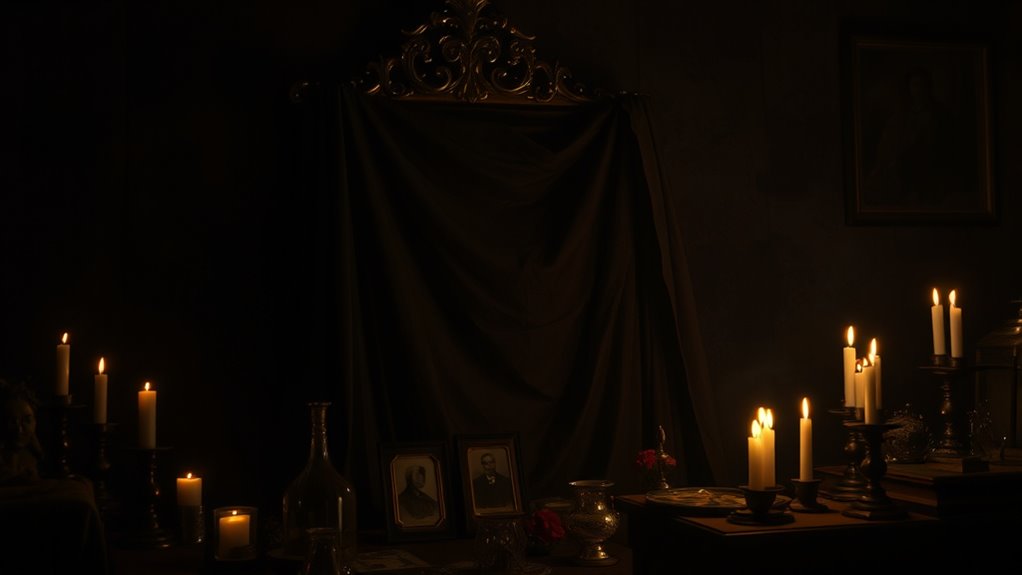
Covering mirrors is a practice rooted in various cultural and spiritual traditions, often undertaken during times of mourning or significant loss. You might notice that in some households, mirrors are draped in cloth or covered entirely after a loved one passes away. This custom stems from deep-seated superstitions surrounding mirrors, which are believed to hold spiritual significance beyond their reflective function. Many cultures think that mirrors can trap or trap the soul of the departed, preventing it from moving on peacefully. By covering mirrors, families aim to protect both the spirit of the deceased and the living from any negative spiritual influence. These superstitions suggest that an uncovered mirror might lead to restless spirits or even cause the soul’s imprisonment, which is why covering them becomes an essential part of mourning rituals.
Cultural variations in mirror covering reveal diverse beliefs about the spiritual power of reflections. For instance, in some Eastern traditions, covering mirrors is a way to prevent the soul of the deceased from being trapped within the glass. In Jewish mourning practices, mirrors are often covered during the shiva period to symbolize the interruption of normal life and to focus on mourning rather than vanity. Similarly, in certain Latin American cultures, mirrors are hidden or covered to avoid the deceased’s spirit appearing in reflections, which could bring bad luck or hauntings. Conversely, in some Western traditions, covering mirrors is seen more as a practical act of respect or a way to prevent vanity during a somber time. Despite these differences, the core idea remains consistent: mirrors are more than just reflective surfaces—they are believed to be portals or containers of spiritual energy that need safeguarding during periods of grief.
You might find that in many cases, the practice isn’t just about superstition but also about honoring the memory of the departed and maintaining spiritual boundaries. Covering mirrors often coincides with other mourning customs, such as lighting candles or keeping the room dark. These rituals help families focus on mourning and remembrance while avoiding potential spiritual disturbances. Whether rooted in superstition or cultural tradition, the act of covering mirrors during death emphasizes the profound belief that reflections harbor more than just images—they are connected to the soul, the afterlife, and the spiritual domain. By respecting this practice, you participate in a centuries-old tradition that seeks to protect the living and honor the dead during their transition.
mirror covering cloth for mourning
As an affiliate, we earn on qualifying purchases.
As an affiliate, we earn on qualifying purchases.
Frequently Asked Questions
Do All Cultures Cover Mirrors During Mourning?
Not all cultures cover mirrors during mourning, but many do due to superstitions surrounding mirrors, like preventing the soul from being trapped or disturbed. Covering mirrors can also have psychological effects, helping mourners focus on grief without distraction. You might find that in some traditions, covering mirrors offers comfort or symbolizes the separation between life and death, although practices vary widely across different cultures and beliefs.
When Did Covering Mirrors Become a Widespread Death Custom?
You might find it fascinating that covering mirrors became a widespread death custom during the 16th and 17th centuries, influenced by funeral etiquette and cultural symbolism. Around this time, many societies believed mirrors could trap the soul or invite spirits during mourning. This practice helped families honor the dead and avoid spiritual disturbances, reflecting deep-rooted beliefs about life, death, and the afterlife that persisted across cultures.
Are There Specific Rituals Associated With Covering Mirrors?
You might notice that covering mirrors often ties to superstitious beliefs, aiming to prevent spirits from being trapped or to ease the grieving process. Rituals can include draping mirrors with cloths, which may psychologically comfort the family and reduce the death’s emotional impact. These customs serve to protect the living from negative energies and help manage the psychological effects of loss, creating a respectful space for mourning.
How Do Modern Practices Differ From Historical Mirror Covering?
Modern practices are like a gentle breeze, less strict and more personal than historical mirror covering. Today, you might cover mirrors during grief, but superstitions’ origins have faded into symbolism or personal comfort. Psychological effects like preventing spirits from lingering or avoiding bad luck still influence some, but many see it as a cultural tradition rather than a strict ritual. You choose what feels meaningful, blending history with contemporary beliefs.
What Materials Are Traditionally Used to Cover Mirrors?
You’ll find that traditional materials used to cover mirrors include black cloth, paper, or fabric, chosen for their symbolism of mourning and reflection. In various cultural variations, these materials hold significance in respecting the dead and preventing spirits from entering the mirror, which is tied to mirror symbolism. You might notice that, across cultures, the choice of covering material reflects local customs, beliefs, and respect for the deceased.
Conclusion
As you reflect on the tradition of covering mirrors, think of it as safeguarding your soul from lingering grief. Imagine a family, shrouded in silence, their mirrors masked like windows to another world. Just like a mirror’s surface can hide a whole universe, these customs help us confront loss while honoring the mystery of death. Embracing these rituals keeps memories alive, guiding us gently through mourning’s shadows and into healing’s light.