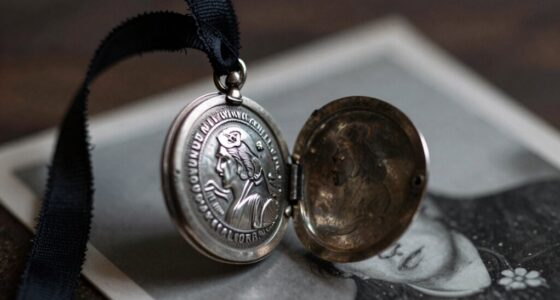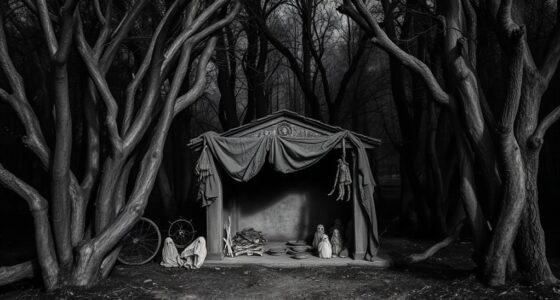

You might find that crossroads burials inspire superstitions because these sites are seen as powerful spiritual gateways where the boundaries between the living and spirits blur. People believe that burying someone there can prevent restless spirits from troubling the living or guide souls to the afterlife. Rituals and offerings at these spots aim to respect these sacred thresholds and influence unseen forces. To uncover more about this fascinating connection, keep exploring their deep-rooted cultural significance and stories.
Open a free Amazon Business account
Business pricing, bulk buying and tax-exempt orders.
As an affiliate, we earn on qualifying purchases.
Key Takeaways
- Crossroads are considered spiritual gateways where spirits and the living can interact, inspiring superstitions about the dead’s presence.
- Burying individuals at crossroads was believed to help guide souls to the afterlife and prevent restless spirits from troubling the living.
- Superstitions grew around crossroads as liminal spaces, linking them to supernatural encounters, curses, and protective rituals.
- Folklore depicts crossroads as gathering points for spirits and witches, reinforcing beliefs about their mystical significance.
- Rituals and customs at crossroads emphasized respecting spiritual boundaries, leading to superstitions about warding off evil and influencing fate.

Throughout history, many cultures have believed that crossroads are powerful sites of spiritual significance, often associated with superstitions surrounding death and the afterlife. These intersections are seen as liminal spaces—thresholds between worlds—where the boundaries between the living and the dead blur. It’s no wonder that ancient rituals frequently took place at crossroads, as people sought to honor spirits, seek protection, or ward off evil. The folklore origins of these beliefs run deep, rooted in stories passed down through generations that emphasize the importance of respecting these mysterious points on the landscape. Over time, these rituals and stories fostered superstitions that still influence beliefs about crossroads today.
Crossroads are sacred thresholds, where spirits and the living intertwine through centuries-old rituals and stories.
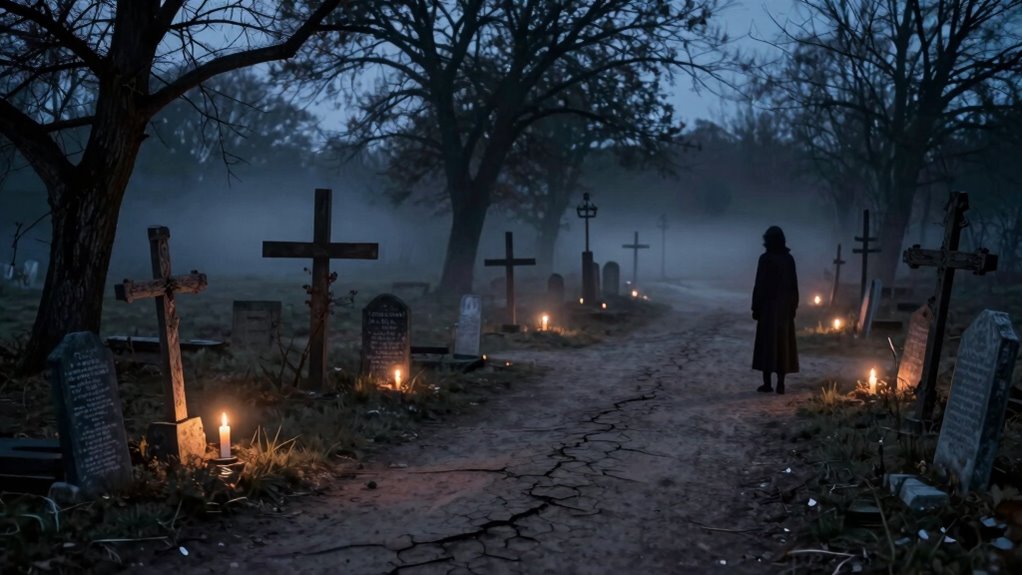
You might notice that in many traditions, burying someone at a crossroads was believed to be a way to guarantee their spirit wouldn’t trouble the living. This practice likely stems from ancient rituals designed to appease wandering spirits or prevent them from becoming malevolent. Folklore often depicts crossroads as places where spirits can more easily cross between worlds, making them ideal sites for rituals meant to either summon or banish these entities. In some cultures, it was believed that burying a person at a crossroads could help guide their soul to the afterlife, especially if they died under suspicious circumstances or without proper rites. These customs underline the idea that crossroads are not just physical locations but spiritual gateways, a symbolic understanding rooted in centuries of tradition. Additionally, many of these traditions emphasize the importance of respecting the spiritual boundaries present at these sites, which contributes to their mystique. Recognizing the cultural significance of these sites helps explain why they remain powerful symbols in folklore and ritual practices. Moreover, legends often depict crossroads as places where the veil between worlds is thinnest, further reinforcing their mystical reputation.
The superstitions surrounding crossroads also grew from stories of supernatural encounters. Tales tell of witches, spirits, and other entities gathering at these points, fueling fears and reverence. People believed that crossing a crossroads after dark could attract spirits or invoke curses, leading to a range of protective charms and superstitions designed to ward off evil. These beliefs became embedded in folklore, reinforcing the idea that certain rituals—like leaving offerings or marking the spot—could influence one’s fate or protect loved ones. Over centuries, these stories became part of a collective consciousness, shaping how communities regarded these intersections.
In essence, the deep-rooted folklore origins and ancient rituals associated with crossroads have cemented their reputation as sacred, dangerous, or enchanted places. The superstitions that arose from these beliefs aren’t arbitrary—they reflect a shared understanding that crossroads are powerful symbols of transition, death, and spiritual crossing. Whether as sites of burial, rituals, or cautionary tales, these intersections continue to evoke a sense of mystery and reverence, reminding us of the enduring human desire to connect with the unseen forces that govern life and death.

New Age Imports, Inc. bo, Triple Moon Pentacle Copper 3", for Altar, Ritual use, Incense Burner, smudging, Decoration, offering Bowl, 3" Diameter 2" Height
- Design: Triple Moon with Pentacle Symbol
- Material: Solid Copper Bowl with Brass Symbols
- Size: 3-inch Diameter
As an affiliate, we earn on qualifying purchases.
As an affiliate, we earn on qualifying purchases.
Frequently Asked Questions
Are Crossroads Burials Unique to Specific Cultures or Regions?
Crossroads burials are not unique to specific cultures or regions; many societies incorporate them into their superstitious beliefs and cultural symbolism. You’ll find similar practices worldwide, often linked to notions of spiritual crossing points or gateways to the afterlife. These sites are believed to hold special power, making them significant for rituals or superstitions. Their universal presence highlights how different cultures interpret crossroads as mystical or sacred spaces.
How Did Ancient Societies Choose Crossroads for Burials?
Choosing crossroads for burials was like planting seeds at the edge of the world, where land meets the unknown. Ancient societies saw these sites as holding spiritual significance and boundary symbolism, marking the shift between life and death, the earthly and the divine. They believed crossroads were powerful places to honor spirits, protect communities, and connect with the supernatural, making them sacred spots for burial rituals and offerings.
What Rituals Are Associated With Crossroads Burials?
You participate in rituals that honor the grave symbolism and spiritual significance of crossroads burials. These often include leaving offerings like coins, food, or personal tokens to appease spirits or guarantee safe passage. Some perform ceremonies or prayers, believing the crossroads serve as a spiritual gateway. These rituals reflect a deep respect for the grave symbolism associated with crossroads, emphasizing their role as sacred sites connecting the physical and spiritual worlds.
Are There Any Modern Practices Linked to Crossing Burial Sites?
Crossroads burials act like silent whispers guiding modern superstitious rituals. Today, you might notice some people avoiding certain cemetery designs, believing crossing sites hold lingering energies. In some cultures, folks perform protective charms or leave offerings at specific points, echoing old superstitions. These beliefs influence modern cemetery layouts, blending tradition with design, as if history’s ghost still haunts the pathways, reminding you that some superstitions refuse to fade completely.
How Do Crossroads Burials Influence Local Folklore Today?
Crossroads burials still influence local folklore today by fueling superstitious beliefs and cultural myths. You might hear stories claiming that placing objects or leaving offerings at crossroads can ward off evil spirits or bring good luck. These traditions persist because communities see crossroads as powerful symbols of change and mystery. As a result, superstitious practices continue, blending old beliefs with modern customs, keeping the cultural significance alive in everyday life.
Conclusion
As you walk past crossroads burials, remember they’re more than just stones—they’re silent gateways where fears and hopes intertwine. These sites symbolize the delicate boundary between the known and unknown, stirring superstitions that linger like shadows in your mind. You may think you’re merely passing by, but in truth, you’re crossing into a space where tradition whispers secrets, reminding you that some mysteries are woven into the very fabric of life’s intersections, forever lurking just beyond sight.
Back to school Picks
back to school
As an affiliate, we earn on qualifying purchases.