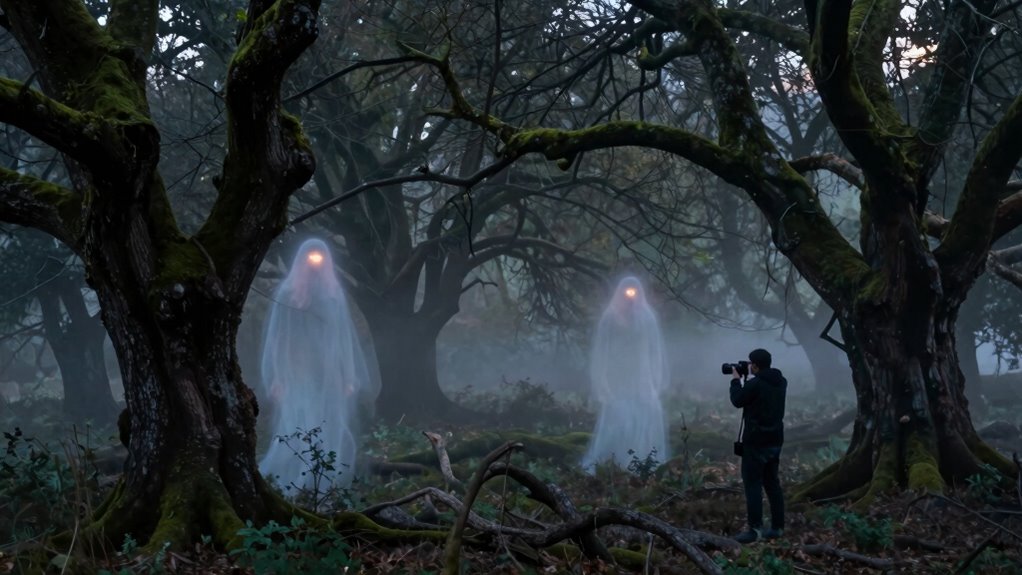

Science can’t fully explain every haunting report yet due to current technological limits, the subjective nature of personal experiences, and psychological or cultural influences. Many phenomena are fleeting, difficult to reproduce, or mistaken for natural causes, which makes validation challenging. While advancements may someday provide clearer answers, some reports remain elusive in scientific terms. If you want to explore what’s behind these mysteries, you’ll discover fascinating insights along the way.

Get books and cozy reading nights delivered free with Prime
- Fast, free delivery on millions of items
- Prime Video, Amazon Music and more included
- Member-only deals all year
Key Takeaways
- Scientific tools often cannot detect subtle or fleeting paranormal phenomena, limiting comprehensive explanation.
- Subjective experiences influenced by psychology and culture make objective validation challenging.
- Many hauntings may have natural or psychological explanations, reducing the likelihood of true supernatural causes.
- Recreating conditions of reported hauntings is typically impossible, hindering scientific investigation.
- Advances in science and technology might eventually explain currently unexplained haunting reports.
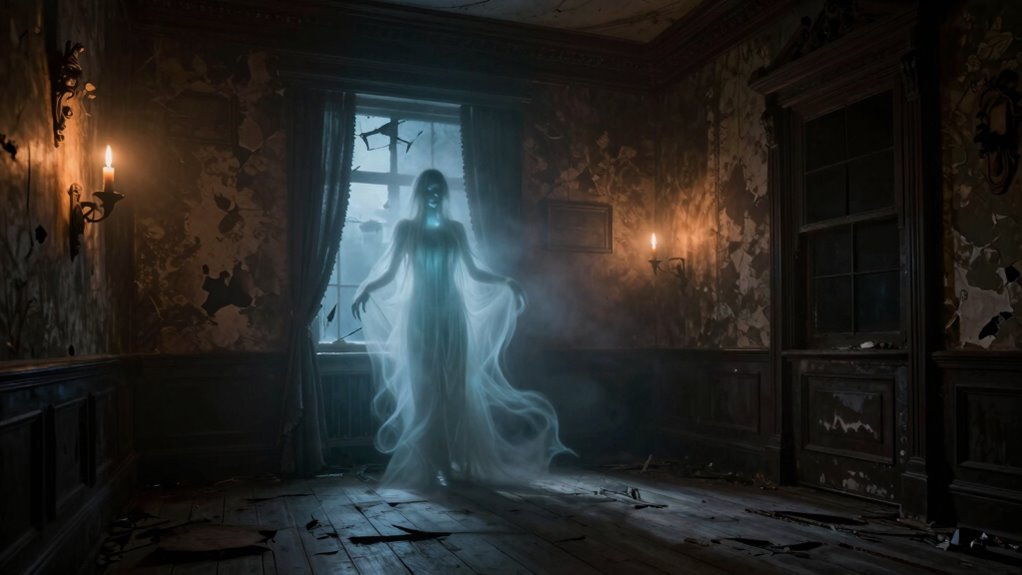
Many people wonder whether science can fully explain every haunting report, especially when encounters seem to defy logical understanding. While scientific inquiry has made tremendous progress in understanding the natural world, it also faces limitations when confronting the paranormal. Paranormal skepticism exists for a reason: many claims lack verifiable evidence, and some phenomena can be attributed to psychological factors like hallucinations, suggestibility, or the power of suggestion. However, just because something resists easy explanation doesn’t mean it’s beyond scientific reach. Instead, it often highlights the scientific limitations we face when studying phenomena rooted in subjective experience or lacking clear physical evidence.
Science relies on observable, measurable data. When it comes to hauntings, many reports are based on personal accounts, which are inherently subjective. These stories can be influenced by cultural beliefs, emotional states, or even environmental factors. As a result, skeptics argue that many hauntings are misinterpretations of normal occurrences—like creaking floorboards, drafts, or optical illusions—that are mistaken for supernatural activity. The scientific limitations here are clear: without concrete, replicable evidence, it’s challenging to analyze or validate these experiences using traditional scientific methods. This doesn’t mean the experiences aren’t real to the individual but rather that they’re difficult to scrutinize objectively.
Furthermore, paranormal skepticism emphasizes the importance of critical thinking and rigorous testing. Scientific investigations into haunting reports often face constraints, such as limited access to the sites, unreliable instrumentation, or the inability to recreate the conditions under which the phenomena occur. These constraints showcase the boundaries of current scientific tools and methodologies. For example, the limitations of scientific instruments can impede the detection of subtle or fleeting phenomena, making thorough investigation even more challenging. Additionally, understanding the psychological factors behind subjective experiences can help demystify many reports, although some phenomena still elude explanation. These factors include not only individual mental states but also cultural influences that shape perceptions of paranormal activity. Scientific research has also shown that confirmation bias can influence how individuals interpret ambiguous stimuli, further complicating efforts to objectively evaluate haunting claims. Until phenomena can be consistently reproduced and tested under controlled conditions, they remain outside the domain of accepted scientific explanation. This isn’t necessarily a dismissal of the reports but a recognition of the scientific limitations we currently face in studying such elusive events. Additionally, advances in scientific tools and methods may eventually provide new ways to explore these phenomena more accurately.
In the end, whether science can fully explain every haunting report depends on how you interpret the available evidence. While many claims are explainable through natural causes or psychological factors, some encounters continue to challenge scientific understanding. The persistent gap between anecdotal reports and scientific validation fuels ongoing debate. It’s important to remember that science is always evolving, and what’s unexplained today may be understood tomorrow as new tools, theories, and methods develop. Until then, the tension between skepticism and curiosity keeps the mystery alive, reminding us that some phenomena still lie just beyond the reach of current scientific explanation.
As an affiliate, we earn on qualifying purchases.
Frequently Asked Questions
Are There Historical Cases That Defy Scientific Explanations?
Yes, there are historical cases that defy scientific explanations. You might find that supernatural phenomena often puzzle even expert paranormal investigations, leaving scientists unable to fully explain the experiences. These unexplained reports fuel debates about whether science can ever account for all paranormal activity. While many cases have logical reasons, some still remain mysterious, intriguing your curiosity and challenging scientific understanding of the supernatural.
Can Personal Beliefs Influence How Hauntings Are Perceived?
Yes, your personal beliefs can profoundly influence how you perceive hauntings. Subjective perception and emotional influence shape your interpretation of unexplained phenomena, making you more likely to see or feel what aligns with your beliefs. If you’re open to the idea of spirits, you might interpret strange sounds as paranormal. Conversely, skepticism can lead you to dismiss or rationalize similar experiences, highlighting how perception is deeply personal.
Do Cultural Differences Affect Interpretations of Haunted Reports?
Cultural differences act like lenses through which you view haunted reports, shaping your perceptions vividly. Your cultural perceptions color how you interpret strange phenomena, making some see spirits where others see illusions. Interpretation biases are deeply rooted in tradition and belief systems, influencing your understanding of haunting stories. So, yes, cultural context profoundly affects how you understand and respond to reports of hauntings, turning them into personal or collective stories rooted in cultural identity.
Are There Any Proven Scientific Methods to Verify Hauntings?
There are no proven scientific methods to verify hauntings definitively. Paranormal research often explores phenomena like quantum phenomena, but these lack conclusive evidence linking them to hauntings. You might find experiments using electromagnetic sensors or thermal imaging, yet these tools don’t provide conclusive proof. Instead, they help gather data that remains open to interpretation, leaving the question of whether hauntings are scientifically verifiable still unanswered.
How Do Psychological Factors Contribute to Haunting Reports?
You might be surprised to learn that around 60% of people report paranormal experiences, often influenced by psychological factors. Psychological projection causes you to interpret ambiguous stimuli as supernatural, while cognitive biases like confirmation bias make you see what you expect. These mental processes shape your haunting reports, making your mind an active participant in creating and reinforcing ghostly encounters, even without any physical evidence.
Conclusion
While science has unraveled many mysteries, it can’t quite explain every haunting report, leaving some stories shrouded in enigma. You might think of it as the modern-day equivalent of a Victorian séance—fascinating yet ultimately unproven. So, until we develop a scientific ether capable of catching every ghostly whisper, you’ll have to accept that some mysteries are meant to remain just beyond our grasp. Perhaps, in the end, some things are best left as charmingly inexplicable.
Fall Picks
fall essentials
As an affiliate, we earn on qualifying purchases.