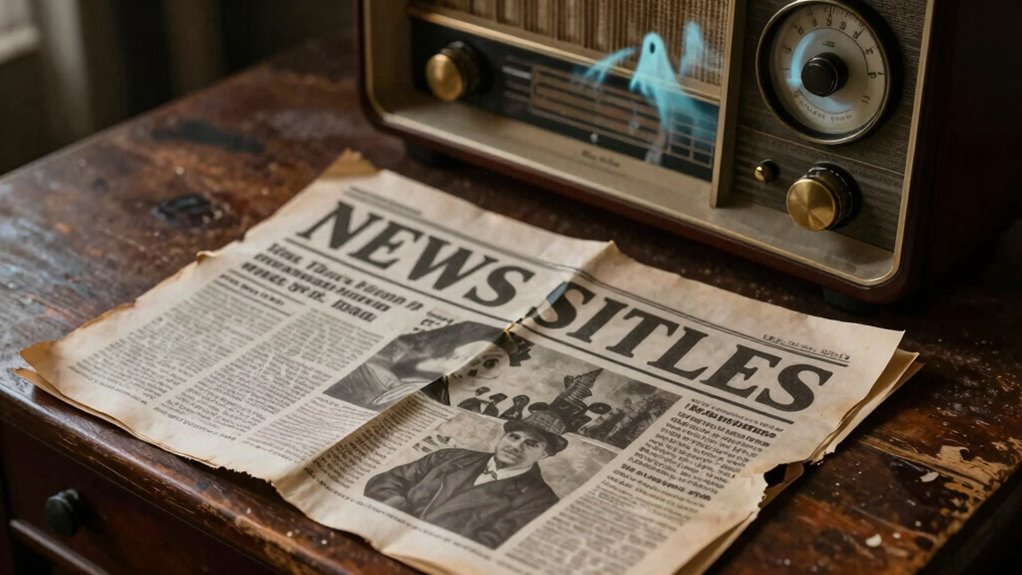
You see how newspapers and radio help spread ghost stories by sharing sightings and encounters with wide audiences quickly. Newspapers often report supposed events, making stories seem real, while radio adds sound effects and narration that boost their realism. These media forms turn local legends into widespread folklore and create a sense of community among believers and skeptics. If you want to discover more about how media continues to shape these spooky tales, keep exploring.
Key Takeaways
- Newspapers report sightings and encounters, lending credibility and quickly reaching large audiences.
- Radio broadcasts create immersive experiences with tone and sound effects, enhancing story realism.
- Media sensationalizes stories, transforming local legends into captivating narratives that spread widely.
- Listener call-ins and reports blur fact and fiction, fostering community belief and sharing personal experiences.
- Technological advances and rapid dissemination turn isolated tales into widespread cultural phenomena.
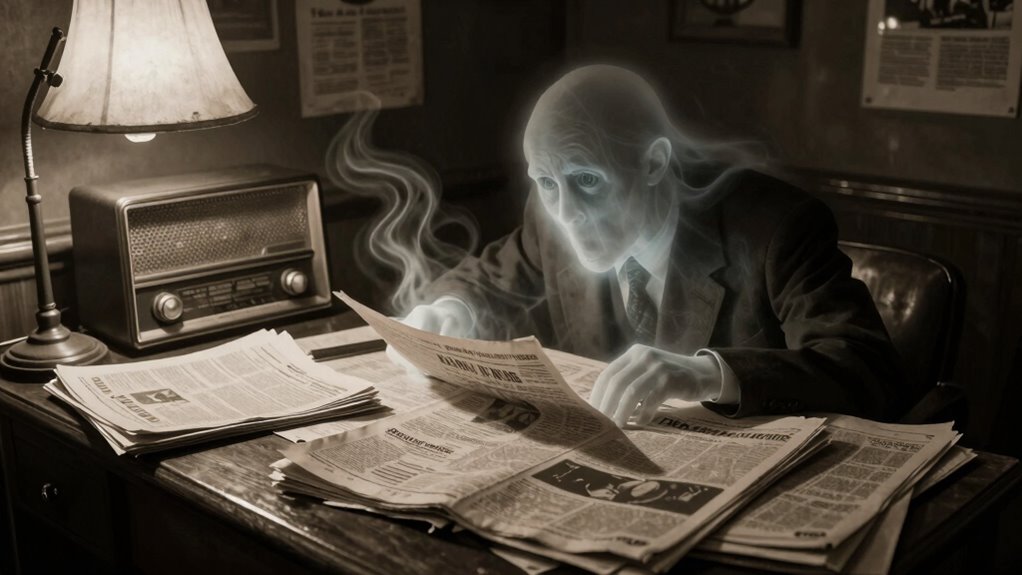
Ghost stories have long captivated audiences, and in modern times, newspapers and radio play a significant role in spreading these eerie tales. You’re probably familiar with how a chilling story can spread quickly, especially when it’s featured in widely read newspapers or broadcasted on popular radio shows. This media influence amplifies supernatural folklore, turning local legends into widespread phenomena. When a newspaper reports a supposed sighting or encounter, it lends an air of credibility that makes the story more believable. The immediacy of newspapers allows these tales to reach a broad audience in a short amount of time, fueling curiosity and fear alike.
Media like newspapers and radio quickly spread and amplify ghost stories, turning local legends into widespread folklore.
Radio, on the other hand, adds a different layer of immediacy and intimacy. When you listen to ghost stories on the radio, the tone, voice, and sound effects create an immersive experience. This sensory engagement makes the stories feel more real, almost as if you’re hearing them firsthand. Radio shows dedicated to supernatural folklore often feature listener call-ins, where real people share their own encounters, further blurring the line between fact and fiction. This interactive element fosters a sense of community among believers and skeptics alike, reinforcing the stories’ vital staying power. Over time, these tales become part of the collective consciousness, woven into the fabric of local and national culture.
Media influence plays a pivotal role in how ghost stories evolve and spread. Newspapers and radio don’t just report stories—they shape perceptions. A story that might start as a small local legend can be sensationalized or dramatized, transforming it into a compelling narrative that captures the public’s imagination. Sometimes, stories are exaggerated or fabricated to entertain or attract a larger audience. This process feeds into supernatural folklore, creating a cycle where media coverage amplifies belief in spirits and hauntings. As stories get passed from one medium to another—newspapers to radio, radio to word of mouth—they gain layers of myth and mystery, making them more enticing and enduring. Additionally, the mass media environment helps ensure these stories reach diverse audiences quickly and effectively. The technological advances in communication have further accelerated the spread of these tales, making them more pervasive.
In essence, media influence acts as a key catalyst, turning isolated ghost stories into shared cultural phenomena. It’s how tales of spirits, hauntings, and supernatural encounters spread far beyond their origins, shaping a collective fascination with the unknown. Through newspapers and radio, you become part of a larger story—one that’s constantly evolving, fueled by the power of media to entertain, inform, and mystify.

Ghost Stories of America: Volume I
- Condition: Used Book in Good Condition
As an affiliate, we earn on qualifying purchases.
As an affiliate, we earn on qualifying purchases.
Frequently Asked Questions
How Did Ghost Stories Originate Before Newspapers and Radio?
Ghost stories originated mainly through supernatural folklore and oral traditions, long before newspapers and radio existed. You’d hear tales passed down from generation to generation, often told around campfires or in storytelling gatherings. These stories relied on personal experiences, community beliefs, and cultural myths, creating a rich tapestry of supernatural legends. Over time, these oral traditions helped preserve and shape ghost stories, making them a essential part of human storytelling history.
Were There Specific Regions More Influenced by Ghost Stories?
You’d notice ghost stories had a stronger foothold in regions rich with regional folklore and cultural variations. These stories act like roots deep in the soil, growing uniquely in each place. For example, rural areas often embraced local legends, while urban centers adopted more modern tales. The cultural backdrop shapes how ghost stories evolve, making some regions more influenced than others, like different melodies in the same song.
How Did Publishers Choose Which Ghost Stories to Print?
Publishers choose which ghost stories to print based on story selection criteria that appeal to their audience and fit their publication’s tone. They often rely on publisher influence to select tales that evoke curiosity, fear, or excitement, ensuring higher sales and engagement. They favor stories with vivid details and local relevance, knowing that compelling narratives and recognizable settings maximize reader interest and help the stories spread more widely.
Did Radio Stations Face Censorship Over Ghost Story Broadcasts?
You might feel the chills of censorship concerns as radio stations faced strict broadcast regulations over ghost stories. Like guardians of a haunted gate, regulators worried these tales could incite fear or unrest, leading to censorship concerns. They often hesitated to air chilling stories freely, fearing backlash or moral outrage. So, yes, stations did face censorship over ghost story broadcasts, carefully balancing entertainment with societal standards and regulations.
How Did Audiences React to Ghost Stories on Radio Shows?
You find that audiences were captivated by ghost stories on radio shows, fueling their fascination with the supernatural. They enthusiastically tuned in, often feeling immersed through storytelling techniques like eerie sound effects and suspenseful narration. This engagement shows how radio created a vivid experience, drawing listeners into ghostly tales. Your curiosity about these reactions highlights how effectively these stories resonated, making them a memorable part of entertainment history.
Conclusion
As you imagine the flickering glow of old radio sets and the ink-stained pages of newspapers, you realize how ghost stories seeped into your world, whispering secrets in the shadows. These tales, carried by the crackle of static and the rustle of paper, wrapped around you like a chilling breeze on a dark night. They linger, haunting your mind long after the broadcast ends, forever echoing the mysterious whispers of the unseen.