Inside Eastern State Penitentiary, you’ll discover a prison famous for its revolutionary design, focusing on solitary confinement to promote moral reform. Its eerie corridors, thick stone walls, and dark history foster stories of hauntings, paranormal activity, and restless spirits. From ghostly apparitions to unexplained sounds, the prison’s haunted reputation captivates visitors and investigators alike. Continue exploring and you’ll uncover the chilling legends, paranormal investigations, and efforts to preserve this haunted landmark’s haunting legacy.
Key Takeaways
- Eastern State Penitentiary features a radial design emphasizing solitary confinement for moral reform.
- Reports of paranormal activity include ghostly apparitions, unexplained noises, and EVP recordings.
- Investigations detect electromagnetic anomalies and capture spirit photographs of spirits haunting the prison.
- The prison’s eerie atmosphere, dim lighting, and stark corridors contribute to its haunted reputation.
- Today, it is a historic landmark known for its haunted legends, ghost tours, and paranormal investigations.
Top picks for "inside eastern state"
Open Amazon search results for this keyword.
As an affiliate, we earn on qualifying purchases.
The History and Architecture of Eastern State Penitentiary

Eastern State Penitentiary, built in 1829, revolutionized prison design with its innovative approach to incarceration. Its prison architecture emphasized solitary confinement, with each inmate housed in a separate cell that minimized contact. This design reflected a new chapter in prison history, prioritizing rehabilitation through reflection and penance. The structure’s radial layout, with a central hub and spokes leading to individual cells, allowed guards to monitor prisoners efficiently while maintaining strict isolation. The architecture was a departure from earlier prisons, which were often overcrowded and chaotic. Instead, Eastern State’s design aimed to prevent crime through the moral reform of inmates. Its influence extended across the nation, shaping the evolution of prison architecture and marking a significant milestone in prison history. The use of radial layout and individual cells served as a model for many subsequent penal institutions, emphasizing discipline and order.
The Revolutionary Approach to Justice and Rehabilitation
At Eastern State, the focus on solitary confinement aimed to encourage moral reform rather than punishment. You’ll see how the design promotes reflection and personal change. This innovative approach reshaped ideas about justice and rehabilitation, emphasizing behavioral change as a key goal of the penal system. The emphasis on rehabilitative strategies reflects a shift toward understanding offenders’ needs and promoting their reintegration into society. Additionally, the facility’s distinctive architecture was intended to facilitate independent reflection, supporting the inmates’ path toward moral improvement. Modern research indicates that psychological benefits can be achieved through such reflective environments, aligning with the broader goal of fostering positive transformation within the prison environment.
Solitary Confinement Philosophy
While solitary confinement often evokes images of punishment, its roots lie in a revolutionary approach to justice and rehabilitation. Originally, it was designed to encourage reflection and moral reform by isolating inmates, giving them time to contemplate their actions. This method aimed to reduce violence and promote personal change rather than just punishment. However, the psychological impact of solitary confinement is profound. Extended isolation can lead to mental health issues like anxiety, depression, and hallucinations. Despite its initial intentions, many now see solitary as a controversial tool that risks damaging inmates’ mental well-being. Its use highlights a core debate: can isolation truly foster rehabilitation, or does it do more harm than good? The philosophy behind solitary confinement remains complex, balancing reform ideals with the realities of psychological harm.
Emphasis on Moral Reform
The original idea behind solitary confinement was rooted in the belief that isolating inmates could lead to moral reform and personal growth. Eastern State Penitentiary embodied this philosophy by emphasizing moral reform over punishment. Inmates were encouraged to reflect and improve themselves, often through activities like creating inmate artwork, which provided a constructive outlet for their emotions. Even prison cuisine was designed to promote discipline and self-control, fostering a sense of routine and order. The focus wasn’t just on confinement but on guiding inmates toward a better moral state. This revolutionary approach aimed to transform prisoners into morally upright citizens, believing that isolation, combined with introspection and creative expression, could inspire genuine reform and reduce recidivism.
Innovative Architectural Design
Eastern State Penitentiary revolutionized prison design by integrating architecture directly into its rehabilitative mission. Its distinctive radial cell block layout allows guards to observe multiple cells from a central point, enhancing security features while reducing the need for constant supervision. Each cell is designed to minimize contact between inmates, fostering solitude and reflection. The innovative design emphasizes individual space, aligning with the belief that solitary confinement could lead to moral reform. The structure’s thick stone walls and secure gates create a fortress-like environment, ensuring safety for staff and prisoners alike. This architectural approach aimed to promote introspection and rehabilitation, setting a precedent for future correctional facilities. By combining security features with a focus on moral reform, Eastern State’s architecture reflects a revolutionary vision for justice. Additionally, the use of architectural design in prison construction exemplifies how thoughtful planning can support rehabilitative goals.
Notorious Inmates and Their Stories
Many of the prison’s most infamous inmates left a lasting mark on its history, their stories revealing the darker side of justice and human nature. One such inmate, Al Capone, captured attention not just for his crimes but also for his time in solitary, where prison cuisine was his only diversion. Others, like Charles “Slick” Williams, expressed themselves through inmate artwork, turning their confinement into a form of rebellion and creativity. These stories highlight how prisoners navigated their harsh realities, sometimes finding solace in art or routines like preparing their meals. Their legacies endure, offering a glimpse into the human spirit’s resilience and the complex lives behind the prison walls. Additionally, the contrast ratio of the prison’s dimly lit corridors contributes to its eerie atmosphere, further enhancing its haunted reputation. These tales continue to haunt Eastern State’s history, adding layers to its haunted reputation.
The Transformation From Prison to Haunted Landmark

Infamous inmates and their stories left a lasting impression on the prison’s history, but over time, perceptions shifted from fear and punishment to fascination and intrigue. As attitudes changed, Eastern State’s prison architecture was preserved and repurposed, highlighting its innovative design aimed at inmate rehabilitation. The imposing stone walls and radial layout reflected a focus on reform rather than just containment. Today, the site functions as a historic landmark, drawing visitors enthusiastic to learn about its past. The transformation emphasizes the evolution of correctional ideals—from harsh punishment to a more humane approach that prioritized inmate rehabilitation. This shift helped preserve the prison’s legacy, turning it into a symbol of justice reform and a mesmerizing glimpse into America’s penal history.
Ghostly Encounters and Paranormal Investigations
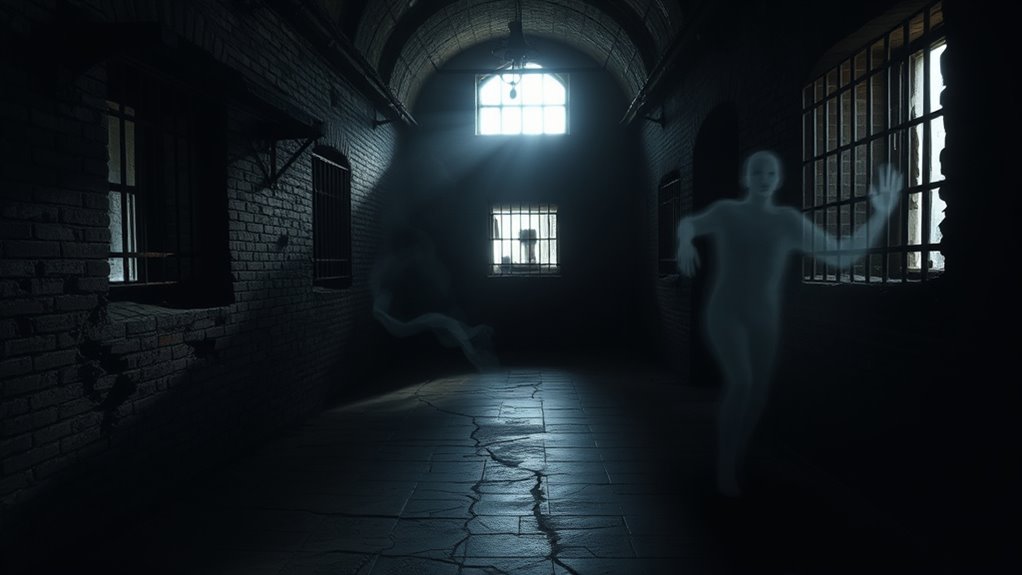
Many visitors and investigators report seeing apparitions roaming the halls, often appearing unexpectedly. Eerie sounds and haunting voices seem to echo through the empty corridors, adding to the chilling atmosphere. Evidence like spirit photographs further suggest that the penitentiary might still be haunted by the spirits of its past inmates. Incorporating paranormal investigation techniques can help uncover more about these eerie encounters. Techniques such as EMF readings and EVP recordings are commonly used to document paranormal activity, providing more insight into the ghostly phenomena reported. Additionally, understanding the emotional atmosphere of the site can enhance the effectiveness of paranormal investigations. Exploring the psychological environment of the prison can also shed light on how emotional states influence reported encounters. Recognizing the influence of psychological factors can be crucial in interpreting paranormal evidence accurately.
Apparitions Reported Frequently
Apparitions are among the most frequently reported phenomena at Eastern State Penitentiary, capturing the attention of visitors and investigators alike. Many visitors have witnessed ghost sightings in dark hallways and abandoned cells, often describing fleeting figures or shadowy forms. These encounters are a significant part of the prison’s reputation for paranormal activity, with reports of apparitions appearing unexpectedly. Some say they see former inmates or guards, their figures lingering in the eerie silence. Investigators have documented these sightings through photographs and recordings, adding credibility to the stories. The consistent reports of apparitions contribute to the prison’s haunted reputation, making it a magnet for those seeking to experience or study paranormal phenomena firsthand. Recordings and photographs have played a crucial role in validating these paranormal encounters, further fueling the intrigue surrounding the site. Additionally, paranormal investigations often utilize specialized equipment to detect residual energy or unexplained phenomena, enhancing the credibility of the sightings.
Eerie Sounds and Voices
Eerie sounds and haunting voices often echo through the dark corridors of Eastern State Penitentiary, fueling your sense of unease. Visitors and investigators alike report hearing unexplained whispers, footsteps, and distant moans that seem to come from the cell blocks. These chilling noises are woven into cell block stories, where former inmates’ spirits are said to still linger, voicing their anguish. The prison yard legends also speak of ghostly voices calling out, sometimes seemingly just out of reach. You might feel a sudden cold breeze or hear a faint cry that disappears when you turn around. These disturbing sounds create an atmosphere thick with ghostly presence, making Eastern State a hotspot for paranormal investigations and ghost hunters seeking evidence of the supernatural.
Spirit Photography Evidence
Spirit photography at Eastern State Penitentiary captures haunting images that many believe reveal ghostly apparitions and supernatural presence. These photographs are considered compelling paranormal evidence, fueling investigations into the prison’s haunted history. When reviewing spirit photographs, you might notice:
- Shadowy figures lurking in the background
- Unexplained orbs floating near cell blocks
- Apparitions that resemble former inmates or guards
These images often spark debate about their authenticity, but many claim they provide tangible proof of spirits lingering within the prison’s walls. Enthusiasts and investigators use spirit photography to deepen their understanding of paranormal activity at Eastern State Penitentiary, making it a key piece of ghostly encounters and paranormal investigations.
Legends and Folklore Surrounding the Prison
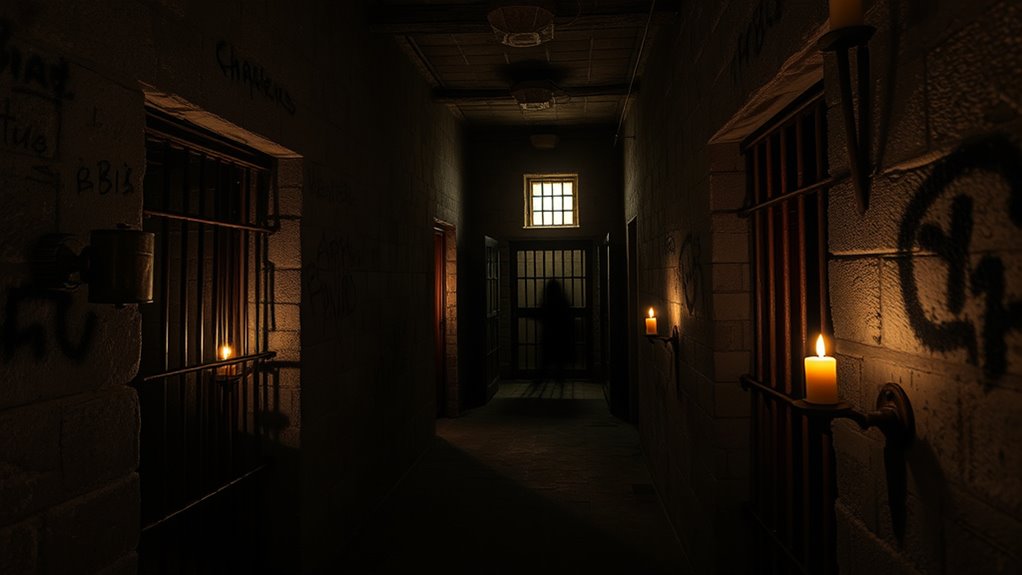
Many believe that Eastern State Penitentiary is haunted by the restless souls of former inmates, fueling its reputation as one of America’s most haunted prisons. Urban legends abound, with stories of ghostly figures appearing in the shadows and unexplained noises echoing through the cellblocks. Supernatural stories tell of hearing distant whispers, footsteps, or the clanging of doors long after hours. Some say the spirits of prisoners who suffered in solitude still linger, fueling fears and fascination. These legends have grown over time, blending fact and folklore into a haunting tapestry that captivates visitors and staff alike. Whether you believe or not, the folklore surrounding Eastern State adds an eerie layer to its grim history, making it a focal point of ghost stories and supernatural intrigue.
Visiting Eastern State Penitentiary Today
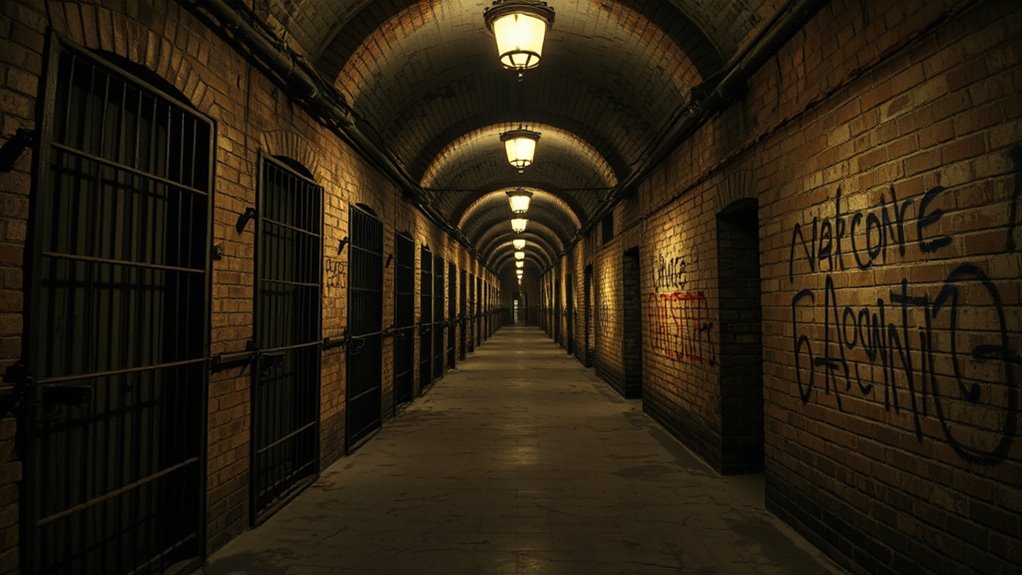
Today, a visit to Eastern State Penitentiary offers a compelling glimpse into its haunting history through guided tours, immersive exhibits, and atmospheric ruins. You can explore the cellblocks and learn about inmate life, including prison cuisine that shaped daily routines. As you walk through, discover inmate artwork displayed throughout the site, revealing personal stories and creativity behind bars. To enhance your experience, consider these highlights:
- Guided tours explaining the prison’s architecture and history
- Exhibits showcasing inmate artwork and their stories
- Interactive displays about prison cuisine and daily routines
Walking through the decaying corridors, you feel the weight of history and the echoes of past inmates, making your visit both educational and haunting.
Preserving the Past: Restoration and Education Efforts
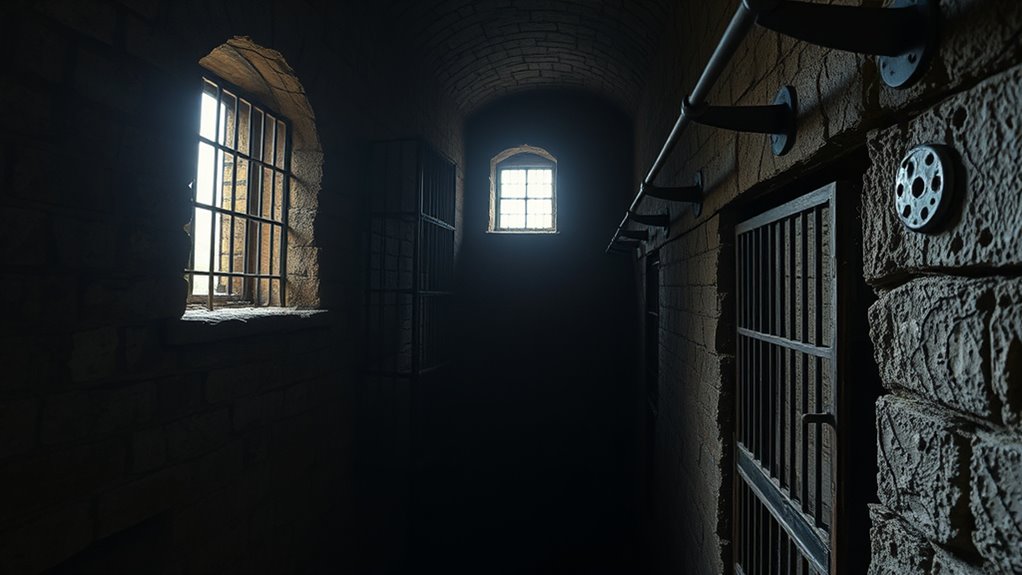
Preserving Eastern State Penitentiary requires ongoing restoration efforts that balance maintaining its historic integrity with guaranteeing visitor safety. You’ll find that art conservation plays a key role, preserving murals and artifacts that tell the prison’s story. These efforts help keep the site authentic while preventing deterioration. Community outreach is also central to its preservation, engaging local residents and visitors through programs and volunteer opportunities. Educational initiatives bring history to life, offering tours, workshops, and interpretive displays that deepen your understanding of the prison’s past. By supporting these restoration and outreach efforts, you help ensure that Eastern State Penitentiary remains a powerful reminder of justice, history, and the importance of preserving our cultural landmarks for future generations.
Frequently Asked Questions
What Inspired the Prison’s Unique Radiating Cell Block Design?
You’re curious about what inspired the prison’s unique radiating cell block design. The architects aimed to create an innovative design that emphasized surveillance and control, reflecting strong architectural symbolism. This layout allows guards to observe all prisoners from a central point, promoting security and discipline. The radiating structure symbolizes order and authority, showcasing how thoughtful, symbolic architecture can serve functional purposes, making it a pioneering example in prison design.
How Did Eastern State Influence Modern Correctional Philosophies?
Imagine a lighthouse guiding ships through darkness—that’s how Eastern State’s prison architecture shaped correctional reform. Its design emphasized solitary confinement and moral reflection, symbolizing hope for rehabilitation. You see how this influenced modern correctional philosophies, promoting humane treatment and reform rather than mere punishment. By prioritizing structure and purpose, Eastern State inspired a shift toward correctional practices focused on redemption and betterment, transforming how society views incarceration.
Are There Any Documented Cases of Real Supernatural Activity?
You might wonder if there are real supernatural sightings or ghost stories at Eastern State Penitentiary. While many visitors and staff report eerie feelings and unexplained noises, documented cases of supernatural activity remain unproven. These ghost stories contribute to the prison’s haunted reputation, but scientific evidence is lacking. Still, the chilling atmosphere and tales of apparitions keep the belief alive for those interested in paranormal phenomena.
What Former Inmates Left the Most Lasting Legacy?
Think of former inmates as the original influencers, leaving a lasting legacy through artistic expressions and inmate stories. Even centuries later, their tales of hardship and resilience resonate, shaping public perceptions of justice and penal reform. Their creative works—like sketches, poems, or recorded testimonies—serve as powerful reminders. You might say they turned their confinement into a form of expression, ensuring their stories continue to inspire and provoke reflection long beyond their time behind bars.
How Does the Prison’s History Impact Its Current Preservation Efforts?
Your interest in the prison’s history highlights its importance, which drives current preservation efforts. You see that historical preservation is essential to maintaining its legacy, inspiring visitors and honoring its past. However, funding challenges often hinder these efforts, making it harder to restore and protect the site. By supporting community initiatives and raising awareness, you can help guarantee this historic landmark endures for future generations to learn from and explore.
Conclusion
Walking through Eastern State Penitentiary, you feel the weight of its history and haunting stories. Imagine standing in the cell of Al Capone, realizing how justice and punishment shaped lives. This place isn’t just a relic; it’s a reminder of our past mistakes and the importance of reform. Visiting today, you become part of its ongoing story—preserving history while confronting the ghosts that linger, reminding us of lessons we must never forget.