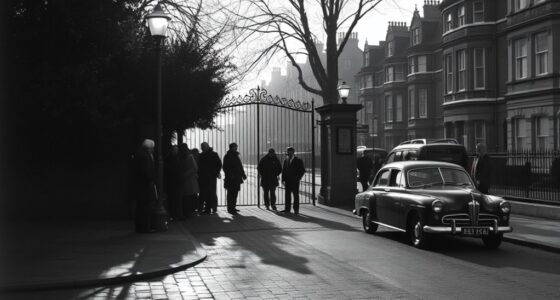

The Highgate Vampire Panic of 1970 arose from local folklore about supernatural sightings at Highgate Cemetery, amplified by sensational media coverage. Stories about ghostly figures and eerie encounters became widespread, fueling public fears. Journalists seized on these tales to attract readers, turning isolated reports into a nationwide hysteria. This event highlights how community myths, combined with media sensationalism, can create a lasting cultural phenomenon. To understand the full story, explore how these elements intertwined over time.
Key Takeaways
- The panic stemmed from Victorian-era local folklore and ghost stories linked to Highgate Cemetery’s history.
- Media sensationalized sightings, portraying the vampire as a real and dangerous entity.
- Newspaper coverage amplified initial reports, fostering nationwide hysteria and urban legends.
- Eyewitness accounts described tall, dark figures, often exaggerated for sensationalism.
- The event exemplifies how media and folklore combined to create a lasting paranormal myth.

The Highgate Vampire Panic of the early 1970s captured the imagination of London residents and paranormal enthusiasts alike. This event wasn’t just a fleeting curiosity; it became a cultural phenomenon fueled by local folklore and amplified by media influence. The story began with whispers in the community about strange sightings and ghostly encounters around Highgate Cemetery, a site long associated with Victorian funerary practices and urban legends. These tales weren’t created overnight—they drew on a rich tapestry of local lore that had circulated for years, blending ghost stories, urban myths, and superstitions that many residents grew up hearing. As these stories gained traction, they created an environment ripe for sensationalism.
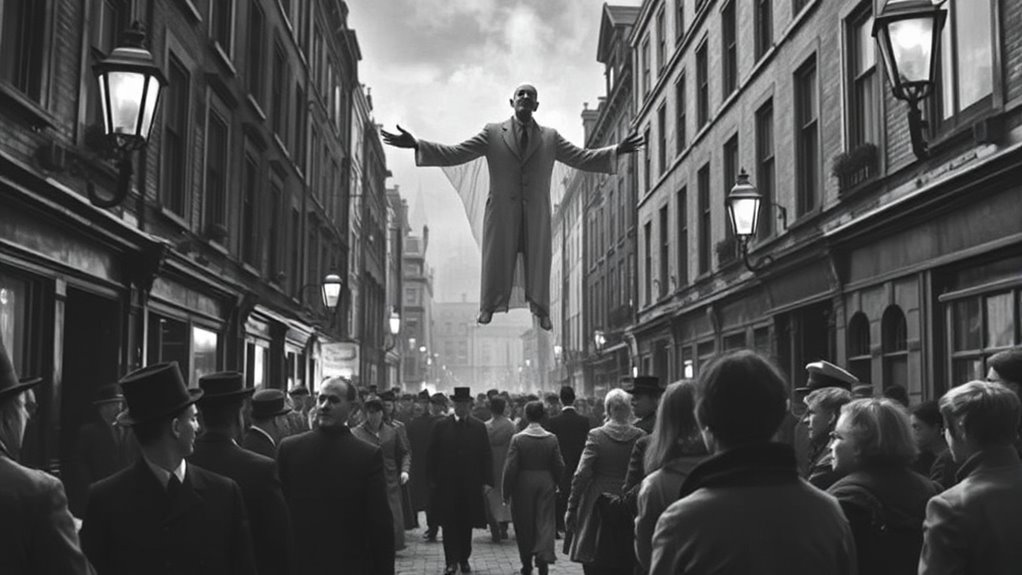
Media outlets played a vital role in transforming local folklore into a nationwide spectacle. Journalists and newspapers seized upon the eerie reports, publishing sensational headlines that painted a vivid picture of a vampire lurking in the shadows. The press’s fascination wasn’t just about reporting facts; it was about capturing the public’s imagination. They presented the sightings as real and imminent threats, which stoked fear and curiosity among the general population. This media influence turned what might have been a series of isolated sightings into a collective hysteria. The narrative was further fueled by reports of eyewitnesses claiming to have seen a tall, dark figure with glowing eyes, or feeling an unexplainable sense of dread near the cemetery.
Media sensationalized sightings, transforming local fears into nationwide hysteria about a lurking vampire.
Your understanding of the panic deepens when you realize how media coverage shaped perceptions. Sensational stories created a sense of urgency and danger that kept the story alive for months. Each new sighting was reported with increasing detail, often embellished to heighten the sense of menace. The media’s portrayal of the vampire as a real, dangerous entity transformed local folklore into an urban legend that seemed almost tangible. This influence was so powerful that it prompted a series of investigations, sightings, and even supposed encounters with the creature, all documented in newspapers, magazines, and later in books. Moreover, the phenomenon exemplifies how media influence can amplify local stories into national phenomena, blurring the lines between fact and fiction.
In essence, the Highgate Vampire Panic was a perfect storm—local folklore provided the foundation, but media influence built the story into a nationwide phenomenon. It’s a clear example of how stories rooted in tradition can be amplified and distorted by the press, creating a collective hysteria that leaves a lasting mark on cultural memory. You see this played out repeatedly in history, but the Highgate case remains one of the most vivid illustrations of how media shapes paranormal narratives and public perception.
highgate cemetery ghost hunting kit
As an affiliate, we earn on qualifying purchases.
As an affiliate, we earn on qualifying purchases.
Frequently Asked Questions
What Inspired the Initial Vampire Sightings at Highgate Cemetery?
You’re inspired by urban legends and supernatural folklore that often depict mysterious, eerie figures lurking in cemeteries. These stories fuel sightings at Highgate Cemetery, where locals and visitors claim to see shadowy shapes or supernatural beings. The combination of haunted tales, cultural fears, and the cemetery’s spooky atmosphere creates a perfect environment for vampire sightings, sparking curiosity and myth-building that continues to attract attention today.
Were There Any Real Historical Figures Linked to the Vampire Stories?
Think of the vampire stories as echoes from old legends, but no real historical figures tie directly to them. You won’t find Dracula or Vlad the Impaler lurking in Highgate’s shadows. Instead, these tales draw from supernatural folklore and myth, blending history with imagination. While some stories hint at legendary figures, there’s no concrete evidence linking actual people to the vampire sightings, leaving the tales rooted more in legend than history.
How Did the Media Influence Public Perception During the Panic?
You see, media sensationalism fueled public hysteria during the panic by exaggerating vampire sightings and spreading rumors rapidly. As the press sensationalized stories, you and others began to believe in the supernatural threat, creating a cycle of fear and panic. This coverage amplified the situation, making the vampire stories seem more real than ever and intensifying the community’s fear, even though there was little actual evidence.
What Role Did Local Residents Play in the Events?
You see, local residents played a vital role in shaping the events through their community involvement and resident reactions. Their curiosity and fears fueled the rumors, leading to increased sightings and reports. Some residents actively participated by exploring the area or spreading stories, while others reacted with skepticism or panic. This collective response intensified the hysteria, making the panic a community-driven phenomenon driven by personal reactions and shared beliefs.
Have Similar Vampire Panics Occurred in Other Regions?
Yes, similar vampire panics have happened in other regions, often fueled by superstitious beliefs and urban legends. You might recall the 19th-century vampire scares in Eastern Europe or the 18th-century American tales about blood-drinking spirits. In each case, communities become convinced of supernatural threats, leading to public hysteria. These panics show how deeply superstitions and urban legends can influence people’s fears and actions.

Vampires: A Handbook of History & Lore of the Undead (Folklore Legends)
As an affiliate, we earn on qualifying purchases.
As an affiliate, we earn on qualifying purchases.
Conclusion
So, while the Highgate vampire panic captured imaginations, there’s little solid evidence to prove a real vampire lurking in the shadows. Most reports likely stem from mass hysteria, local legends, or mistaken sightings. You might wonder if fear alone can conjure such tales. Ultimately, the story reminds you how powerful rumors and imagination are—sometimes more convincing than facts. The truth probably lies somewhere between myth and reality, shaped by collective fear and curiosity.

Sam and Colby XPLR Spirit Box | Paranormal Detection Equipment; Haunted Survival; Ghost Hunter Scanner; EMF and EVP Detector; Comprehensive Tool for Spirit Communication
Designed by Viral Explorers Sam and Colby: Step up your ghost hunting game with the "Spirit Box," created…
As an affiliate, we earn on qualifying purchases.
As an affiliate, we earn on qualifying purchases.
urban legends and folklore collection
As an affiliate, we earn on qualifying purchases.
As an affiliate, we earn on qualifying purchases.