
The Winchester Mystery House’s construction spans 38 years, starting in 1884 and continuing until 1922, resulting in a quirky blend of Victorian, Queen Anne, and Gothic styles. It reflects Sarah Winchester’s beliefs in spirits, fears, and her desire for constant innovation, leading her to frequently change plans and add features like secret passages. Its patchwork appearance showcases her emotional state and evolving ideas. Exploring this history reveals a fascinating mix of personal motives and architectural evolution—more details await your curiosity.
Key Takeaways
- The house was built continuously from 1884 to 1922, reflecting evolving fears, beliefs, and architectural styles.
- Construction was unplanned, with frequent modifications inspired by Sarah Winchester’s supernatural beliefs and emotional needs.
- Architectural features include a mix of Queen Anne, Victorian, and Gothic elements, with secret passages and whimsical design choices.
- Architects were engaged sporadically, accommodating her changing ideas and spiritual concerns throughout the 38-year building process.
- The structure embodies her psychological state, serving as a spiritual sanctuary and legacy driven by grief, superstition, and personal obsession.

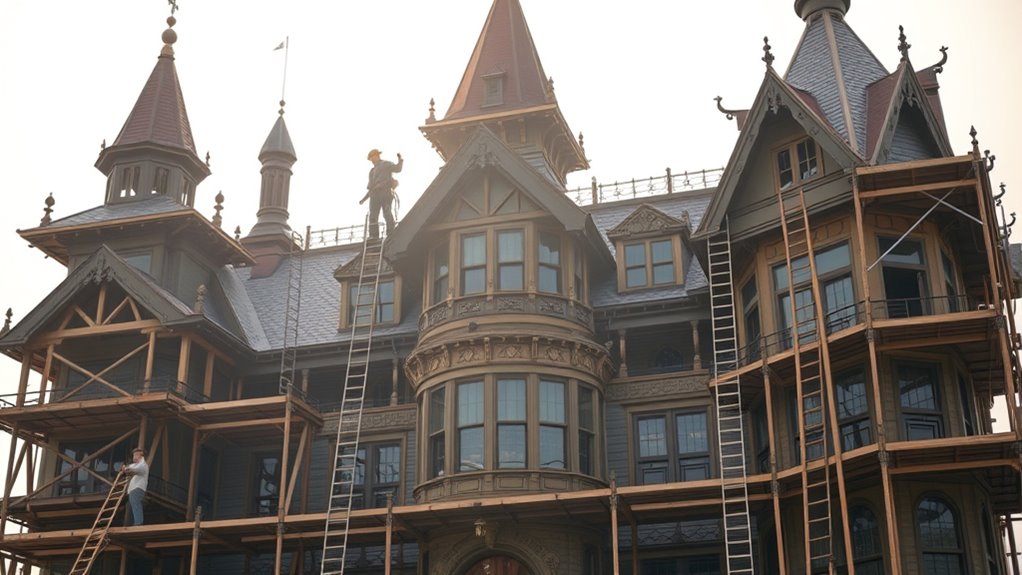
The construction of the Winchester Mystery House is a fascinating story of obsession and mystery. As you explore its walls, you’ll notice how the architectural styles blend seamlessly, reflecting years of evolving design trends and personal whims. The house isn’t built in a single style but showcases a mix of Queen Anne, Victorian, and even some Gothic elements. This eclectic mix results from a construction timeline that spanned over 38 years, starting in 1884 and continuing until Sarah Winchester’s death in 1922. During this period, the house grew and changed constantly, almost like a living organism that responded to her fears and beliefs. As you walk through its maze-like corridors, you see turrets, bay windows, and ornate woodwork that embody Victorian grandeur, but also some unusual features like secret passages and staircases leading nowhere. These elements highlight her desire for constant innovation and perhaps even serve as symbols of her complex psyche.
The construction timeline is as fascinating as the house itself. It’s not a story of rapid building but a slow, deliberate process driven by personal necessity. Sarah Winchester kept adding rooms and features almost obsessively, believing she was appeasing spirits or warding off bad luck. As you examine the house’s development, you realize that each phase of construction reflects her shifting fears and hopes. The house’s design evolved over decades, with new styles and ideas layered over previous ones, creating a patchwork of architectural influences. This piecemeal approach results in the somewhat haphazard yet intriguing appearance the house has today. You might wonder how such a complex structure could be built without a master plan, but the answer lies in her ongoing desire to create a sanctuary tailored to her spiritual needs. Additionally, her frequent changes to the construction plans demonstrate her evolving relationship with her architects, further shaping the house’s unique appearance.
Throughout the construction timeline, Sarah Winchester’s relationship with her architects also shifted. She often changed plans mid-project, adding or modifying rooms as new ideas or fears emerged. The house’s architecture, thus, isn’t just about style; it’s a reflection of her emotional and psychological state over the decades. The house’s architecture and its timeline tell a story of a woman driven by grief and superstition, pouring her energy into a forever-changing sanctuary. As you walk through this labyrinth of history, you get a glimpse into her mind—a mind obsessed with protection, legacy, and the desire to keep spirits at bay. The Winchester Mystery House stands as a memorial to her unique approach to architecture, blending styles and time periods into a singular, haunting masterpiece.
Top picks for "winchester mystery house"
Open Amazon search results for this keyword.
As an affiliate, we earn on qualifying purchases.
Frequently Asked Questions
Who Was Sarah Winchester’s Primary Architect During Construction?
You should know that Sarah Winchester’s primary architect during the construction was William H. Hill. His work influenced the house’s eclectic architectural style, blending Victorian, Queen Anne, and other styles. The construction timeline stretched over 38 years, leading to the house’s bizarre, sprawling design. Hill’s role was vital in shaping the mysterious, maze-like mansion that still captivates visitors today.
How Did Local Laws Influence the House’s Design and Expansions?
Imagine you’re Sarah Winchester steering her sprawling mansion—local laws, like zoning restrictions and building permits, shape her design choices. These rules forced her to get creative, leading to the house’s labyrinth of rooms and secret passages. Zoning restrictions limited where she could expand, while building permits dictated certain structures. You’d adapt by adding hidden staircases and windows, turning legal constraints into part of her mysterious, ever-growing estate—pretty innovative, right?
Were There Any Specific Building Techniques Unique to the House?
You’ll notice the Winchester Mystery House features unique building techniques, like intricate Gothic Revival details and hidden elements. The house includes secret passages, staircases leading nowhere, and concealed doors, showcasing innovative craftsmanship. These techniques reflect the era’s fascination with Gothic architecture and a desire for mystery. Your exploration reveals how these features create an enchanting, puzzling space, emphasizing the house’s extraordinary design and the builder’s imaginative approach.
What Materials Were Predominantly Used in the House’s Construction?
You notice the house’s walls whisper with the weight of wood and brick, the foundation built sturdy with concrete. The building material choices reflect a mix of wood framing, intricate brickwork, and delicate glass windows, all woven into the house’s labyrinthine design. These construction techniques, combining durability with whimsy, create a haunting rhythm that echoes through the halls, revealing how materials shape this mysterious, ever-evolving mansion.
How Did the House’s Construction Impact the Surrounding Community?
Your house’s construction boosted the local economy by creating jobs and attracting tourists, which benefits nearby businesses. It also fueled community folklore, as residents share stories about the house’s mysterious features and eerie history. This ongoing fascination keeps visitors coming, supporting local shops and services. Overall, the house’s construction has had a lasting positive impact on the community, blending economic growth with cultural intrigue.
Conclusion
As you walk through the Winchester Mystery House, you can’t help but feel like you’re stepping into a maze of madness and obsession that defies reality. Every twist, turn, and secret passage reveals a story more bizarre and breathtaking than the last. This house isn’t just a mansion; it’s a mind-boggling monument to one woman’s obsession that’s so incredible, it almost seems impossible you’re standing in the middle of it. Prepare to be amazed beyond your wildest dreams!