
To create a control room, start by planning a layout that minimizes movement and places critical controls within easy reach. Choose high-quality display equipment with adjustable mounts, considering contrast and lighting for clear visibility. Integrate reliable monitoring hardware and software to track multiple processes simultaneously, ensuring seamless communication and alert systems. Incorporate ergonomic principles with comfortable furniture and ideal positioning to reduce fatigue. Continuing further will help you master the detailed steps to build an efficient, user-friendly control environment.
Key Takeaways
- Assess operational needs and define key systems for monitoring, communication, and data management.
- Design an ergonomic layout with optimal placement of displays, controls, and workstations.
- Select high-quality, contrast-rich display equipment suitable for various lighting conditions.
- Integrate hardware and software systems to ensure seamless real-time data flow and alerts.
- Implement ergonomic principles to enhance comfort, reduce fatigue, and improve overall system efficiency.

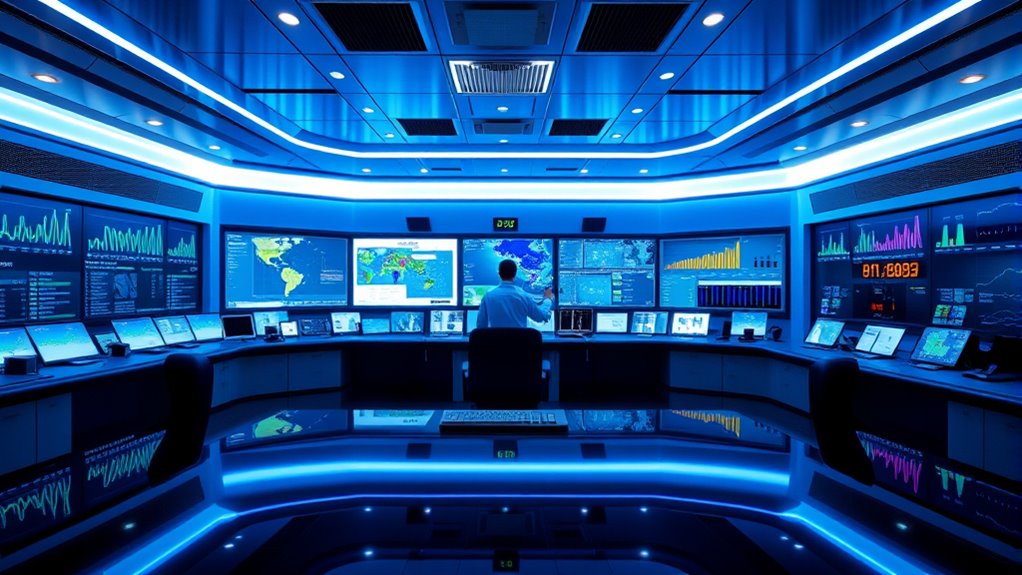
Have you ever wondered what it takes to set up an effective control room? The foundation begins with integrating reliable monitoring systems that provide real-time data and seamless communication. Your choice of hardware and software should align with the specific needs of your operation, guaranteeing you can track multiple processes simultaneously without delay. High-quality monitors, cameras, sensors, and alert systems are essential, as they enable you to respond swiftly to any issues that arise. Think about how these systems will interface with each other and how you’ll access the information—intuitive dashboards and centralized controls make your job easier. Properly configured monitoring systems not only enhance situational awareness but also reduce response time, boosting overall efficiency. Additionally, understanding the importance of contrast ratio can help in selecting display equipment that renders images with greater depth and clarity, ensuring critical data is easily distinguishable in various lighting conditions.
Once you’ve selected your monitoring systems, the next step is to focus on ergonomic design. This aspect is vital because your control room is where you’ll spend long hours, and comfort directly impacts your alertness and decision-making. Start by designing the layout to minimize unnecessary movement. Place critical controls and displays within easy reach and at eye level to reduce strain. Ergonomic chairs, adjustable desks, and proper lighting help prevent fatigue and discomfort, allowing you to maintain focus for extended periods. Also, consider the placement of screens so that they don’t cause neck or eye strain—using adjustable mounts and anti-glare screens can make a significant difference. An ergonomic design isn’t just about furniture; it’s about creating an environment that promotes productivity and safety. When you prioritize comfort and accessibility, you’ll find that your team can monitor and respond more effectively, especially during demanding shifts.
Additionally, integrating ergonomic principles with your monitoring systems ensures a more cohesive setup. For example, the positioning of display screens should facilitate quick glances without requiring awkward head turns, and control panels should be arranged logically to streamline workflows. Proper cable management and noise reduction techniques also contribute to a more organized, less distracting environment. When your control room’s design considers human factors, you decrease errors caused by fatigue or discomfort, which ultimately improves operational reliability.

GOYOJO 4K Head-Mounted Night Vision Goggles & Binoculars for Adults – Infrared NVG with Manual Focus & 8X Digital Zoom for Hunting, Camping, and Outdoor Surveillance
📸[4K Video & 36MP Photos]: Whether it's daytime, low-light, or the dead of night, GOYOJO night vision goggles...
As an affiliate, we earn on qualifying purchases.
Frequently Asked Questions
What Are the Essential Safety Protocols for a Control Room?
You should implement essential safety protocols like clear emergency procedures and thorough staff training. Make certain everyone knows how to respond swiftly to alarms, power failures, or accidents. Regularly review and practice emergency protocols, keeping safety equipment accessible. Invest in ongoing staff training to keep all team members updated on safety measures. These steps help maintain a safe control room environment, minimizing risks and ensuring quick, effective responses during emergencies.
How to Choose the Best Software for Control Room Management?
Choosing the best control room management software means balancing power and simplicity. Look for software that seamlessly integrates with your existing systems, ensuring smooth software integration. Prioritize an intuitive user interface design so operators can navigate effortlessly, reducing errors. Consider scalability and customization options, so your system adapts as your needs evolve. Test demos firsthand to see how well the software fits your workflow, helping you make an informed, confident decision.
What Is the Ideal Room Size for Different Control Room Applications?
For different control room applications, you should aim for room dimensions that promote comfort and efficiency. Typically, a space of about 250-400 square feet works well for small operations, while larger setups require 600+ square feet. Prioritize ergonomic design by ensuring enough room for monitors, equipment, and movement. This setup helps reduce fatigue and enhances focus, making your control room more effective and comfortable for all users.
How to Ensure Cybersecurity in a Control Room Environment?
To guarantee cybersecurity in your control room, prioritize access control by restricting entry to authorized personnel only. Implement strong authentication methods and regularly update passwords. Use threat detection tools to monitor for suspicious activities and potential breaches. Train your team on cybersecurity best practices, like recognizing phishing attempts. Regularly review and update security protocols, conduct audits, and maintain backups to protect your control systems from evolving cyber threats.
What Are the Common Challenges Faced During Control Room Setup?
You might worry about equipment calibration and staff training challenges when setting up a control room. To overcome these, prioritize thorough staff training and schedule regular equipment calibration checks. This guarantees your team operates efficiently and your equipment stays reliable. Although these tasks seem intimidating, staying proactive and organized makes setup smoother. Focusing on these key areas helps you build a well-functioning control room that’s ready for real-world demands.

Thames & Kosmos Spy Labs Inc: Night Vision Goggles Conduct Secret Missions & Surveillance at Night! | Essential Tools & Tricks of The Trade from The Detective Gear Experts for Young Investigators
Spy Labs Incorporated's activity kits and equipment provide an engaging and interactive way for kids to learn about...
As an affiliate, we earn on qualifying purchases.
Conclusion
Now that you know the steps to create a control room, are you ready to take the leap and bring your vision to life? With careful planning and attention to detail, you can build a space that boosts efficiency and safety. Remember, every great control room starts with a clear plan and the right tools. Why wait to turn your idea into reality? Your control room is just a step away from becoming your operational hub.

HEXEUM Night Vision Goggles - 4K Night Vision Binoculars for Adults, 3'' HD Screen Binoculars can Save Photo and Video with 32GB TF Card, Camouflage, NV4000C
Day & Night Vision with 4K Video Recording: Designed for low-light and pitch-dark environments, these night vision goggles...
As an affiliate, we earn on qualifying purchases.

VisioGear Night Vision Binoculars - Night Thunder X3 4K Night Vision Goggles for Adults, AI Color Mode, 2000ft Range, 5000mAh Battery, 32GB Card for Camping & Security
【4K Ultra HD Image Quality】The NTX3 advanced night vision goggles for adults capture stunning 4K videos and 40MP...
As an affiliate, we earn on qualifying purchases.