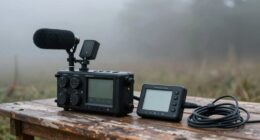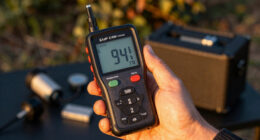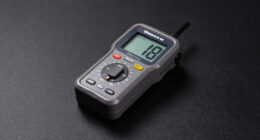

To measure static electricity step-by-step, start by selecting the right sensor such as an electrostatic field meter or Faraday cup. Position the sensor close to the charged surface without contact, ensuring proper calibration for accuracy. Record the electric field or charge level indicated by the device. Keep environmental factors like humidity in mind, as they affect your measurements. If you keep exploring, you’ll uncover more detailed techniques to get precise results.
Key Takeaways
- Use a calibrated electrostatic sensor or voltmeter to detect electric fields near the object or surface.
- Ensure environmental conditions, like humidity and temperature, are suitable for accurate measurements.
- Position the sensor close to the static buildup area without physical contact for contactless readings.
- Calibrate the sensor with known charges or fields before taking measurements for accuracy.
- Record the electric field strength displayed by the sensor to quantify the static electricity level.

Static electricity is invisible but can be measured accurately with the right tools. When you’re trying to quantify static charges, electrostatic sensors are your best allies. They detect and measure the electric fields generated by static charges, providing precise data essential for understanding and controlling static buildup. To do this effectively, you need to understand the charge measurement techniques involved. These techniques include methods such as the Faraday cup, electrostatic voltmeters, and field meters, each suited for different scenarios.
Electrostatic sensors work by sensing the electric field created by static charges on surfaces or objects. They typically consist of conductive probes or plates connected to sensitive electronic circuitry that translates the detected electric field into a measurable voltage or current. When you approach a charged object with an electrostatic sensor, it picks up the electric field and provides a reading proportional to the amount of charge present. This process allows you to quantify static electricity without direct contact, which is *essential* for delicate electronics or materials sensitive to contact.
Electrostatic sensors detect electric fields to measure static charges without contact, crucial for sensitive electronics.
Charge measurement techniques involve several steps. First, you need to position the electrostatic sensor close to the area or object where you suspect static buildup. *Ascertain* the sensor is calibrated correctly—most devices require calibration against a known charge or electric field to *guarantee* accuracy. Once calibrated, you can take readings by bringing the sensor near the target surface or object. The sensor’s display or connected device will show the electric field strength, which you can interpret to determine the amount of static charge. For more precise measurements, you might use a Faraday cup, which captures the charge within a conductive enclosure, allowing you to directly measure the total static charge in coulombs. Additionally, understanding music production essentials can help in developing better static control strategies, especially for sensitive electronic equipment involved in audio and sound engineering.
When measuring static electricity, it’s *imperative* to consider environmental conditions like humidity and temperature, as they influence static buildup and sensor readings. In high-humidity environments, static charges tend to dissipate more quickly, reducing measurement sensitivity. Conversely, low humidity can lead to higher static accumulation, making measurements more pronounced. Using electrostatic sensors with proper charge measurement techniques ensures you get consistent, reliable data.
electrostatic field meter
As an affiliate, we earn on qualifying purchases.
As an affiliate, we earn on qualifying purchases.
Frequently Asked Questions
What Are Common Causes of Static Electricity Buildup?
You often cause static electricity buildup through charge accumulation when you rub certain materials or create surface contact between objects. For example, walking across a carpet or taking off a sweater transfers electrons, leading to static charge. These activities increase surface contact, which encourages charge transfer. Humid environments tend to reduce static, but dry conditions make it easier for static electricity to build up on your clothes, carpets, or other surfaces.
How Does Humidity Affect Static Electricity Measurements?
Humidity impact on static electricity measurements is significant; higher humidity reduces static buildup, making your readings less intense and more consistent. Conversely, low humidity increases static charges, leading to higher measurement variability. You’ll notice that in dry environments, measurements become less accurate because static charges are easier to generate and harder to control. To guarantee measurement accuracy, maintain ideal humidity levels, especially in controlled environments, to minimize static interference and get reliable results.
Can Static Electricity Harm Electronic Devices?
Yes, static electricity can harm electronic devices through electrostatic discharge. When you touch sensitive electronics with a static charge, it can transfer through conductive materials, damaging internal components. To prevent this, always ground yourself before handling devices and use anti-static mats. These precautions help minimize electrostatic discharge risks, ensuring your electronics stay safe and functional despite static electricity exposure.
What Safety Precautions Should I Take During Measurement?
You should always wear personal protective equipment, like gloves and safety glasses, to protect yourself during static electricity measurement. Use proper grounding techniques to prevent static buildup and discharge, ensuring safety. Make sure your equipment is properly grounded, and work on an anti-static mat. Keep your workspace dry and free of clutter. These precautions help avoid shocks and damage to sensitive electronics, keeping you safe throughout the process.
Are There Alternative Methods to Measure Static Electricity?
Think of alternative methods like electrostatic sensors as your toolkit’s hidden gems for charge quantification. These sensors allow you to measure static electricity without direct contact, providing quick and accurate readings. You can also use Kelvin probes or electrostatic voltmeters, which are great for non-invasive measurements. While not as common, these methods can be more practical in certain environments, giving you flexibility and precision in your static electricity assessments.
Faraday cup static charge measurement
As an affiliate, we earn on qualifying purchases.
As an affiliate, we earn on qualifying purchases.
Conclusion
As you finish measuring static electricity, remember it’s like capturing a fleeting spark—a tiny lightning bolt frozen in time. Each test is a step closer to understanding the silent power that surrounds us daily. With patience, you hold the key to revealing invisible forces, turning sparks into knowledge. So keep exploring, for in every static shock lies a story waiting to be told, a whisper of energy waiting to be understood.
electrostatic voltmeter
As an affiliate, we earn on qualifying purchases.
As an affiliate, we earn on qualifying purchases.
static electricity sensor
As an affiliate, we earn on qualifying purchases.
As an affiliate, we earn on qualifying purchases.