
Metal detectors and ground survey tools help you find artifacts more efficiently by identifying targets through soil mineralization and mapping the subsurface layout. You can adjust detector settings to better handle different soil conditions and reduce false signals. Tools like soil conductivity meters and magnetometers guide you to promising spots and minimize unnecessary digging. Combining these technologies makes your searches more accurate and environmentally friendly—keep exploring to uncover how these tools work together for even better results.

Get books and cozy reading nights delivered free with Prime
- Fast, free delivery on millions of items
- Prime Video, Amazon Music and more included
- Member-only deals all year
Key Takeaways
- Metal detectors can filter soil mineralization interference to improve artifact detection accuracy.
- Ground survey tools like conductivity meters and magnetometers help identify promising excavation sites.
- Understanding soil composition enhances detection strategies and reduces false signals.
- Combining detection with ground surveys increases efficiency and minimizes unnecessary digging.
- Proper calibration and technique adaptation optimize results across diverse soil conditions.
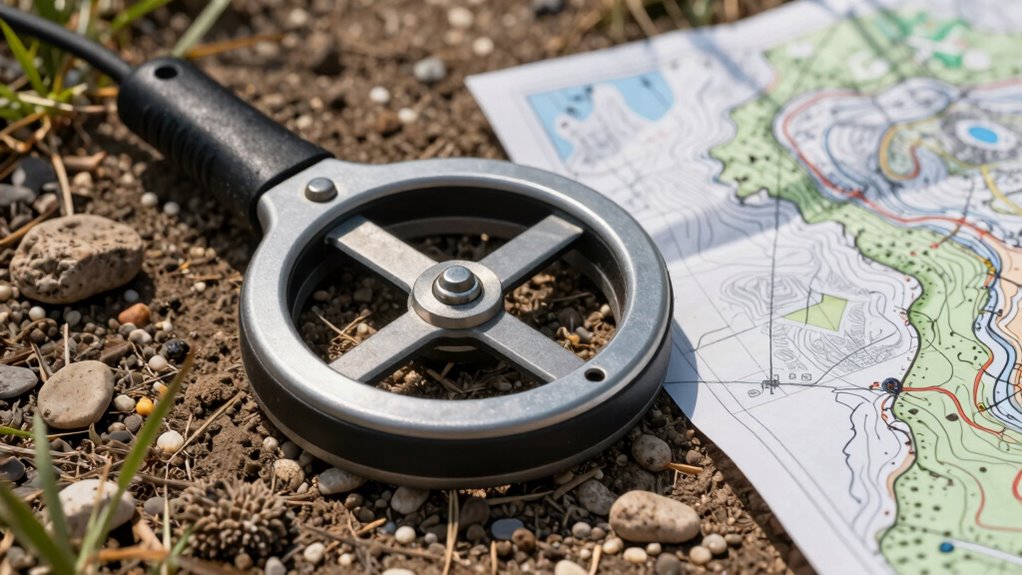
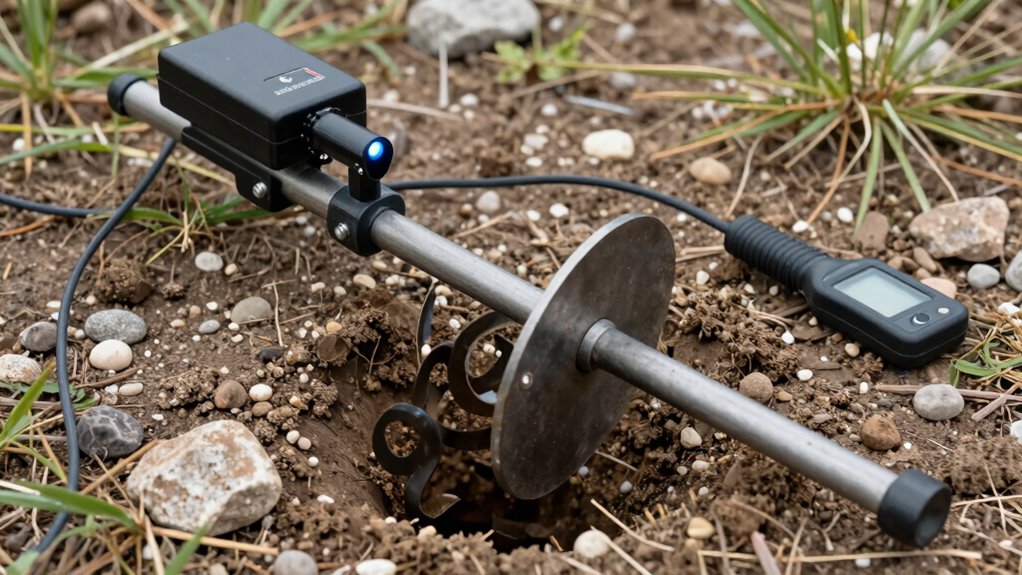
Using a metal detector equipped with discrimination settings allows you to filter out unwanted signals caused by soil mineralization, focusing instead on targets that are likely to be genuine artifacts. You’ll find that understanding the impact of soil mineralization is essential in areas with rich mineral deposits or highly conductive soil. With proper calibration, your detector can distinguish between iron, aluminum, and precious metals, increasing your chances of uncovering authentic historical artifacts. Ground survey tools, such as soil conductivity meters or magnetometers, give you detailed insights into the subsurface composition. These devices help you map out promising locations where artifacts may be buried, especially in complex terrains where mineralization varies. Incorporating soil mineralization awareness into your search strategy ensures you adapt your techniques effectively to different environments. When you combine metal detection with thorough ground surveys, your ability to locate significant historical artifacts improves dramatically. These tools allow you to target specific areas, reducing unnecessary digging and minimizing disturbance to the site. Plus, understanding soil mineralization helps you adapt your search strategy—whether that means adjusting your detector’s settings or choosing the right time of day for better results. Recognizing soil composition and how it influences metal detection performance enables you to refine your approach further. Additionally, understanding the conductivity of soil can guide you in selecting the most effective detection parameters for each location. Awareness of ground conditions can also help prevent false signals caused by mineralization or soil moisture, making your searches more efficient. Being familiar with soil types and their effects on detection can significantly improve your success rate in different terrains. Ultimately, the combination of advanced ground survey tools and a keen understanding of soil conditions enables you to maximize your success in uncovering valuable relics. It’s not just about finding metal; it’s about interpreting the environment and making informed decisions that lead to meaningful discoveries. By leveraging these tools effectively, you enhance your ability to uncover the secrets hidden beneath the ground, revealing stories from our past that have long been buried.
metal detector with discrimination settings
As an affiliate, we earn on qualifying purchases.
As an affiliate, we earn on qualifying purchases.
Frequently Asked Questions
How Accurate Are Metal Detectors in Mineral-Rich Soils?
Metal detectors’ accuracy in mineral-rich soils varies, often affected by mineral interference and soil composition. You might find it challenging to detect metals because minerals like salt or iron can cause false signals or reduce sensitivity. To improve accuracy, use detectors specifically designed for mineralized environments and adjust settings accordingly. Understanding your soil’s composition helps you optimize your equipment, making your searches more effective despite mineral interference.
Can Ground Survey Tools Detect Underground Utilities Without Damage?
Yes, ground survey tools can detect underground utilities without damage, helping treasure hunters and historians uncover hidden history safely. Their precision pinpointing prevents potential harm to essential infrastructure. By accurately identifying underground utilities, you protect valuable artifacts and avoid costly repairs. This careful, calculated approach guarantees you can explore and excavate historical artifacts confidently, without risking damage to underground utilities or the integrity of your treasure hunting or archaeological pursuits.
What Is the Typical Depth Range for Various Metal Detectors?
You’ll find that metal detectors typically detect at depths ranging from 6 inches to 3 feet, depending on the model and target size. For uncovering historical artifacts, deep-seeking detectors excel, reaching up to 3 feet. Beach treasure hunting often requires waterproof detectors that work well in saltwater, detecting coins and jewelry near the surface or a bit deeper. Always consider your target and environment when choosing your detector’s depth capabilities.
How Do Weather Conditions Affect the Performance of Survey Tools?
Weather conditions profoundly influence your survey tool’s performance. Weather interference from rain, snow, or high humidity can disrupt signals or cause equipment malfunctions. Cold temperatures may impact battery life and sensitivity, while calibration can drift in extreme conditions. To guarantee accuracy, you need to regularly adjust and recalibrate your equipment under varying weather conditions, and consider weather-resistant gear to minimize these issues during your surveys.
Are There Legal Restrictions on Metal Detecting in Certain Areas?
Did you know that over 30 countries have strict legal restrictions on metal detecting? Yes, in many areas, metal detecting is prohibited on public lands or private property without permission. You must always check local laws before you start, as unauthorized detecting can lead to fines or confiscation. Respect private property rights, get the necessary permits, and follow regulations to enjoy your hobby responsibly and legally.
Conclusion
By harnessing high-tech metal detectors and ground survey tools, you open doors to discovery and delight. These tools transform treasure hunts into thrilling adventures, turning tiny clues into triumphant tales. With precision and passion, you can uncover hidden histories and priceless artifacts. Embrace this exciting exploration, and let the magic of modern tools motivate your mission. Immerse yourself with determination, and watch your discoveries develop into unforgettable moments of achievement.
Fall Picks
fall essentials
As an affiliate, we earn on qualifying purchases.