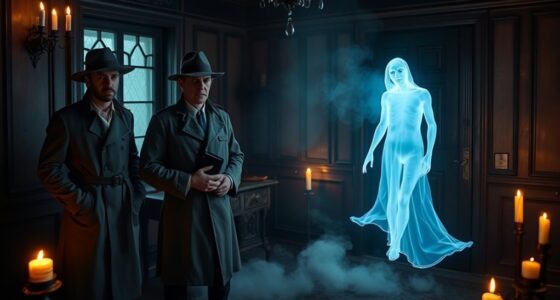
Doppelgängers in folklore serve as eerie doubles that embody society’s fears about identity, death, and supernatural forces. You’ll find them portrayed as ominous signs, warnings of misfortune, or spiritual reflections across cultures like German and Irish legends. These stories highlight themes of duality, the unknown, and cosmic balance, often warning about breaches of natural order. If you want to uncover the deeper meanings and cultural variations behind these haunting encounters, there’s more to explore.
Key Takeaways
- Doppelgängers are folklore figures symbolizing duality, often seen as ominous signs of death or misfortune across cultures.
- They serve as cautionary tales, warning about perceptions of reality and the consequences of actions.
- Variations include German beliefs linking them to death and Irish myths symbolizing crossings between living and dead.
- These doubles reflect universal fears of losing identity, being watched, or encountering supernatural forces.
- Their enduring stories highlight themes of duality, the supernatural, and cultural symbols shaping perceptions of the unknown.
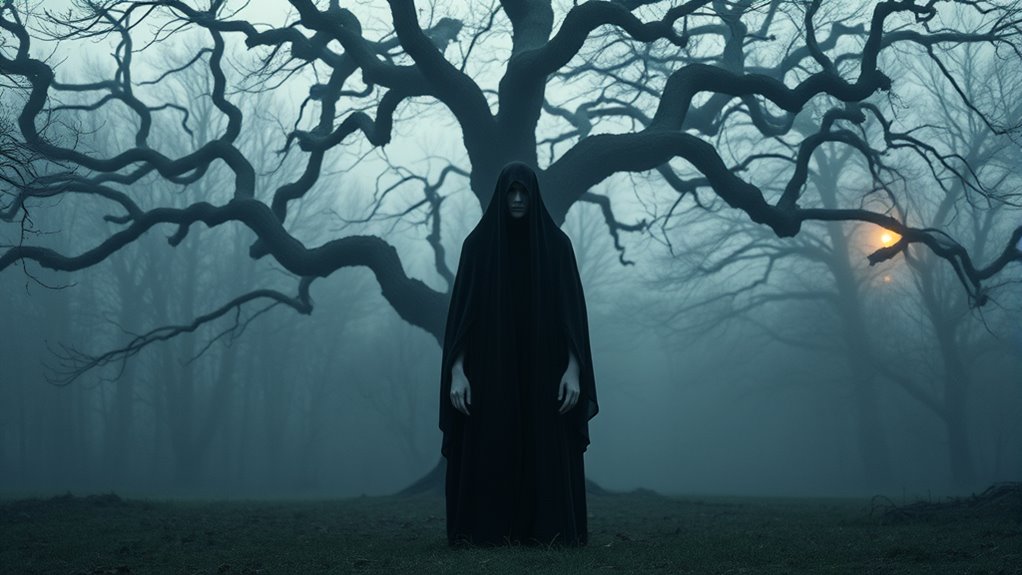
Doppelgängers have long fascinated folklore around the world, often seen as sinister or ominous doubles of a person. When you hear about a doppelgänger, it’s natural to imagine a ghostly apparition or a sinister mirror image that signals danger. These encounters aren’t just stories; they’re woven into cultural symbolism that reflects deep-seated fears and beliefs about identity and the supernatural. Throughout history, many cultures have associated seeing your double with paranormal encounters that suggest the presence of spirits or otherworldly forces. In some traditions, a doppelgänger is considered a bad omen, foretelling death or misfortune for the person it mirrors. In others, it’s seen as an extension of the soul or a spiritual reflection, revealing hidden truths about the individual’s character or destiny. The way these stories are told often highlights cultural symbolism, emphasizing their role in shaping societal perceptions of the supernatural and the unknown. You might find it intriguing how these doubles are often linked to cultural symbolism. For example, in German folklore, the doppelgänger is a harbinger of death, a warning that someone close to you may soon pass away. In Irish mythology, encountering your double can symbolize a clash between worlds—an intersection of the living and the dead. These stories serve as cautionary tales, warning people to be cautious about their actions and their perceptions of reality. The idea of a double also resonates with the concept of the “other self,” an aspect of identity that exists outside your conscious awareness. When you experience a paranormal encounter involving a doppelgänger, it often feels like a breach of the natural order, a glimpse into something beyond ordinary perception. Throughout different cultures, the symbolism attached to doppelgängers varies but consistently emphasizes themes of duality, fate, and the supernatural. Some see the double as a mirror of one’s true nature, revealing qualities you might not be willing to confront. Others view it as a warning or a sign of impending change, sometimes linked to spiritual or cosmic forces. These stories have persisted because they tap into universal fears of losing oneself or being watched by an unseen presence. When you hear about these encounters, it’s easy to see how they reflect our collective anxieties about mortality, identity, and the thin veil separating the worlds of the living and the dead. The enduring fascination with doppelgängers reveals much about human psychology and the cultural symbolism we attach to our unseen fears and hopes.
Frequently Asked Questions
Are There Modern Interpretations of Doppelgängers in Popular Culture?
Yes, you’ll find modern interpretations of doppelgängers in popular culture, often blending urban legends with supernatural entities. Films, TV shows, and books portray these doubles as eerie, often malevolent spirits or clones that haunt or threaten characters. You might see them in horror stories or psychological thrillers, where they symbolize inner fears or hidden truths. These modern takes keep the mysterious, unsettling essence alive, enthralling audiences with their blend of folklore and supernatural intrigue.
How Do Different Cultures Perceive the Spiritual Significance of Doppelgängers?
Ever wonder how different cultures see doppelgängers’ spiritual symbolism? You might find that in some societies, they represent a spiritual double or a reflection of one’s soul, rooted in cultural myths. Others perceive them as omens of misfortune or death. These diverse beliefs show how doppelgängers embody profound spiritual meanings, revealing unique views on life, death, and the soul across cultures.
Can Doppelgängers Be Scientifically Explained or Identified?
You can often explain doppelgängers through scientific skepticism, attributing sightings to psychological factors like pareidolia or sleep paralysis. Paranormal phenomena are unlikely explanations, as no empirical evidence supports their existence. When you encounter what seems like a doppelgänger, consider cognitive biases or misperceptions, rather than supernatural causes. Scientific research focuses on understanding these psychological processes, which can clarify why you might perceive a look-alike, rather than confirming paranormal origins.
What Psychological Factors Contribute to Sightings of Doppelgängers?
You might be surprised to learn that psychological factors like visual hallucinations and cognitive biases fuel sightings of doppelgängers. When your mind is tired, stressed, or distracted, it’s more prone to misperceive familiar figures, creating eerie doubles. These illusions play tricks on your perception, especially when your brain fills gaps with familiar images, making you doubt what you see and fueling that chilling feeling of encountering a mirror image—or something more sinister.
Are There Documented Cases of Harm or Misfortune Linked to Doppelgängers?
Yes, there are documented cases where supernatural encounters with doppelgängers are linked to harm or misfortune. Folklore legends often describe individuals experiencing misfortune, illness, or even death after seeing their double. You might hear stories where these encounters are believed to bring bad luck or tragedy, reinforcing the idea that doppelgängers are more than just folklore legends—they could signal danger or impending doom in some cultural traditions.
Conclusion
So, as you see, doppelgängers delight in darkness, dancing between doubt and danger. They serve as sinister symbols, whispering warnings and fueling fears. By understanding these eerily echoing entities, you can better grasp their ghostly guise and ghostly guidance. Remember, these doubles don’t just deceive—they deliver messages, mysteries, and myths. Embrace the eerie essence of these elusive echoes, and you’ll better understand the bizarre, bothering balance between belief and the beyond.