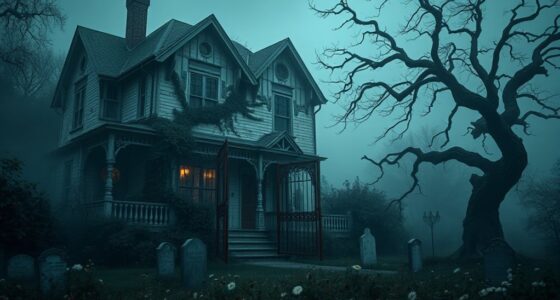

The Stone Tape Hypothesis suggests that environments can absorb and store emotional and traumatic energies, much like tape recordings. When certain conditions are met, these stored energies are replayed, creating what you perceive as paranormal activity or hauntings. Instead of spirits or supernatural forces, it’s the environment’s physical fabric that’s replaying echoes of past events. If you want to explore how physical spaces might hold and project these emotional imprints, you’ll find the details fascinating.

Get books and cozy reading nights delivered free with Prime
- Fast, free delivery on millions of items
- Prime Video, Amazon Music and more included
- Member-only deals all year
Key Takeaways
- The Stone Tape Hypothesis suggests that certain materials, like stone or aged fabrics, can record emotional or traumatic energies.
- These environments act like physical tapes, capturing intense emotional events and replaying them under specific conditions.
- Replays occur without conscious intent, triggered by environmental factors such as lighting, sounds, or atmosphere.
- It explains paranormal phenomena as residual energy echoes, not spirits or supernatural forces.
- The hypothesis shifts focus from spiritual explanations to physical, scientific understanding of energy imprinting in environments.

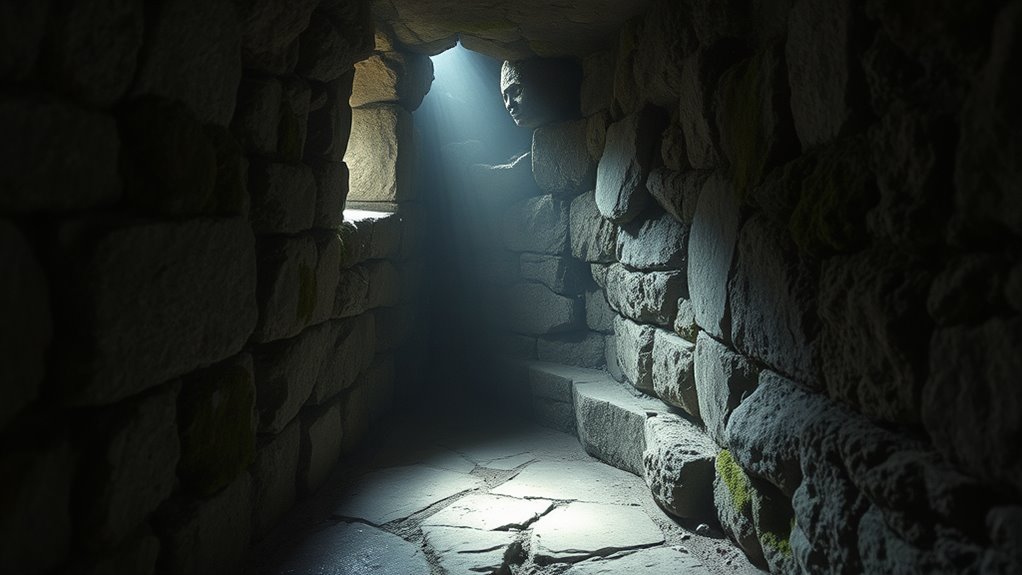
The Stone Tape Hypothesis suggests that certain environments can store emotional or traumatic energy within their physical structures, allowing these memories to be replayed under specific conditions. This idea posits that the environment itself acts like a recording device, capturing moments of intense emotional energy, which can later be triggered and experienced again. When you reflect on this, it becomes clear how certain locations, like old buildings or historic sites, seem to hold onto past events, almost echoing the feelings or actions that took place there. The key concept here is energy recording: the environment’s capacity to inscribe these emotional imprints into its very fabric. This process isn’t about ghosts or spirits in the traditional sense but about physical energy that shapes and influences what you perceive as paranormal activity. The physical characteristics of a location—such as materials, layout, and history—are believed to contribute to its ability to record and replay energy, making environment and energy recording interconnected concepts that shape perception. For example, dense stone walls, wood, or aged fabrics might act as mediums that hold onto emotional vibrations. When certain conditions align—like specific lighting, sounds, or even atmospheric changes—these stored energies can be released or reactivated. You might walk into an old room and suddenly feel a wave of sadness or fear, not because someone is present now, but because the environment is acting as a conduit, replaying a past event encoded within its structure. This environmental influence isn’t random; it’s thought to depend on the intensity of the original emotional energy and the physical properties of the environment. The more traumatic or emotional the original event, the stronger the recorded energy becomes. Over time, these stored energies can build up or become more easily triggered, creating what feels like residual memories that replay without conscious intent. The hypothesis suggests that under certain conditions, these energy recordings can be stimulated, leading you to perceive echoes of the past. This perspective shifts the focus from spiritual or supernatural explanations to a more physical and scientific understanding of how environments might harbor and replay emotional energy. Understanding the energy recording aspect helps explain why some places feel haunted or charged with emotion, even long after the original events. It emphasizes the importance of environmental influence, where the physical surroundings play a vital role in shaping what you experience. When you walk through a location with a rich history of emotional events, you’re not just observing the space—you might be interacting with a physical manifestation of past energies stored within it. This idea opens up a fascinating way to consider how environment and energy recording intersect, shaping perceptions of the paranormal in ways that are rooted in physical reality rather than mystical forces.
stone recording environment decor
As an affiliate, we earn on qualifying purchases.
As an affiliate, we earn on qualifying purchases.
Frequently Asked Questions
How Does the Stone Tape Hypothesis Compare to Other Paranormal Theories?
Compared to other paranormal theories, the Stone Tape Hypothesis suggests that environmental influence causes energy transfer, leaving recordings of past events on surfaces like stone. You might find it more plausible because it explains hauntings as environmental recordings rather than spirits. Unlike spiritual or supernatural explanations, it relies on physical processes, making it more scientifically grounded. This hypothesis emphasizes how energy transfer and environment shape paranormal phenomena.
What Scientific Evidence Supports the Existence of the Stone Tape?
Did you know that only limited empirical evidence supports the Stone Tape Hypothesis? Scientific research faces significant empirical challenges, as proving that emotional or traumatic impressions can leave lasting impressions on rocks is difficult. While some geological correlations suggest that certain mineral formations might store residual energies, conclusive proof remains elusive. You should view the hypothesis as intriguing, but not yet validated by rigorous scientific standards.
Can the Hypothesis Explain All Types of Ghost Sightings?
The Stone Tape Hypothesis can’t fully explain all ghost sightings because it mainly addresses energy residue from traumatic events. Environmental factors, like temperature or humidity, also influence reports, making some phenomena hard to attribute solely to energy residue. While it offers a plausible explanation for certain cases, many sightings involve subjective experiences or psychological factors that the hypothesis doesn’t account for, so it doesn’t cover every type of ghost encounter.
Are There Specific Geological Conditions That Facilitate the Tape Recordings?
Yes, certain geological conditions can facilitate tape recordings. You’ll find that areas with specific mineral compositions, like quartz-rich rocks, are more likely to store and emit these recordings. Additionally, geological stability plays a vital role; stable environments prevent disruptions that could erase or distort recordings. When these factors align, the tape recording hypothesis becomes more plausible, making such locations hotspots for potential ghostly phenomena.
How Has the Hypothesis Influenced Modern Paranormal Research Methodologies?
You see, the hypothesis has shaped modern paranormal research by encouraging you to explore environmental influences and energy imprints. Researchers now focus on how specific surroundings might store residual energy, impacting reports of hauntings. This approach shifts your investigation from solely psychological explanations to taking into account physical factors. By analyzing environmental influences, you can better understand potential energy imprints, making your research more thorough and rooted in scientific curiosity.
Conclusion
Remember, history often leaves traces behind, much like the stone tape hypothesis suggests. While we can’t prove every ghostly recording, it encourages us to look deeper into the mysteries of the past. Keep in mind the saying, “A picture is worth a thousand words,” because sometimes, what’s captured on ancient stones or in old recordings speaks volumes beyond what we can see. Stay curious—there’s always more to uncover in the echoes of history.
Fall Picks
fall essentials
As an affiliate, we earn on qualifying purchases.