

Drafts and cold spots happen because of convection currents caused by temperature and air density differences. Warm air rises and pushes cooler, denser air downward, creating movement and temperature variations, especially near gaps in windows and doors. These airflow patterns make cold spots persist as outside cold air enters and displaces warmer indoors. Understanding the physics behind these processes helps you find effective ways to minimize drafts and keep your space warmer. Keep exploring to learn how to optimize your insulation and comfort.
Key Takeaways
- Cold spots result from convection currents caused by temperature-induced density differences between warm and cold air.
- Air near windows and gaps enters as denser, colder outside air, creating drafts and localized cooling.
- Warm air rises due to decreased density, while cooler, denser air sinks, establishing circulation patterns that transfer heat.
- Heat transfer through convection involves physical movement of air, which amplifies cold spots and drafts.
- Sealing leaks and improving insulation disrupt convection cycles, reducing cold spots and maintaining consistent indoor temperatures.
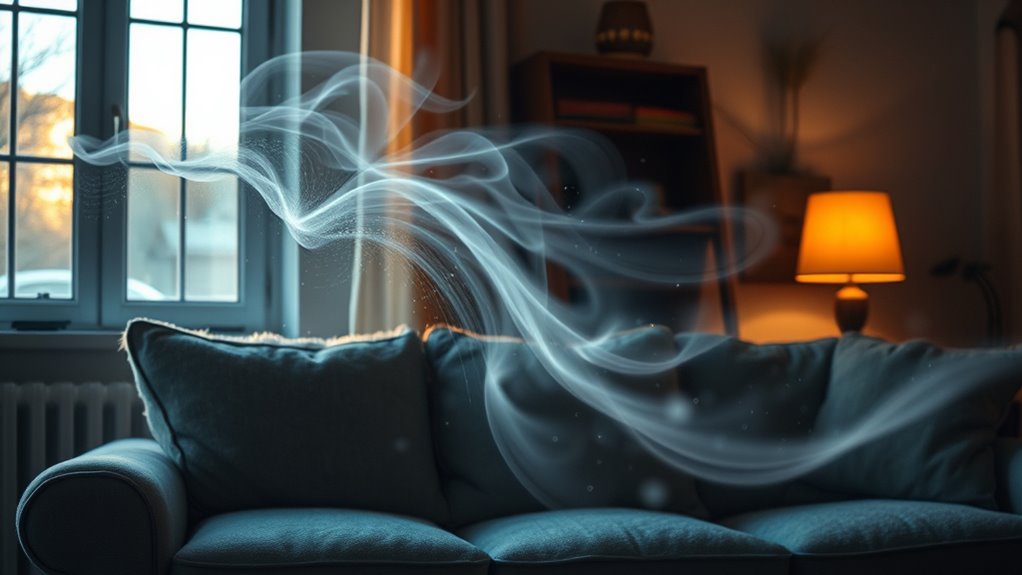
When you notice a cold spot in a room, it’s often caused by drafts and the natural movement of air through convection. These cold patches occur because of differences in air temperature and density, which drive the movement of air from one area to another. Warm air is less dense, so it tends to rise, while cooler, denser air sinks, creating a continuous cycle that transfers heat and leads to visible temperature variations. This process, known as heat transfer, is fundamental to understanding why certain spots feel colder than others.
Cold spots in rooms result from convection, where cooler, denser air sinks and creates drafts, causing temperature variations.
Air density plays a vital role in this process. When warm air heats up, it expands, decreasing its density, and becomes lighter. Conversely, cooler air contracts, increasing its density, and sinks toward the ground or colder areas. This movement is driven by differences in air density that naturally seek equilibrium, producing convection currents. In a room, gaps around windows, doors, or poorly insulated areas allow outside air, which is often colder and denser, to enter and displace the warmer indoor air. As this denser, cooler air flows in, it creates a draft that makes the spot feel especially chilly.
Heat transfer through convection is efficient because it involves physical movement of air, unlike conduction, which transfers heat through direct contact, or radiation, which involves energy transfer via electromagnetic waves. In the context of drafts, convection is responsible for redistributing heat throughout the space. When cold air infiltrates a room, it absorbs heat from surrounding warmer air and surfaces, causing localized cooling. This continuous exchange results in persistent cold spots that can be surprisingly noticeable, especially near windows or poorly sealed openings.
Understanding the physics behind these phenomena can help you address the problem effectively. Sealing leaks around windows and doors reduces the inflow of denser, cold outside air, minimizing convection currents that create drafts. Improving insulation slows down heat transfer, helping maintain a consistent temperature throughout the room. Using draft stoppers or curtains can also disrupt the flow of cold air, reducing the impact of convection-driven cold spots.
Frequently Asked Questions
How Do Drafts Affect Indoor Air Quality?
Drafts can negatively affect your indoor air quality by disrupting air circulation, making it harder to remove indoor pollutants effectively. As drafts move air unevenly, they can cause pollutant dispersion, spreading dust, allergens, and other contaminants throughout your space. This inconsistent airflow can lead to stale or contaminated air pockets, potentially worsening respiratory issues or allergies. To maintain good air quality, control drafts and improve ventilation in your home.
Can Convection Cooling Be Used for Refrigeration?
Yes, convection cooling can be used for refrigeration, but it’s less efficient than traditional methods. You rely on convection techniques, like circulating cold air or liquids, to transfer heat away from items. However, convection efficiency drops with larger volumes or poor airflow, so it’s best suited for small-scale cooling. For efficient refrigeration, combining convection with other methods often yields better results, especially in commercial or industrial settings.
Why Do Cold Spots Form Near Windows?
Ever wonder why cold spots form near windows? It’s because window gaps and thermal bridging let heat escape, creating cooler areas inside your home. These gaps allow cold air to leak in and warm air to escape, making nearby spots feel chillier. Thermal bridging happens when materials like metal frames conduct heat away faster, intensifying cold spots. So, sealing gaps and insulating can help keep your home cozy and uniform in temperature.
How Does Insulation Influence Convection Currents?
Insulation influences convection currents by increasing thermal resistance, which slows down heat transfer between warm indoor air and cooler surfaces. This reduces airflow patterns that create drafts and cold spots, helping to maintain a stable temperature. When insulation is effective, it minimizes the movement of air and heat, keeping your space warmer and more comfortable. Proper insulation ensures convection currents stay controlled, preventing unwanted cold spots near windows and walls.
Are Drafts More Common in Certain Building Designs?
Drafts tend to haunt buildings with poor orientation and poorly placed windows. If your home faces the wind or has gaps near windows, cold air sneaks in like unwelcome guests. Narrow or oddly positioned windows create pathways for drafts, making them more common in such designs. To keep the chill outside, consider strategic window placement and thoughtful building orientation, which act like shields against winter’s icy breath.
Conclusion
Now that you understand how drafts and convection create cold spots, remember they’re more than just pesky breezes—they symbolize life’s unseen forces shaping your environment. Like wind that moves unseen, these forces remind you that invisible influences can have a powerful impact. Embrace the science behind the chill, and let it inspire you to recognize the subtle currents guiding your own journey. Sometimes, the coldest spots teach us the warmest lessons about awareness and change.