
Solar storms happen when the Sun’s magnetic activity causes bursts of energy and charged particles to burst out into space. These particles, mainly electrons and protons, create solar wind that speeds toward Earth, interacting with our magnetic field. When intense, they cause geomagnetic storms, resulting in auroras and disruptions to satellites and power grids. If you want to understand how these phenomena connect to reports of anomalies and disruptions, keep exploring the science behind these powerful solar events.
Key Takeaways
- Solar storms are caused by magnetic reconnection on the Sun, releasing energy and charged particles into space.
- These charged particles form solar wind, which intensifies during storms and interacts with Earth’s magnetic field.
- When solar wind impacts Earth, it causes geomagnetic disturbances, leading to phenomena like auroras and potential infrastructure disruptions.
- Increased solar activity can induce electric currents in Earth’s magnetosphere, resulting in power surges and satellite malfunctions.
- Anomalous reports may stem from the effects of energetic particles penetrating Earth’s environment during intense solar storms.
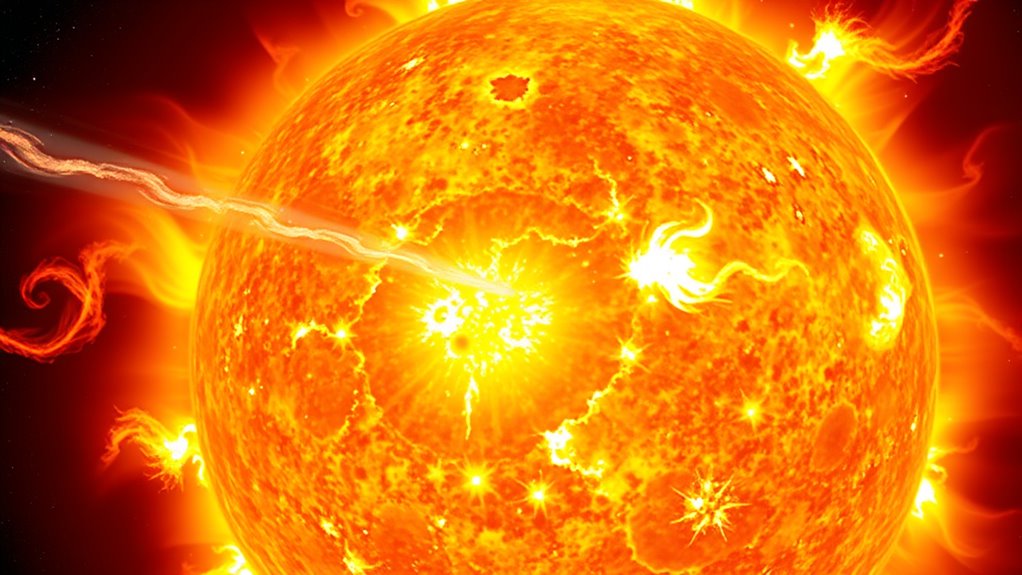
Solar storms, also known as solar eruptions, occur when the Sun releases massive bursts of energy and charged particles into space. These eruptions send out a stream of plasma known as solar wind, which travels across the solar system at high speeds. When this solar wind interacts with Earth’s magnetic field, it causes geomagnetic effects that can disrupt satellite communications, navigation systems, and power grids. As you observe the sky or monitor technological systems, understanding how these solar phenomena influence our planet becomes essential.
Solar eruptions release charged particles that disrupt Earth’s magnetic environment and technological systems.
The solar wind is composed mainly of electrons and protons propelled outward by the Sun’s magnetic activity. During a solar storm, the intensity of this wind increases markedly, carrying with it energetic particles that can penetrate Earth’s magnetosphere. When these charged particles collide with Earth’s magnetic field, they cause disturbances known as geomagnetic storms. These storms can distort Earth’s magnetic environment, affecting everything from the auroras to the functioning of electronic infrastructure. You might notice spectacular auroras—northern and southern lights—appearing at lower latitudes during intense geomagnetic effects, a visual reminder of the Sun’s influence.
The geomagnetic effects of solar storms are complex but follow a clear cause-and-effect pattern. As the solar wind’s density and speed increase, they exert more pressure on Earth’s magnetic field, causing it to compress and become more dynamic. This interaction generates electric currents in Earth’s magnetosphere, which can induce fluctuations in the electrical systems on the ground. Power grids may experience surges, and satellite electronics can suffer malfunctions if not properly shielded. Understanding these effects helps you prepare for potential disruptions, especially during periods of heightened solar activity.
The science behind these processes involves magnetic reconnection, a phenomenon where magnetic field lines from the Sun and Earth realign and release vast amounts of energy. This reconnection accelerates particles and amplifies the solar wind’s impact. As a result, the geomagnetic effects become more pronounced, and the likelihood of anomalous reports—such as unexplained radio blackouts or unusual satellite behavior—increases during intense solar storms. Recognizing the signs of approaching solar activity and understanding the underlying physics empowers you to better anticipate and respond to these natural events.
Additionally, the solar wind’s interaction with Earth’s magnetic field can influence home technology, highlighting the importance of understanding solar activity’s impact on our daily lives. In essence, solar storms are a powerful reminder of our planet’s connection to the Sun. By studying how solar wind interacts with Earth’s magnetic field and causes geomagnetic effects, scientists can better predict the impacts on our technology and environment. As you stay informed about solar activity, you become more prepared for the potential disruptions and can appreciate the intricate science that governs these spectacular cosmic phenomena.
Frequently Asked Questions
How Do Solar Storms Affect Global Communication Networks?
Solar storms can substantially disrupt your global communication networks. They cause satellite disruption, which affects GPS, television, and internet services you rely on daily. Additionally, the storms create radio interference, making it difficult for you to communicate via radio or mobile devices. During intense solar activity, these disruptions can last hours or even days, highlighting how solar storms threaten the stability and reliability of your communication systems worldwide.
Can Solar Storms Influence Human Health or Behavior?
Yes, solar influence can affect your health and behavior. During solar storms, increased electromagnetic activity may cause behavioral changes like mood swings, irritability, or fatigue. Some studies suggest that solar activity can influence sleep patterns and even trigger migraines or headaches. While research is ongoing, it’s clear that solar storms have a tangible impact on human health and behavior, making you more sensitive to environmental fluctuations during these events.
What Are the Long-Term Effects of Solar Storms on Earth’s Climate?
Think of solar storms as celestial tempests that ripple through Earth’s solar climate, leaving lasting marks. These storms can stir the atmosphere, influencing climate patterns over the long haul. You might notice shifts in weather or changes in atmospheric impact, as solar activity subtly molds our planet’s climate. While the effects are complex, understanding these solar influences helps you grasp how cosmic forces shape Earth’s enduring climate story.
Are There Ways to Predict Solar Storms More Accurately?
You can improve your ability to predict solar storms by monitoring solar activity for precursors like solar flares and coronal mass ejections. Scientists use advanced predictive modeling techniques that analyze these precursors to forecast potential storms more accurately. Staying updated with real-time data from satellites helps you anticipate solar storms early, allowing you to prepare and minimize their impacts on technology and infrastructure.
How Do Ancient Civilizations Interpret Solar Storm Phenomena?
You might notice ancient mythologies often interpret solar storm phenomena as celestial omens, linking shimmering skies or strange lights to divine messages. Coincidences like unusual auroras or fiery skies inspired legends of gods and spirits warning of change or disaster. These civilizations saw such events as powerful signs, believing they revealed the will of celestial forces, shaping their stories and guiding their actions during mysterious, awe-inspiring cosmic displays.
Conclusion
Understanding solar storms helps you grasp the power of our sun and its unpredictable nature. These phenomena can disrupt technology and alter our environment, reminding you that even the mightiest forces are beyond human control. Remember, “a storm in the sky is no match for the calm within,” so stay informed and prepared. By respecting these cosmic events, you can better navigate their impact and appreciate the incredible forces at play above us.