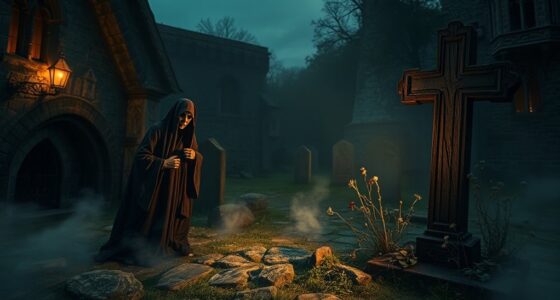
The fear of being buried alive has deep roots in folklore, medical mistakes, and cultural stories that dates back centuries. Early medical tools and limited knowledge made it easy to mistake life for death, fueling anxieties. Tales of awakening in coffins reinforced fears, while superstitions led to inventions like escape hatches and bells. Although modern science eased these concerns, the legacy of this panic still influences how we think about death today; exploring further reveals the history behind this enduring fear.
Key Takeaways
- The panic over being buried alive originated from folklore, medical inaccuracies, and societal fears of premature death.
- Medical limitations and misdiagnoses in history fueled anxieties about mistakenly declaring death.
- Cultural stories and superstitions reinforced fears, leading to precautions like escape hatches and death bells.
- Exaggerated anecdotes and lack of scientific understanding intensified public concern about premature burial.
- Advances in medicine reduced these fears, but the symbolic legacy persists as a reflection of human vulnerability.

Throughout history, fears of being buried alive have sparked widespread panic and fascination. These anxieties often stem from deep-seated cultural folklore and persistent medical misconceptions, which together fueled the belief that death could be mistaken or that individuals might awaken buried alive. In many societies, stories of premature burials became part of popular lore, reinforcing the idea that death was not always immediately apparent. People feared that flawed medical assessments or misdiagnoses might lead to someone being mistakenly declared dead, only to awaken underground. These fears weren’t baseless; in the past, medical tools and techniques lacked the accuracy we have today, and the signs of death could be subtle or misunderstood. As a result, many of these fears were exacerbated by limited medical technology and diagnostic methods. You might have heard stories from folklore that describe individuals awakening in coffins, often in the context of tragic misunderstandings or superstitions. These tales, passed down through generations, helped shape cultural perceptions of death and the afterlife. They also contributed to the development of precautions like coffins with escape hatches or bells that could be rung if someone was mistakenly buried alive. Such stories perpetuated the idea that death could be reversed or mistaken, creating a climate of fear that persisted well into the 19th century. Cultural folklore played a significant role in reinforcing these fears, blending superstition with real medical uncertainties. It’s important to recognize that many of these stories were exaggerated or based on anecdotal evidence, which only fueled public anxiety. Medical misconceptions about death and the human body’s signs of life often led to these fears. For example, doctors in earlier centuries sometimes relied on limited observations—such as the absence of a heartbeat, breathing, or a pulse—to declare death. However, these signs could be unreliable, especially before the advent of modern medical devices. As a result, some individuals were mistakenly believed to be dead when they were only in a coma or a state of deep unconsciousness. The combination of these misconceptions and folklore created a potent mix of fear and intrigue around the possibility of premature burial. As medical science advanced, many of these fears diminished, but the stories and beliefs lingered long after. Today, the idea of being buried alive remains a powerful symbol of human vulnerability, a reminder of past medical uncertainties and cultural fears that once gripped societies worldwide.
Frequently Asked Questions
Were There Documented Cases of People Actually Buried Alive?
You might wonder if there are documented cases of people actually buried alive. While some famous cases and alleged incidents exist, definitive proof remains elusive. Many reports come from centuries ago, and some were likely exaggerated or misdiagnosed. Today, medical advancements have drastically reduced such fears, but the idea persists in popular culture. Overall, real, verified cases are rare, but the concern has historically caused widespread panic.
How Did Medical Practices Influence Fears of Premature Burial?
You might say “trust but verify,” especially when it comes to medical practices that influenced fears of premature burial. Early autopsy procedures and medical diagnostics aimed to determine death accurately, but limited technology sometimes led to misdiagnoses. These uncertainties fueled fears, making people worry they could be buried alive despite modern safeguards. Today’s precise diagnostics help prevent such terrors, but historical practices sowed the seeds of these ongoing anxieties.
Did Cultural Beliefs Shape the Panic Around Being Buried Alive?
Yes, cultural beliefs did shape the panic around being buried alive. You see, superstitious rituals and spiritual symbolism played a big role in fueling fears, as people believed premature burial could trap a restless spirit or disrupt sacred rites. These fears were reinforced by stories and traditions that emphasized spiritual dangers, making the prospect of being buried alive seem like a terrifying violation of religious and cultural norms.
What Modern Technologies Address the Fear of Premature Death?
Have you ever wondered how modern tech eases fears of premature death? Advanced life support and death detection technologies now monitor crucial signs continuously, alerting medical teams instantly if a patient shows signs of life. These innovations help guarantee you aren’t mistakenly declared dead, reducing the terror of being buried alive. Isn’t it comforting to know that science works tirelessly to protect you from such horrifying scenarios?
Are Similar Panics Occurring in Other Historical Periods or Cultures?
You’ll find that similar panics happen across different cultures and eras, often fueled by superstitious beliefs and cultural rituals. For example, in some societies, fears of premature death or being buried alive led to precautions like safety coffins. These fears reflect universal anxieties about mortality, and societies develop rituals or superstitions to cope with them, showing how cultural beliefs shape responses to death throughout history.
Conclusion
Throughout history, these panics reveal how fears can bury us alive in doubt and hysteria. You see, sometimes, what’s buried beneath the surface isn’t just a misunderstanding but a reflection of deeper anxieties. It’s a reminder that you shouldn’t judge a book by its cover or panic at shadows in the dark. Instead, face your fears with clarity, knowing that sometimes, what’s buried isn’t worth losing sleep over.